
Insulin Resistance, Diabetes, Inflammation and the Lymphatic System
Sometimes people don’t come in with one neat problem.
They come in with swelling.
Heaviness.
Skin changes.
Fatigue.
Weight that seems to sit more around the middle than it used to.
Maybe insulin resistance. Maybe type 2 diabetes.
And underneath all of that, there is often a quiet question:
“Why does my body feel like it’s working harder than it used to?”
This is where the lymphatic system becomes part of a much bigger conversation.
Not just fluid.
But inflammation.
Immune load.
Tissue health.
And how well the body is coping with demand.

A simple way to understand insulin resistance
Insulin resistance doesn’t mean the body has stopped making insulin.
It means the message isn’t getting through as clearly.
So the body compensates.
It produces more insulin.
And over time, this tends to sit alongside:
- Increased abdominal fat
- Low-grade chronic inflammation
- Changes in how the body stores and moves energy
In the UK, around 1 in 10 people live with diabetes, with the vast majority being type 2, and many more are estimated to have insulin resistance without a formal diagnosis.
This matters, because insulin resistance is not just about blood sugar.
It is closely linked to inflammation.
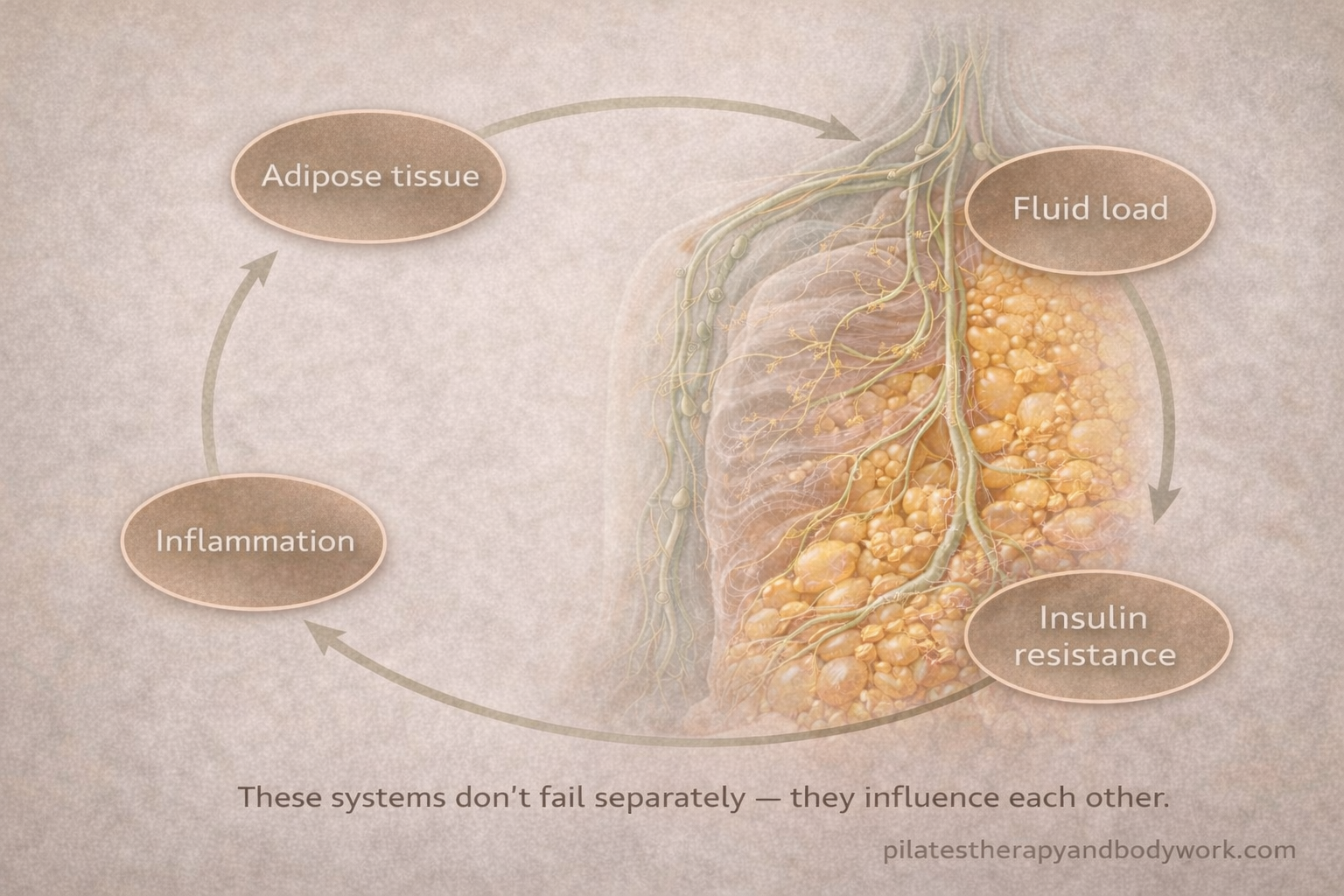
“These systems don’t fail separately — they influence each other.”
Where the lymphatic system comes in
The lymphatic system is often described as a drainage system.
That is true — but it is only part of the story.
It is also involved in:
- Moving fluid out of tissues
- Transporting fats from the gut
- Supporting immune surveillance
- Clearing inflammatory material
When things are working well, this system quietly keeps tissues balanced.
When demand increases — or flow is reduced — things start to shift.
Fluid can begin to accumulate.
Inflammatory signals can linger longer.
Tissues can start to change.
– Over time, this loop begins to place more demand on the tissue itself.
The inflammation loop (and why it matters)
Research now shows that there is a two-way relationship between metabolic health and lymphatic function.
Very simply:
- Inflamed adipose tissue releases inflammatory chemicals
- These can interfere with insulin signalling
- At the same time, reduced lymphatic flow can make it harder to clear inflammatory material
- Which then feeds back into the system
This is why you sometimes see:
- Fluid retention or swelling
- Increased abdominal adiposity
- Chronic low-grade inflammation
- Insulin resistance
…all sitting alongside each other.
Not separate.
But interacting.
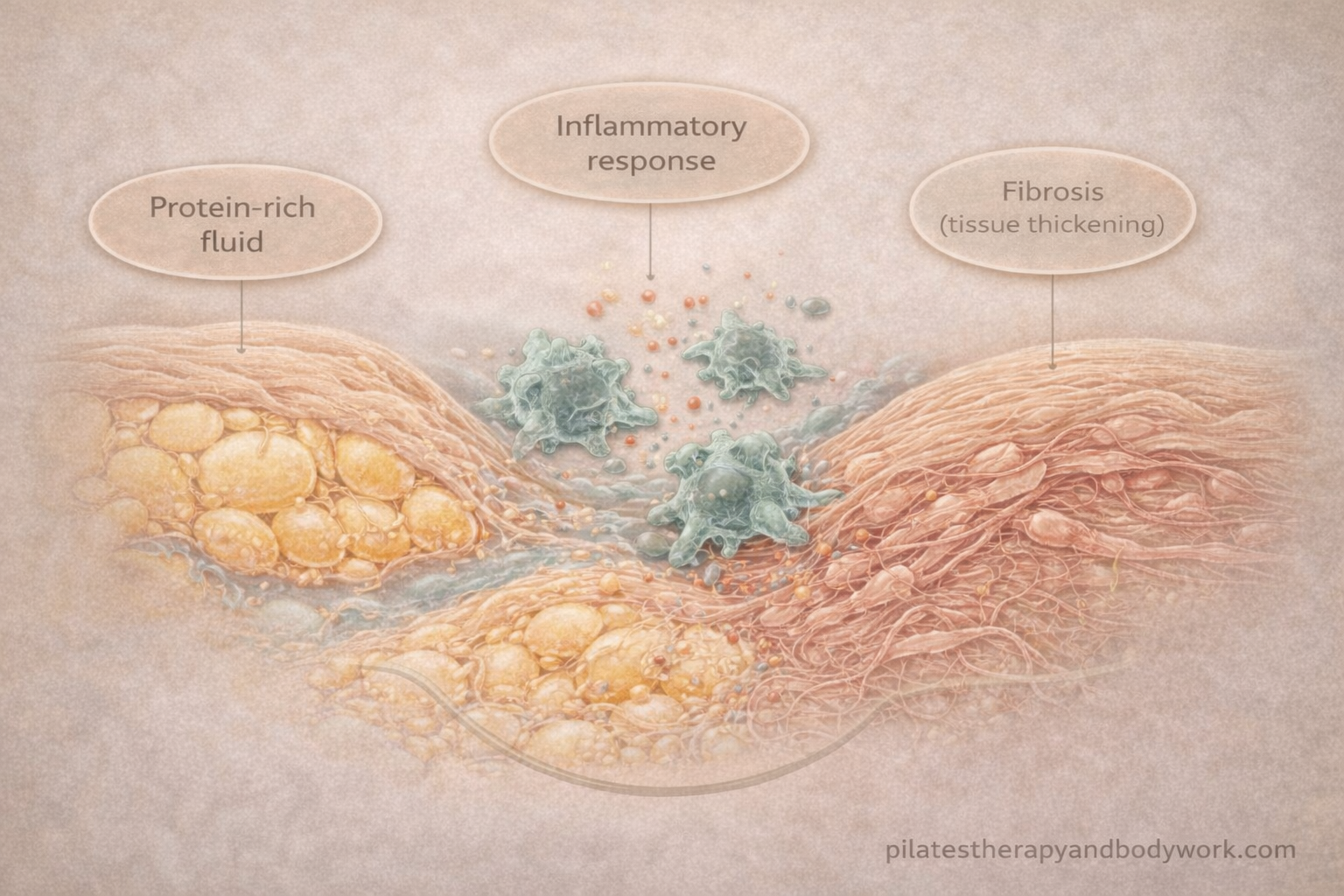
“This is why swelling can start to feel heavier, tighter, and harder over time.”
Lymphoedema is not just “fluid”
This is an important shift in understanding.
Lymphoedema is not simply excess water in the tissues.
It is associated with:
- Protein-rich fluid accumulation
- Chronic inflammation
- Adipose tissue changes
- Fibrosis (tissue thickening)
Over time, if not managed, the tissue itself changes.
This is why early support matters.
And it is also why people often say:
“It feels heavy, not just swollen.”
– And this is where we start to see the real change inside the tissue.
A quick note on inflammation markers (CRP)
You might hear the term C-reactive protein (CRP) mentioned in blood tests.
It is often described as a marker of inflammation.
Which sounds quite clinical — but it is actually quite useful in understanding what the body is dealing with.
CRP levels tend to rise when there is:
- infection
- tissue stress
- or ongoing inflammation
Research shows that CRP is often higher in:
- people with insulin resistance and type 2 diabetes
- those carrying more abdominal fat
- and during infections such as cellulitis
So although you may never feel your CRP levels…
It can reflect something important:
how much inflammatory load the body is carrying.
And this is where things start to connect.
If someone is living with:
- chronic swelling or lymphoedema
- insulin resistance or diabetes
- and perhaps recurrent infections
…it is not unusual for inflammation to sit quietly in the background.
Not always dramatic.
But persistent.
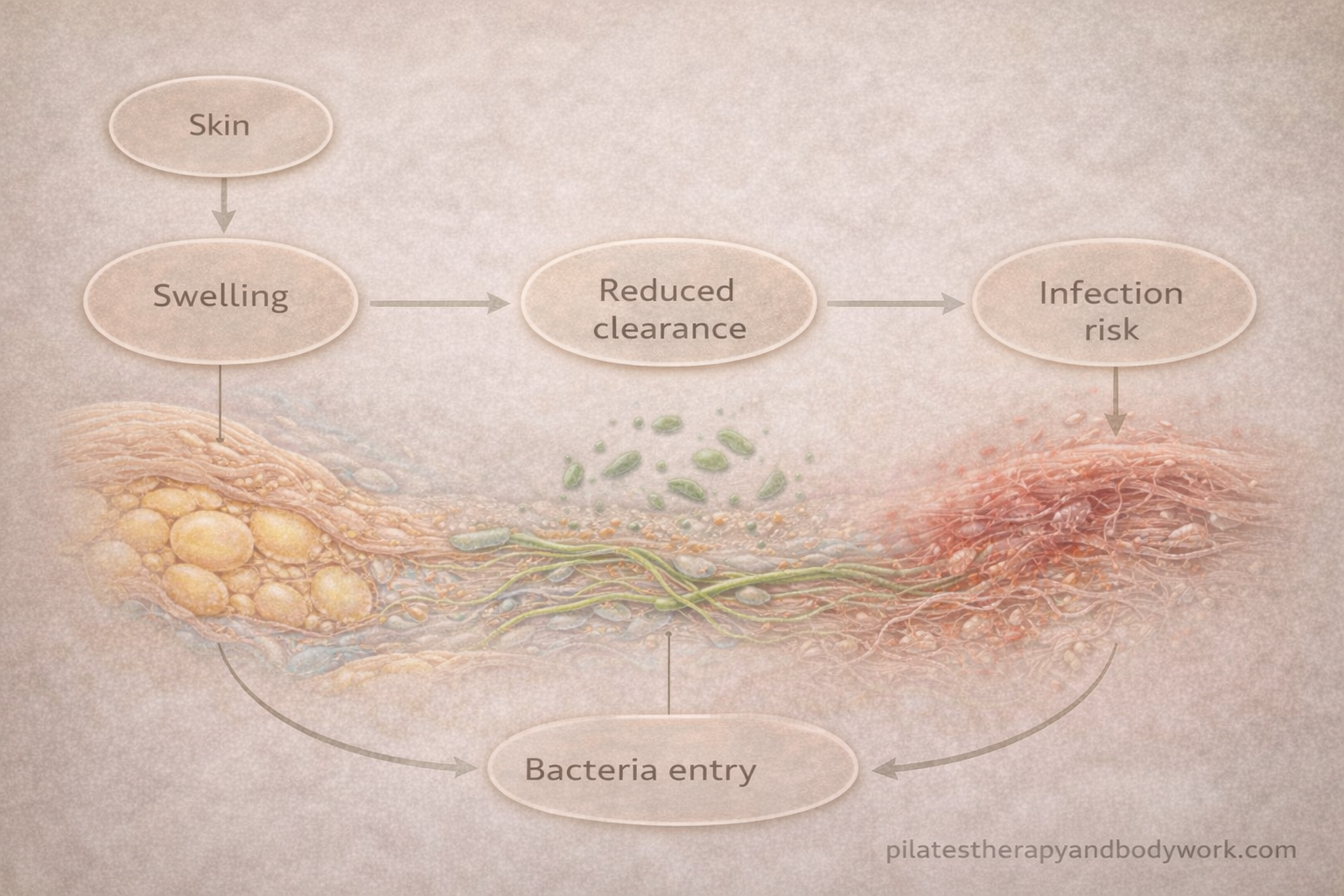
“When fluid isn’t moving well, the skin becomes more vulnerable.”
Infection risk — the part we cannot ignore
When we layer:
- Diabetes or insulin resistance
- Swelling or lymphoedema
- Skin changes
- Reduced immune efficiency
…we increase the risk of infection.
Particularly cellulitis.
In the UK, cellulitis is one of the most common reasons for hospital admission related to skin and soft tissue infection.
Chronic oedema and lymphoedema are recognised risk factors for recurrent cellulitis.
And importantly:
Each infection can further affect lymphatic function.
So it becomes a cycle.
When more than one condition overlaps
This is the reality for many people.
Not one diagnosis.
But several things happening together.
This is where management needs to feel realistic — not overwhelming.
Things to gently think about:
- Skin care becomes essential
- Foot care matters more than people realise
- Movement helps — but it needs to feel achievable
- Compression needs the right guidance
- Fatigue and brain fog are real factors
- Early response to redness, heat or pain is important
What I often see in clinic
- “My leg feels heavier as the day goes on”
- “I keep getting infections in the same area”
- “I know I should move more, but I feel stuck”
- “I’ve been told I have fluid retention and pre-diabetes”
These are not separate issues.
They are often part of the same story.

A more joined-up way of thinking
If there is one takeaway from all of this, it is this:
The body does not work in separate systems.
Fluid, fat, inflammation, immune function and movement are all connected.
When we support one area well, we often support others too.
If you would like support understanding your body — not just treating one symptom —
I offer Manual Lymphatic Drainage, reflexology, and gentle movement sessions designed to work with where you are now.
Available in Clacton-on-Sea, Bury St Edmunds, Essex and Suffolk.