
Why I Always Look Above the Collarbones
Understanding Supraclavicular Swelling
Have you ever noticed a little puffiness just above your collarbones?
Most people don’t give it a second thought, but it’s one of the first places I look during a lymphatic assessment.
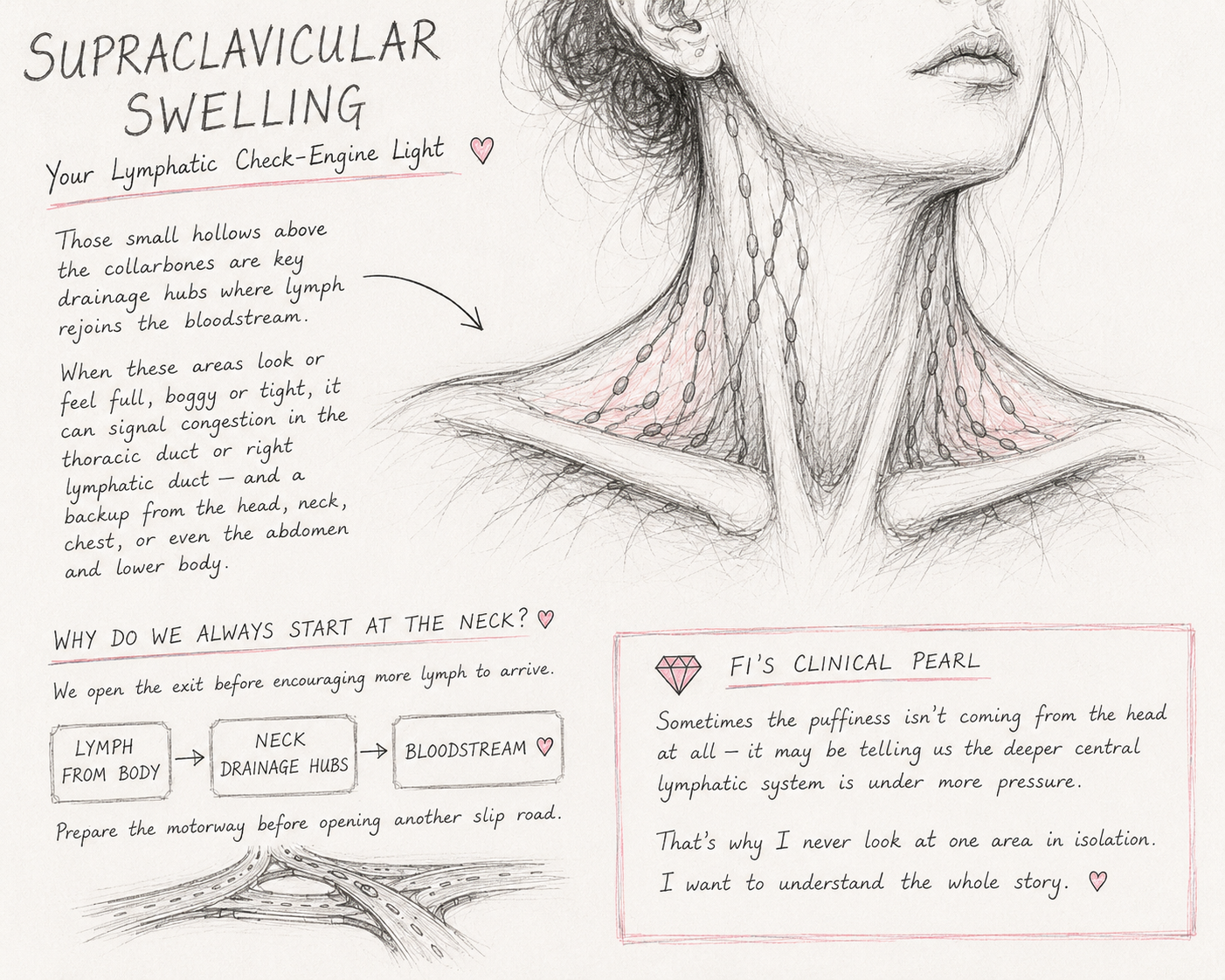
Those small hollows sit over some very important drainage pathways. Think of them as one of the body’s “joining points” where lymph makes its final journey back into the bloodstream. When everything is working well, these areas often feel soft and relaxed. When they’re fuller, boggier or more prominent than usual, they can provide valuable information about what’s happening elsewhere in the body.
That doesn’t automatically mean there’s a problem.
Like every good assessment, it’s simply one piece of the puzzle.
Sometimes the reason is obvious. Perhaps you’ve been less active recently, the weather has been particularly hot, you’ve had recent surgery or you’re recovering from illness. Occasionally it may reflect changes in the deeper lymphatic system that deserve a little more attention.
This is why assessment always comes before treatment.
Why Does My Lymphatic Therapist Start at My Neck?
“My swollen ankle is down here…”
It’s probably the question I’m asked most often during Manual Lymphatic Drainage.
Closely followed by…
“Why do my collarbones sometimes seem to disappear?”
At first glance, those two questions don’t appear to have much in common.
In fact, they’re closely related.
The little hollows just above your collarbones are one of the places I assess before every treatment because they tell me something about how your central lymphatic system is coping.
Sometimes they look exactly as I’d expect.
Sometimes they look a little fuller.
Sometimes they tell me we need to slow down, think a little more carefully and ask a few more questions before treatment begins.
That’s why we always start at the neck.
Why do we always start at the neck?
People often ask why Manual Lymphatic Drainage begins so gently around the neck rather than where the swelling is.
The answer is surprisingly simple.
We prepare the place where lymph leaves the body before encouraging more fluid to arrive.
It’s rather like making sure the motorway is moving before opening another slip road. If we improve the flow at the main exit, the whole system has a better opportunity to work efficiently.
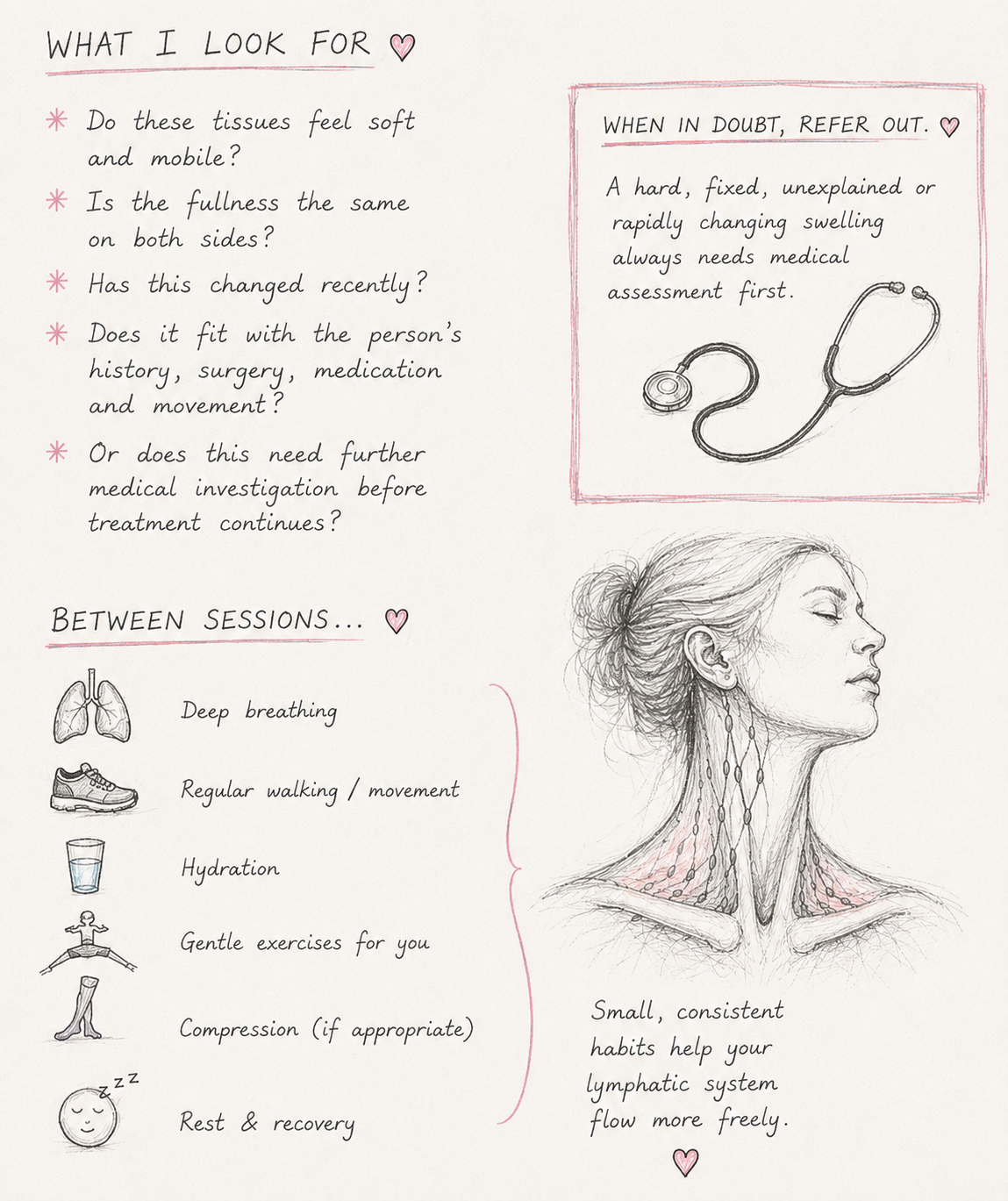
What I look for
As a therapist, I’m asking myself several questions before treatment even begins.
• Do these tissues feel soft and mobile?
• Is the fullness the same on both sides?
• Has this changed recently?
• Does it fit with the person’s medical history, surgery, medication and movement?
• Or is this something that needs further medical investigation before treatment continues?
This is where training and clinical reasoning become just as important as the treatment itself.
Fi’s Clinical Pearl
One of the biggest misconceptions is that supraclavicular puffiness only tells us about the head and neck.
In reality, it can sometimes reflect what’s happening much deeper within the body’s central lymphatic system.
That’s why I never look at one area in isolation.
I want to understand the whole story.
How you’re moving.
How you’re breathing.
Whether you’ve had surgery.
Whether you’ve been unwell.
How active you’ve been recently.
How your body is coping with everyday life.
Sometimes that little area above the collarbones tells us far more than people realise.
When should you seek medical advice?
Not every area of swelling is suitable for Manual Lymphatic Drainage.
A new lump, swelling that is hard, fixed or rapidly changing, unexplained swelling, or swelling associated with symptoms such as fever, significant pain, unexplained weight loss or feeling generally unwell should always be assessed by your GP or medical team first.
One of the most important parts of my role is recognising when treatment is appropriate—and when the safest course of action is to refer someone for further assessment.
Between sessions…
Your lymphatic system responds best to gentle, consistent support.
Small things really do matter.
• Deep breathing
• Regular walking or movement
• Staying hydrated
• Gentle exercises prescribed for your needs
• Compression garments where appropriate
The aim isn’t perfection. It’s giving your lymphatic system the best possible environment to do the job it was designed to do.
If you have further questions please get in touch and we can arrange a time to chat. I have clinics in Bury St Edmunds each month and twice weekly in Clacton.
You may find these useful
Further reading:
- Why Does the Neck Matter in Manual Lymphatic Drainage?
- Understanding the Lymphatic System
- Deep Breathing and the Lymphatic System
Reputable organisations such as:
- British Lymphology Society
- Lymphoedema Support Network
- NHS information on swollen lymph nodes (to help readers understand when medical assessment is important)