
Fi’s Energy Snacks
Tiny habits to recharge your social battery.
We often think recharging has to be something big.
A holiday.
A spa day.
A weekend off.
An empty diary.
But life doesn’t usually work like that.
Most of us are trying to fit ourselves somewhere between work, caring for other people, appointments, washing, cooking, family life and trying to remember where we left our glasses.
No wonder so many people tell me,
“I just haven’t got anything left in the tank.”
The good news?
Research is increasingly showing that our brains and bodies don’t always need huge amounts of recovery. Sometimes they simply need small moments of restoration sprinkled throughout the day.
I call them Fi’s Energy Snacks.
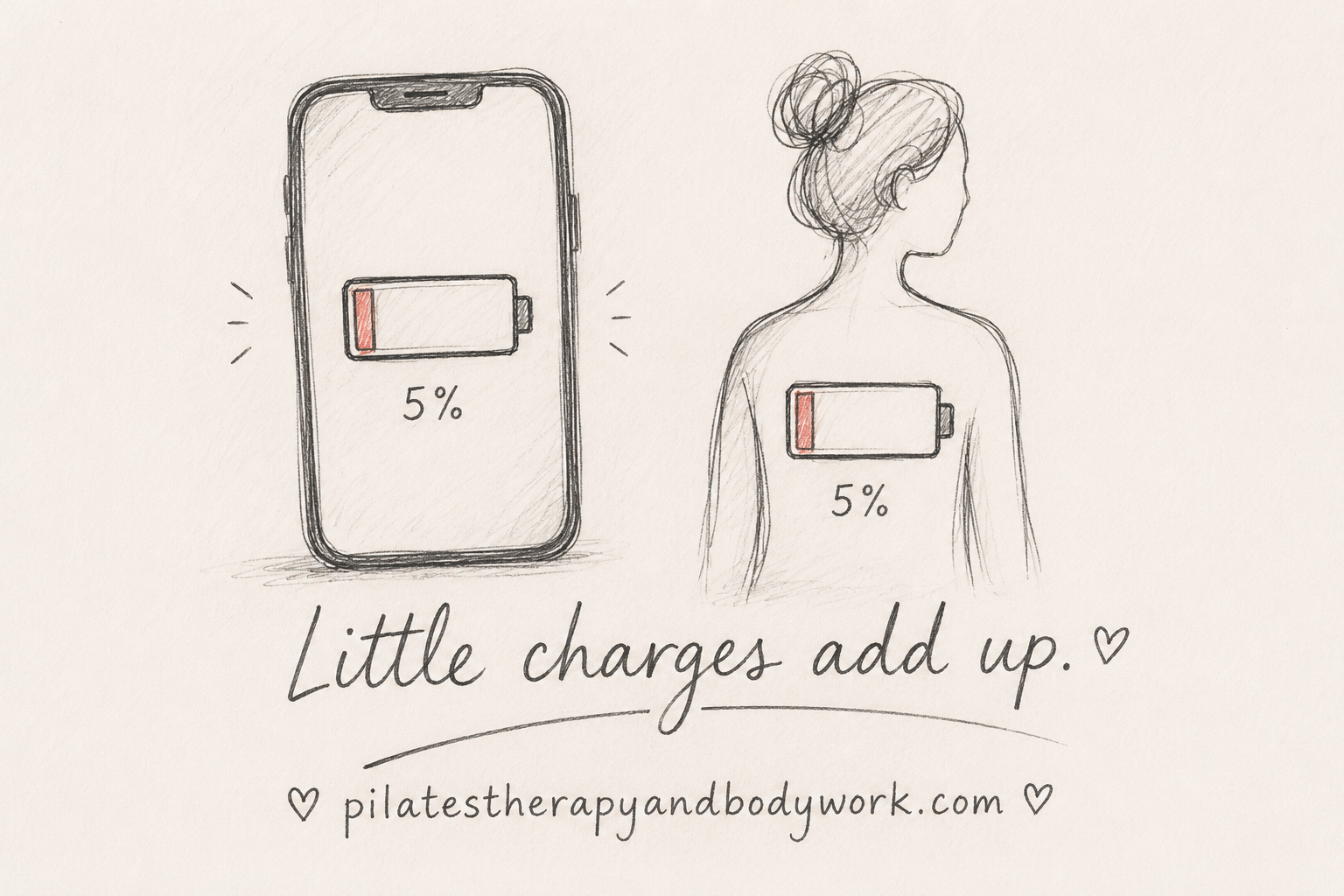
Think of them as tiny charges for your battery before it reaches 1%.
Why tiny breaks work
Our brains weren’t designed to stay switched on all day.
Every conversation.
Every decision.
Every email.
Every bit of pain.
Every worry.
Every notification.
They all ask your brain to spend a little energy.
Psychologists sometimes describe our ability to recover attention through micro-restorative experiences—small moments that allow the brain to reset before fatigue builds too far. Rather than waiting until you’re exhausted, tiny recovery moments can help maintain mental energy throughout the day.
For many of us, prevention is easier than rescue.
Clinical Pearl
Research suggests that brief periods of movement, exposure to nature, positive social interaction and slow breathing can all help reduce stress, improve attention and support emotional wellbeing. You don’t always need more time—you often just need a different few minutes.
Energy Snack 1
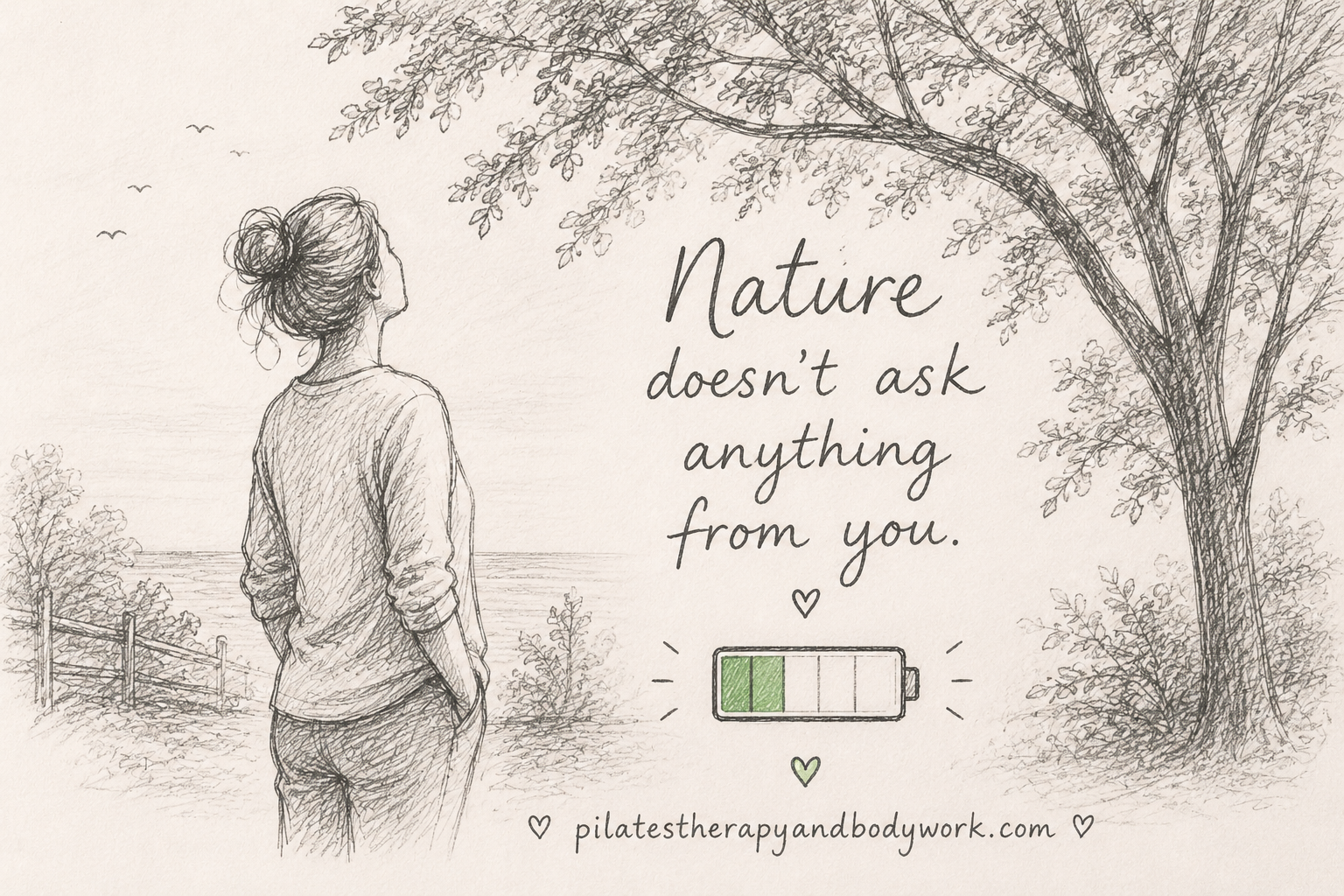
Step outside for two minutes
You don’t have to go for a five-mile walk.
Simply step outside.
Feel the air.
Look at the sky.
Notice something green.
Studies have found that even brief exposure to nature can lower stress hormones, reduce mental fatigue and improve mood.
Fi Field Note
One of the simplest questions I ask clients is,
“When was the last time you stood outside without looking at your phone?”
The answer is often surprisingly long ago.
Try today
Stand outside before getting into your car.
Energy Snack 2
Drink before you think
Mild dehydration can affect concentration, mood and increase feelings of fatigue.
Before reaching for another coffee…
Try drinking a glass of water.
Your brain is around 75% water. It notices when you’re running low.
Clinical Pearl
Even losing 1–2% of body water can reduce attention and increase perceived effort during everyday tasks.
Fi Field Note
It’s amazing how often clients tell me they’re exhausted—and then realise they’ve only had two cups of tea all morning.
Recharge
One minute.
Energy Snack 3
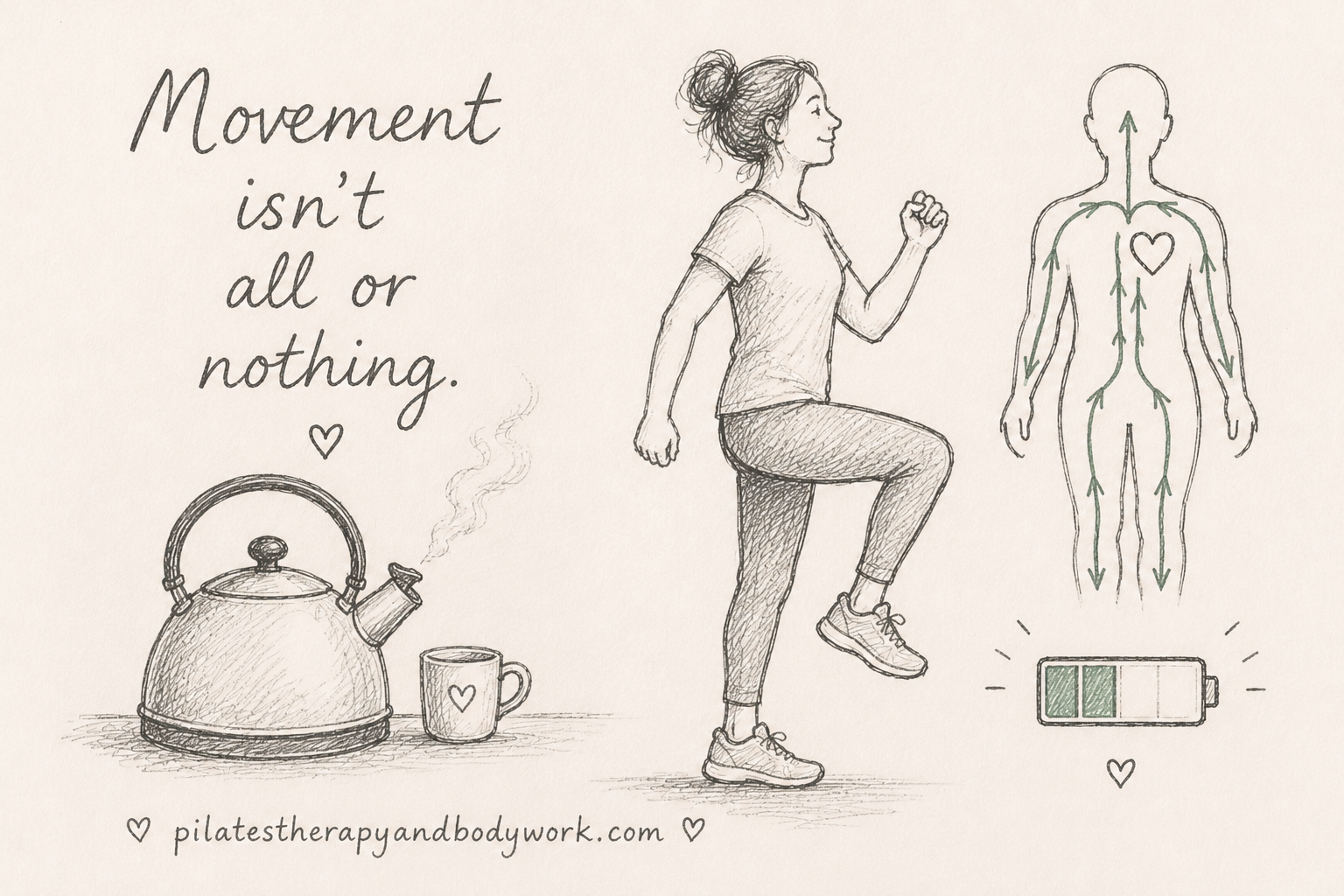
Move for sixty seconds
Stretch.
March on the spot.
Roll your shoulders.
Walk while the kettle boils.
Short bouts of movement help improve circulation, wake up muscles and encourage your brain to release chemicals associated with feeling more alert.
Movement doesn’t have to mean exercise.
Sometimes it simply means reminding your body that it was designed to move.
Energy Snack 4
Breathe out for longer than you breathe in
When we’re stressed, breathing often becomes shallow and fast without us realising.
Try this:
Breathe in for four.
Breathe out for six.
Repeat five times.
Longer exhalations encourage your parasympathetic nervous system—your body’s natural “rest and restore” mode—to become more active.
Fi Field Note
I often tell clients,
“Your breath is the one tool you carry everywhere.”
Energy Snack 5
Eat breakfast before your battery crashes
Skipping meals can leave your brain running low on fuel.
A breakfast containing protein, fibre and healthy fats provides steadier energy than relying on quick sugar fixes later.
Small choices early in the day often make the afternoon feel easier.
Energy Snack 6
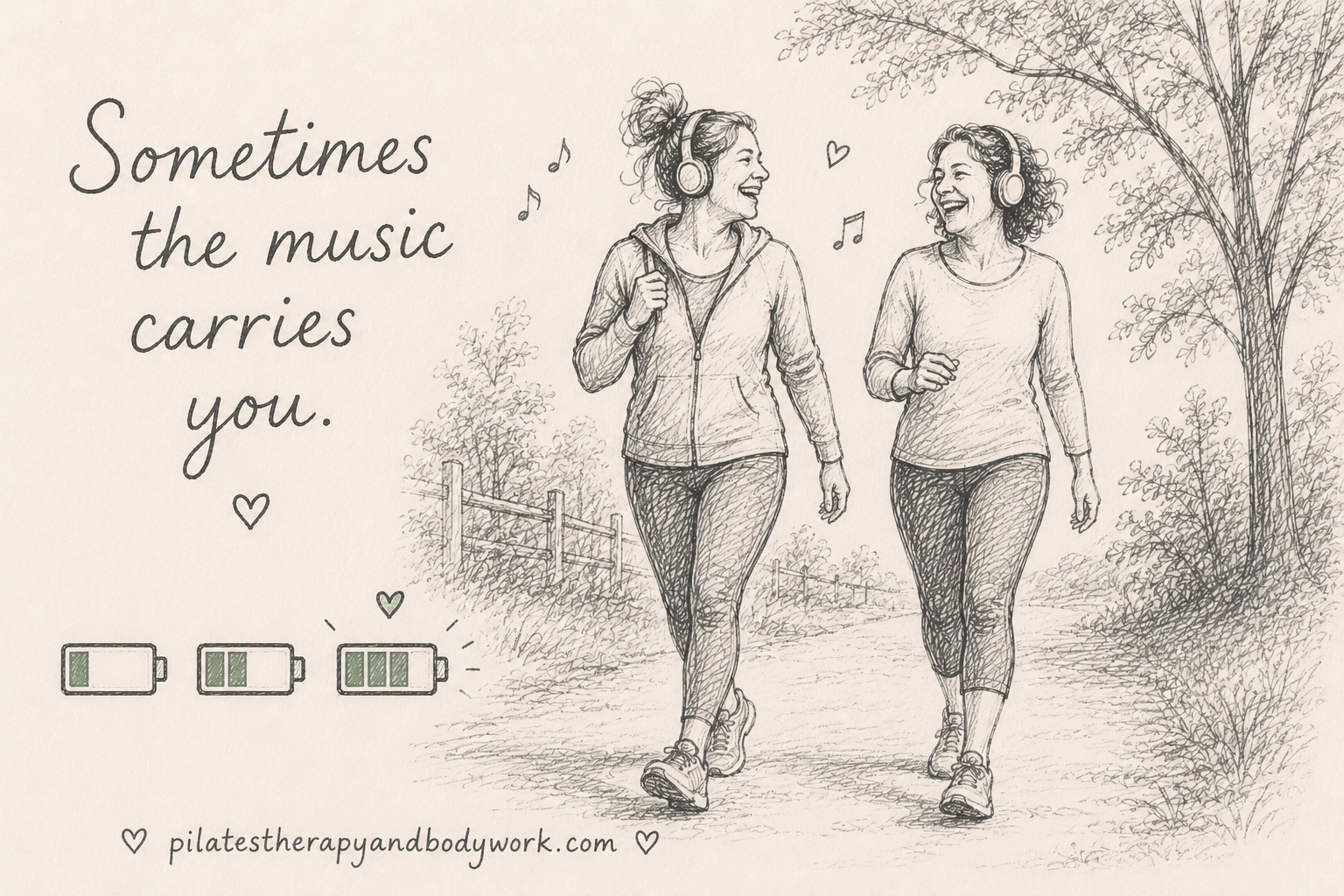
Turn music into medicine
Music changes more than our mood.
Research shows it can reduce perceived effort during movement, improve motivation and even help coordinate walking.
It’s one of the reasons I love using silent disco headsets.
People often walk further without realising they’re exercising.
They simply enjoy moving.
Fi Field Note
Sometimes people arrive saying,
“I nearly didn’t come tonight.”
Forty-five minutes later they’re laughing.
Music often reaches people before words do.
Energy Snack 7
Look further away
We’ve become experts at staring at things close to our faces.
Phones.
Computers.
Paperwork.
Instead…
Look towards the horizon for thirty seconds.
It gives your eyes, neck and attention a chance to reset.
Energy Snack 8
Message someone who makes you smile
Positive social connection isn’t about having hundreds of friends.
Sometimes it’s one genuine conversation.
A short text.
A shared joke.
A quick coffee.
Feeling connected helps buffer stress and reminds us we’re not carrying everything alone.
Energy Snack 9
Give yourself permission to say “Not today.”
Boundaries protect batteries.
Every “yes” costs energy.
Sometimes the healthiest answer is simply,
“I’d love to, but not today.”
Fi Field Note
I’ve noticed people often apologise for protecting their own energy.
You don’t need to apologise for looking after yourself.
Energy Snack 10
Walk with someone
Walking side by side often makes conversation easier than sitting face to face.
Perhaps that’s why some of the best conversations happen while we’re moving.
Energy Snack 11
Find your people
We recharge differently when we feel safe.
That might be a walking group.
A Pilates class.
A choir.
A gardening club.
Or perhaps one day…
A Women’s Circle.
Community doesn’t drain our batteries when we feel accepted.
It often recharges them.
Energy Snack 12
Notice one good thing
Before bed tonight…
Ask yourself one question.
What went well today?
Not perfectly.
Just well enough.
Our brains naturally pay more attention to problems than positives—a survival trait known as the negativity bias. Taking a moment to notice something good helps gently rebalance that tendency over time.
You may find these articles interesting:
How do we recharge our social battery
Protecting your social battery
The science behind Energy Snacks
Although each Energy Snack is simple, they’re grounded in research from psychology, neuroscience and exercise science. Studies suggest that:
- Brief exposure to nature can improve mood and reduce mental fatigue.
- Movement snacks throughout the day improve alertness and reduce the effects of prolonged sitting.
- Mild dehydration affects concentration and increases fatigue.
- Slow breathing helps activate the body’s relaxation response.
- Music can improve motivation, mood and movement.
- Positive social connection supports resilience and emotional wellbeing.
- Practising gratitude or noticing positive moments can improve psychological wellbeing over time.
None of these habits is a magic fix on its own.
But together?
They become lots of little charges instead of waiting for one big recharge.
Fi’s Recharge Checklist
☐ Drank some water.
☐ Moved for one minute.
☐ Stepped outside.
☐ Took one slow breath.
☐ Messaged someone.
☐ Looked up.
☐ Ate something nourishing.
☐ Noticed something good.
If you managed one…
Your battery is already charging.
If you managed four…
You’re building a habit.
If you managed none…
Tomorrow is another opportunity.
One last thought…
We spend so much time watching the battery on our phones.
Perhaps it’s time we became just as good at noticing our own.
Because unlike your phone…
Your battery doesn’t suddenly jump from 5% to 100%.
It fills one little charge at a time.
And those little charges really do add up.
References (reader-friendly)
- Berman MG, Jonides J, Kaplan S. The cognitive benefits of interacting with nature. Psychological Science. 2008.
- World Health Organization. Guidelines on Physical Activity and Sedentary Behaviour. 2020.
- Popkin BM, D’Anci KE, Rosenberg IH. Water, hydration and health. Nutrition Reviews. 2010.
- Laborde S, et al. Heart Rate Variability and Cardiac Vagal Tone in Psychophysiological Research. Frontiers in Psychology. 2017.
- Terry PC, Karageorghis CI, et al. Effects of Music in Exercise and Sport. 2020.
- Fredrickson BL. The Broaden-and-Build Theory of Positive Emotions. 2001.