
What Does the Oxygen Reading on Your Smartwatch Actually Mean?
“My watch says my oxygen is 95%. Is that OK?”
It was a great question that came up during one of our Meet ‘n’ Move sessions recently.
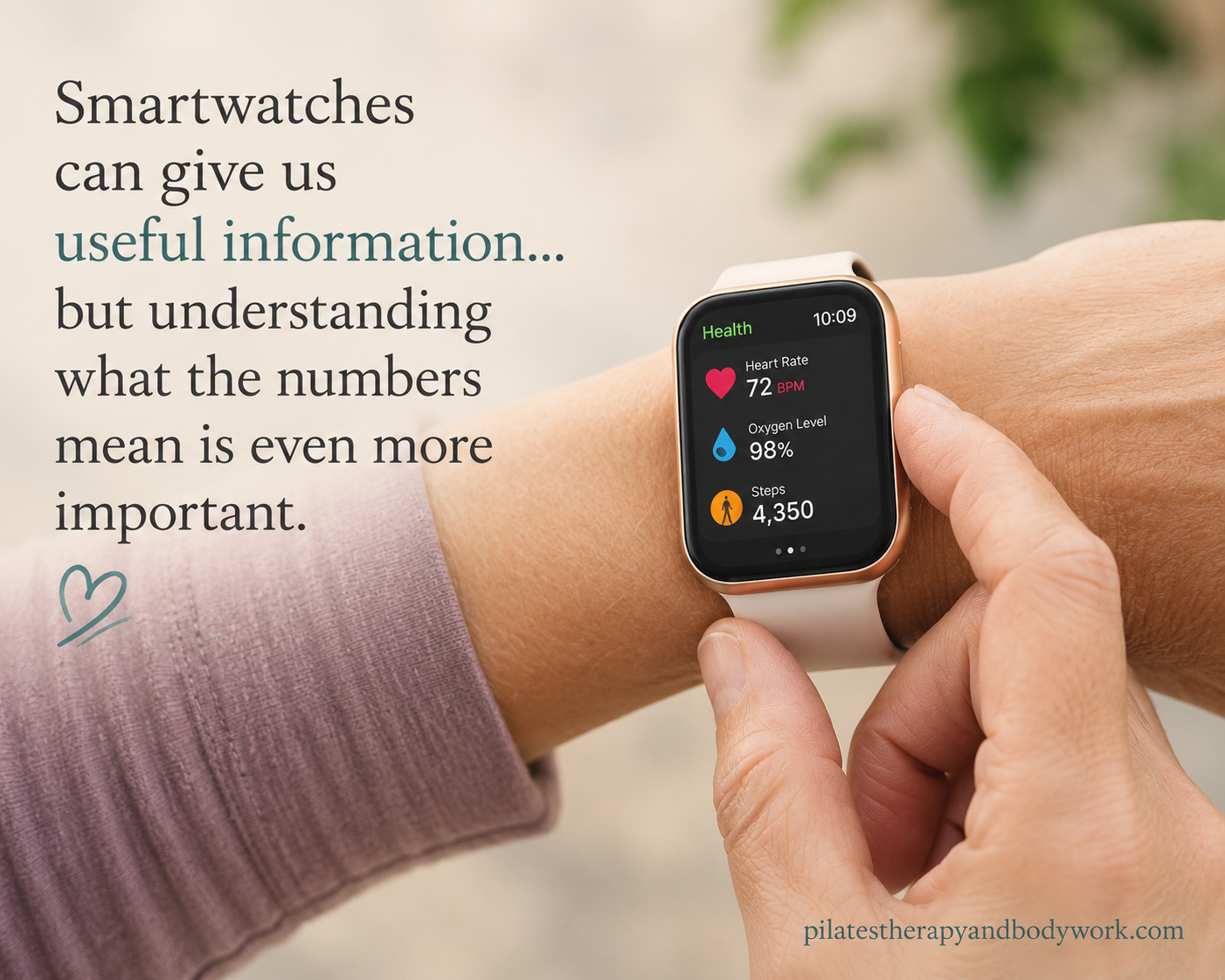
Many smartwatches now display your blood oxygen level (SpO₂), alongside your heart rate, sleep and activity. Having access to this information is fascinating, but it can also make us worry about numbers that we don’t fully understand.
So, what is your watch actually measuring, and how much attention should you pay to it?
If someone is worrying about oxygen, they’re often worrying about swelling too.
If you’ve also noticed swollen ankles or heavy legs, you may find this article helpful.
What is blood oxygen?
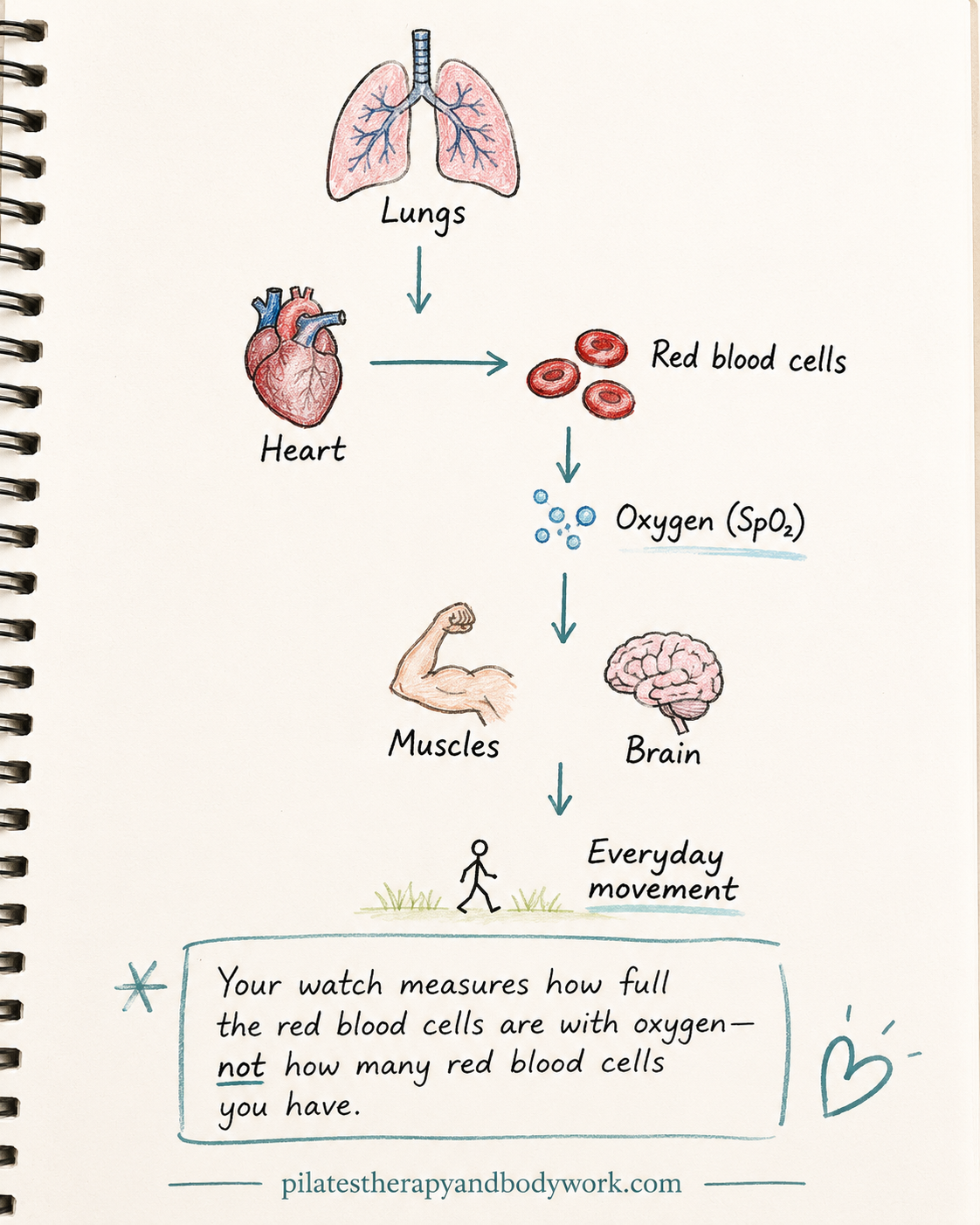
Every time you breathe in, oxygen passes from your lungs into your bloodstream, where it attaches to a protein called haemoglobin inside your red blood cells. Your heart then pumps this oxygen-rich blood around your body, delivering oxygen to your muscles, brain and organs so they can produce the energy needed for everyday life.
Your smartwatch estimates oxygen saturation (SpO₂)—the percentage of haemoglobin carrying oxygen.
For most healthy adults living at sea level, oxygen saturation is usually between 95% and 100%.
One fact that often surprises people is that healthy lungs are incredibly efficient. During normal daily activities and gentle exercise, oxygen levels usually stay remarkably stable, even though you may feel a little more out of breath.
Feeling breathless doesn’t automatically mean your oxygen level has fallen. It often simply means your muscles, heart and lungs are working harder to meet the demands of what you’re doing.
How does a smartwatch measure it?
Most smartwatches use tiny red and infrared lights that shine through the skin on your wrist. By measuring how the light is absorbed and reflected, the watch estimates how much oxygen is attached to your haemoglobin.
It’s an impressive piece of technology, but it’s important to remember that it is an estimate, not a medical test.
Research has shown that wearable devices are becoming increasingly accurate and can be useful for spotting trends over time. However, wrist-based devices are generally less reliable than the fingertip pulse oximeters used in healthcare, particularly if you’re moving, your hands are cold or the watch isn’t fitting snugly.
So rather than worrying about one isolated reading, it’s usually more helpful to notice whether your readings are changing consistently over time.
Why might my reading change?
There are many reasons why your smartwatch might give a slightly different reading.
These include:
- moving while the watch is measuring
- wearing the watch too loosely
- cold hands or poor circulation
- tattoos or darker skin pigmentation, which can sometimes affect light-based sensors
- bright sunlight
- the position of your wrist.
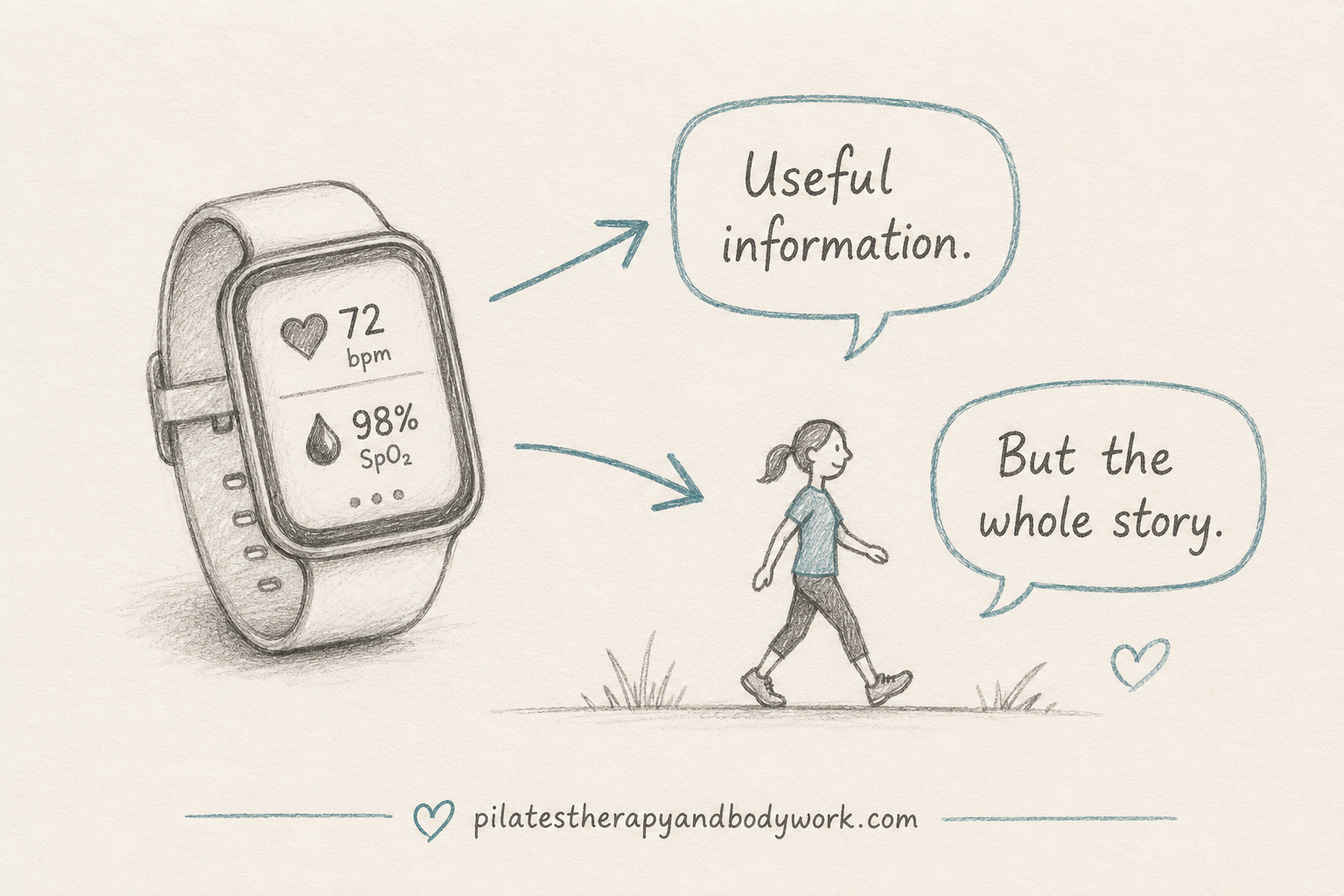
A single number rarely tells the whole story.
As we often say in Meet ‘n’ Move, one moment isn’t the whole picture.
Can medication or medical conditions affect oxygen levels?
Yes.
People living with conditions such as asthma, COPD or certain heart conditions may naturally have different oxygen levels. Chest infections, recent surgery and anaemia can also influence how well oxygen is delivered around the body.
Some medications may also affect breathing or circulation, which is why healthcare professionals never rely on a single reading in isolation. They look at your symptoms, your medical history, your medication and how you are functioning day to day.
What about cancer treatment?
This felt particularly relevant to our Meet ‘n’ Move discussion because many members are recovering from or living beyond cancer.
Some chemotherapy drugs, radiotherapy involving the chest and certain newer cancer treatments can affect the lungs or heart. Surgery, reduced activity during treatment and the natural process of recovery may also influence how breathless you feel.
Another important consideration is anaemia, which can occur during or after some cancer treatments.
This is where smartwatches can sometimes be misleading.
Your watch measures the percentage of haemoglobin carrying oxygen.
It doesn’t measure how much haemoglobin you actually have.
So someone with anaemia may still have an oxygen saturation of 98%, yet feel exhausted because there simply aren’t enough red blood cells available to carry oxygen around the body.
That’s a really good example of why numbers should never replace clinical judgement or how you actually feel.
Does being fitter improve oxygen levels?
Not usually.
Being fitter doesn’t normally make your oxygen saturation higher because healthy lungs already do an excellent job of oxygenating your blood.
Instead, fitness improves how efficiently your heart, lungs, muscles and circulation work together.
You may notice you:
- recover more quickly after exercise
- become less breathless walking uphill
- feel stronger carrying shopping
- have more energy during the day
- feel more confident being active.
These are often much better indicators of improving health than chasing a higher number on your watch.
When should you seek medical advice?
A smartwatch should never be used to diagnose a medical condition.
However, it’s sensible to seek medical advice if:
- your oxygen readings are consistently much lower than usual
- you develop increasing breathlessness
- you experience chest pain
- you feel dizzy, confused or faint
- you simply feel significantly unwell.
The most important message is this:
Treat the person, not the number.
Fi’s Field Note
One of the things I love most about Meet ‘n’Move is the conversations that happen alongside the movement.
Someone asks a question, another person has wondered the same thing, and together we all learn a little more about how amazing our bodies really are.
Technology has given us access to more information than ever before, and I think that’s a positive thing.
But your smartwatch doesn’t know your story.
It doesn’t know whether you’ve recently finished chemotherapy, had surgery, slept badly, feel anxious, are recovering from an infection or are simply walking on a very hot day.
As therapists, we don’t just look at numbers.
We look at people.
I’m always more interested in questions like:
- Are you becoming less breathless than you were three months ago?
- Can you walk a little further?
- Are you recovering more quickly after activity?
- Do you feel stronger and more confident?
Because sometimes the biggest improvements in health never appear as a number on a watch.
They appear in everyday life.
If you’d like to explore further…
If this topic has sparked your interest, these are excellent evidence-based resources:
- British Heart Foundation explains heart and circulation health in clear, accessible language.
- Asthma + Lung UK has helpful information about oxygen levels, breathlessness and lung health.
- Macmillan Cancer Support provides guidance on fatigue, breathlessness and recovery after cancer treatment.
- The National Institute for Health and Care Excellence has guidance on managing breathlessness, COPD and many long-term conditions.
- Studies published in journals such as the Journal of Medical Internet Research and npj Digital Medicine have shown that while consumer wearable devices continue to improve, wrist-based pulse oximetry is best used for monitoring trends and supporting wellbeing rather than diagnosing medical conditions