What is lymphoedema?
It’s a question many people don’t ask straight away —
because swelling often starts off feeling quite normal.
Ankles that puff up by the evening.
A leg that feels a little heavier than the other.
Marks left behind by socks or clothing.
It gets brushed off as “just fluid” or “poor circulation”.
But when swelling keeps coming back — or slowly starts to feel different — it’s worth understanding what might be happening underneath.
Lymphoedema is a long-term (chronic) swelling condition caused by the lymphatic system not being able to drain fluid effectively.
This means fluid, proteins, and waste products begin to build up in the tissues instead of being cleared.
In the UK, it’s estimated that over 450,000 people are living with lymphoedema, although many remain undiagnosed or unsupported.
Why swelling isn’t always “just fluid”
In early stages, swelling can come and go.
- Worse at the end of the day
- Better after rest or overnight
- Linked to heat, travel, or long periods of sitting
This is often linked to venous insufficiency — where the veins struggle to return blood efficiently back to the heart.
Venous issues are incredibly common:
- Around 1 in 5 adults in the UK show signs of venous disease
- Venous leg ulcers affect up to 1 in 500 people, increasing with age
But here’s the part that often gets missed…
How a vein problem can become a lymphatic problem
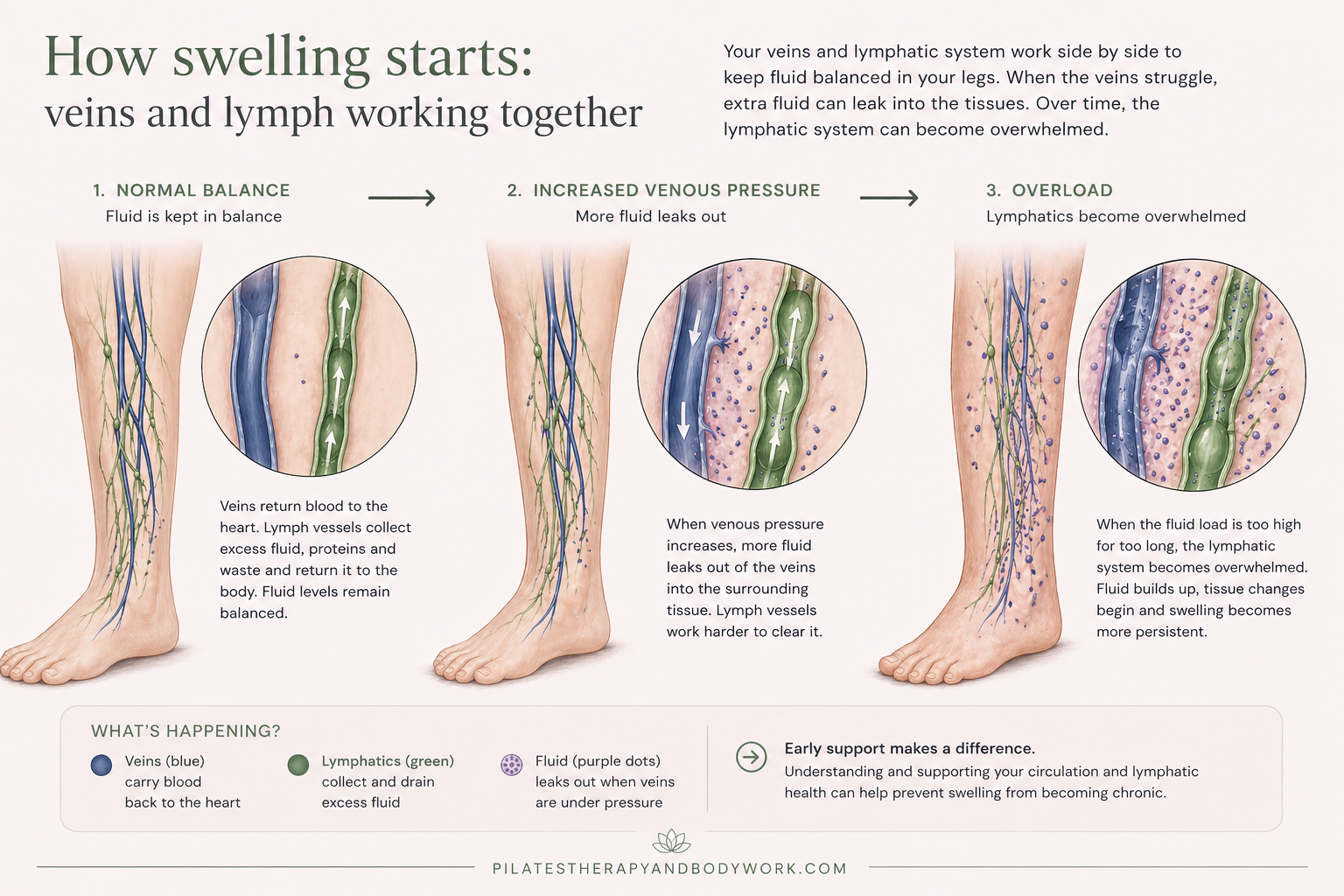
Your venous system and lymphatic system are closely linked.
When veins are under pressure (venous insufficiency), more fluid leaks out into the surrounding tissues.
At first, your lymphatic system steps in and works harder to clear it.
But over time:
- The fluid load increases
- The lymphatic system becomes overwhelmed
- Drainage becomes less efficient
- Swelling becomes more persistent
This is where swelling can shift from:
→ temporary and reversible
to
→ chronic and progressive
This is often referred to clinically as a combined or mixed oedema — where venous and lymphatic systems are both involved.
“How swelling starts: veins and lymph working together”
What actually changes in the tissue?
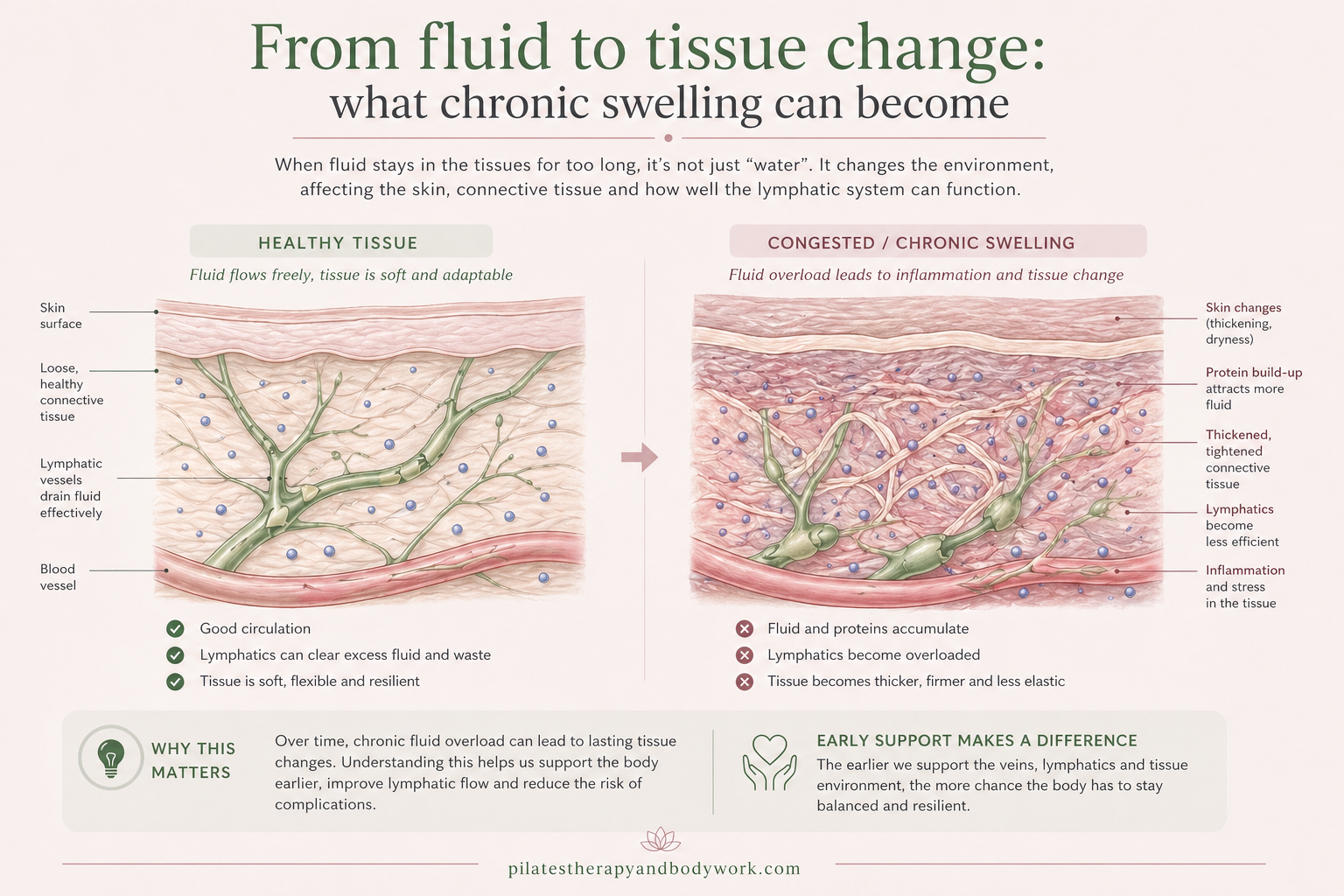
Swelling isn’t just water.
When fluid sits in the tissues for longer periods:
- Proteins begin to accumulate
- The immune system becomes more active
- Fibroblasts are stimulated
- Collagen starts to build up
Over time, the tissue can become:
- Thicker
- Firmer
- Less elastic
- More difficult to drain
This is why long-term swelling can feel very different from early swelling.
It’s also why early support matters.
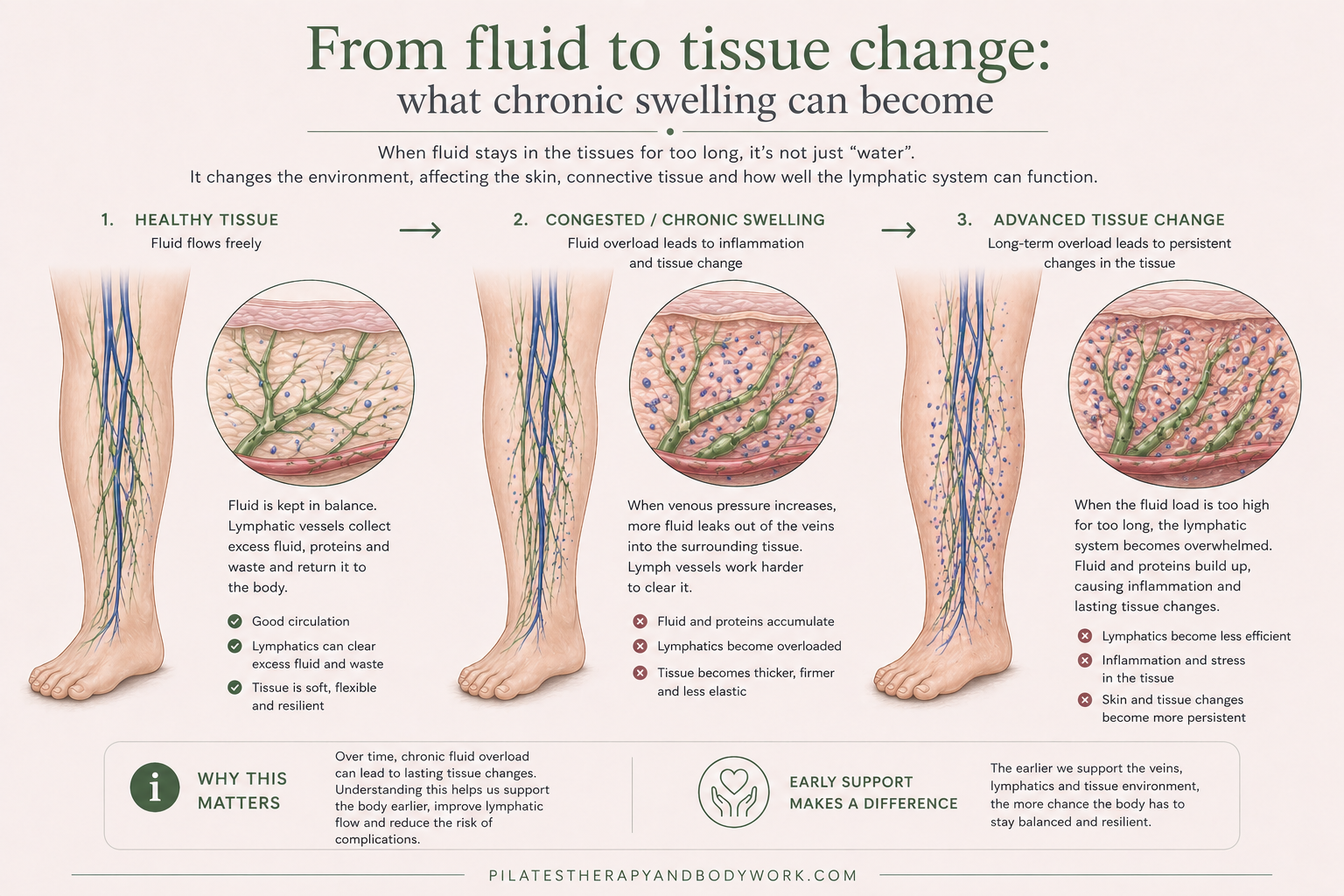
“From fluid to tissue change: what chronic swelling can become”
When does swelling become lymphoedema?
There isn’t always a clear “cut-off point”.
But swelling is more likely to be moving towards lymphoedema if:
- It no longer fully reduces overnight
- It feels heavier, tighter, or firmer
- One limb is noticeably different from the other
- Skin changes begin (dryness, thickening, colour change)
- You’ve had surgery, cancer treatment, or lymph node removal
- You’ve had long-standing venous issues
This is where understanding your body becomes more important than guessing.
Why this matters more than people think
Lymphoedema isn’t just about swelling.
If left unsupported, it can lead to:
- Increased risk of infection (such as cellulitis)
- Reduced mobility and confidence
- Progressive tissue changes
- Impact on daily comfort and energy
There is also growing recognition in UK research that early identification and management reduces long-term complications and healthcare costs.
What helps (and where to start)
This is where things often feel overwhelming — but they don’t need to be.
Support might include:
- Understanding what type of swelling you have
- Medical assessment when needed
- Compression (when appropriate and safe)
- Gentle, regular movement
- Breathing and posture work
- Skin care
- Specialist support such as Manual Lymphatic Drainage (MLD)
Not everything is needed for everyone — and it should never feel like a list of things you’ve “failed” to do.
It’s about building the right support around your body, at the right time.
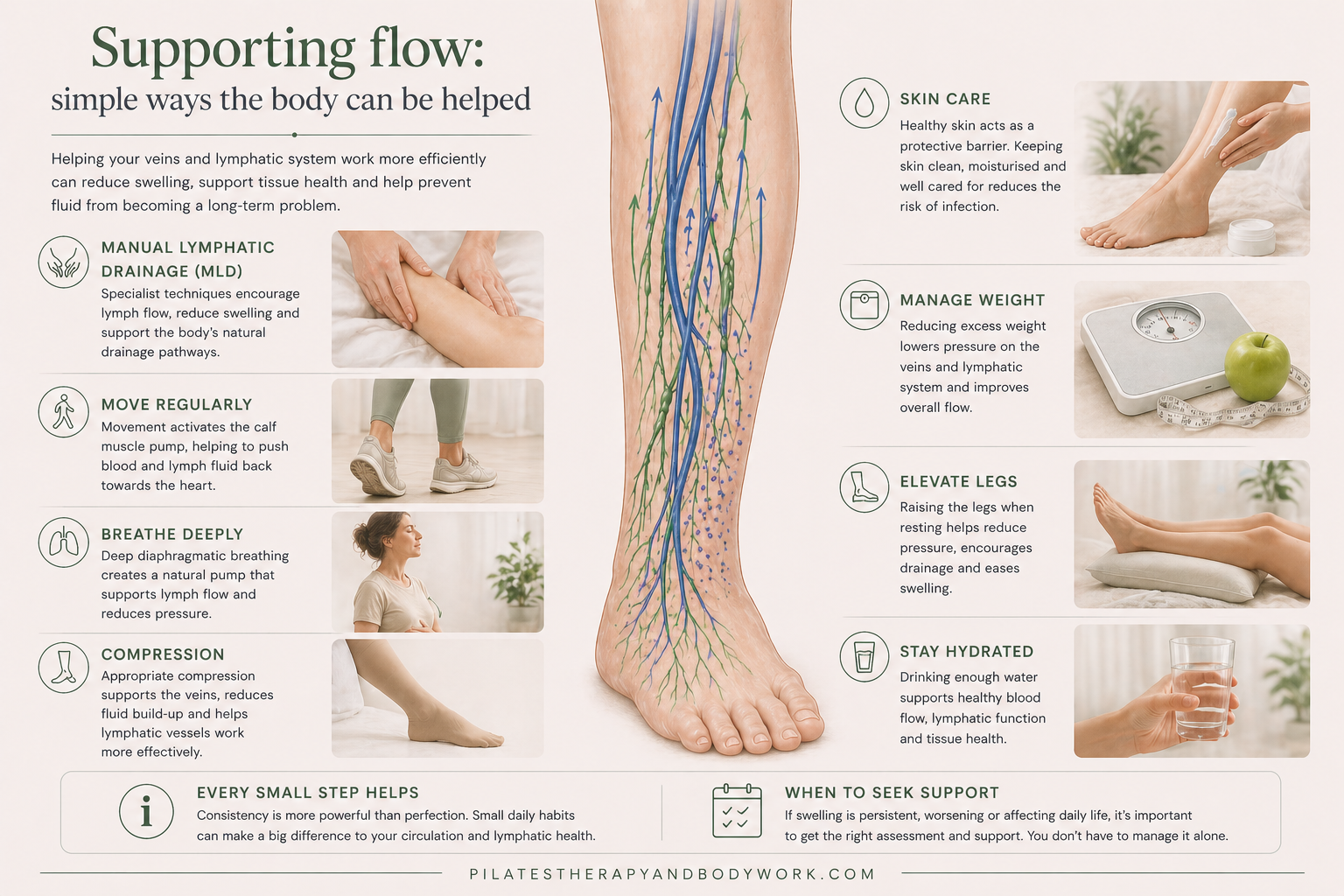
“Supporting flow: simple ways the body can be helped”
A quiet but important message
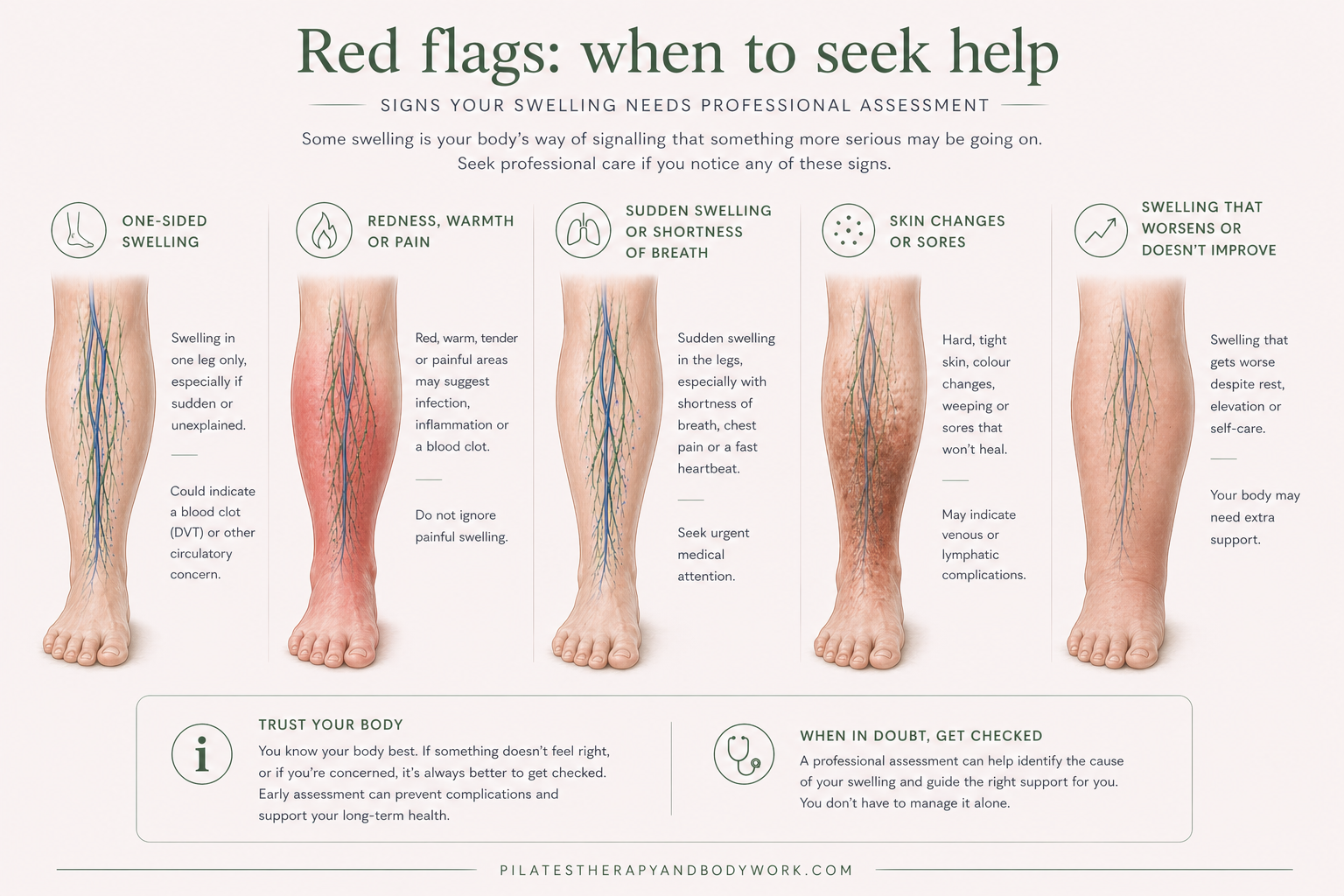
If your swelling:
- keeps returning
- is changing
- or just doesn’t feel quite right
…it’s worth exploring.
Not to diagnose yourself.
Not to worry.
But to understand what your body might be asking for.
If you’d like support
If you are based in Clacton-on-Sea, Bury St Edmunds, Essex or Suffolk, I offer gentle, specialist support for swelling, lymphatic health, and recovery after surgery or cancer treatment.
This includes:
- Manual Lymphatic Drainage (MLD)
- Reflexology
- Movement and rehabilitation support
Sometimes people come thinking it’s “just swelling” —
and leave with a much clearer understanding of what their body needs next.
Further reading