
Understanding fatigue, digestion, swelling, and rebuilding trust in your body after treatment
Start here — if this sounds like you:
- “My digestion hasn’t been the same since surgery or treatment”
- “I feel tired in a way that rest doesn’t fix”
- “My abdomen feels tight, swollen, or uncomfortable”
- “I don’t quite trust my body anymore”
You’re not imagining it.
And you’re not alone.
A quick reality check (UK context)
Bowel cancer is the 4th most common cancer in the UK, with around 42,000 people diagnosed each year.
Thanks to earlier detection and improved treatments, more people are living beyond it — which means more people are navigating what recovery actually looks like.
And recovery is not just “you’re fine now.”
It’s:
- digestion changes
- altered bowel habits
- fatigue
- scar tissue
- sometimes swelling or a feeling of heaviness
What actually changes in the body?
Let’s strip it back simply.
Bowel cancer treatment may include:
- surgery (often removing part of the bowel)
- chemotherapy
- sometimes radiotherapy
Each of these affects more than just the bowel.
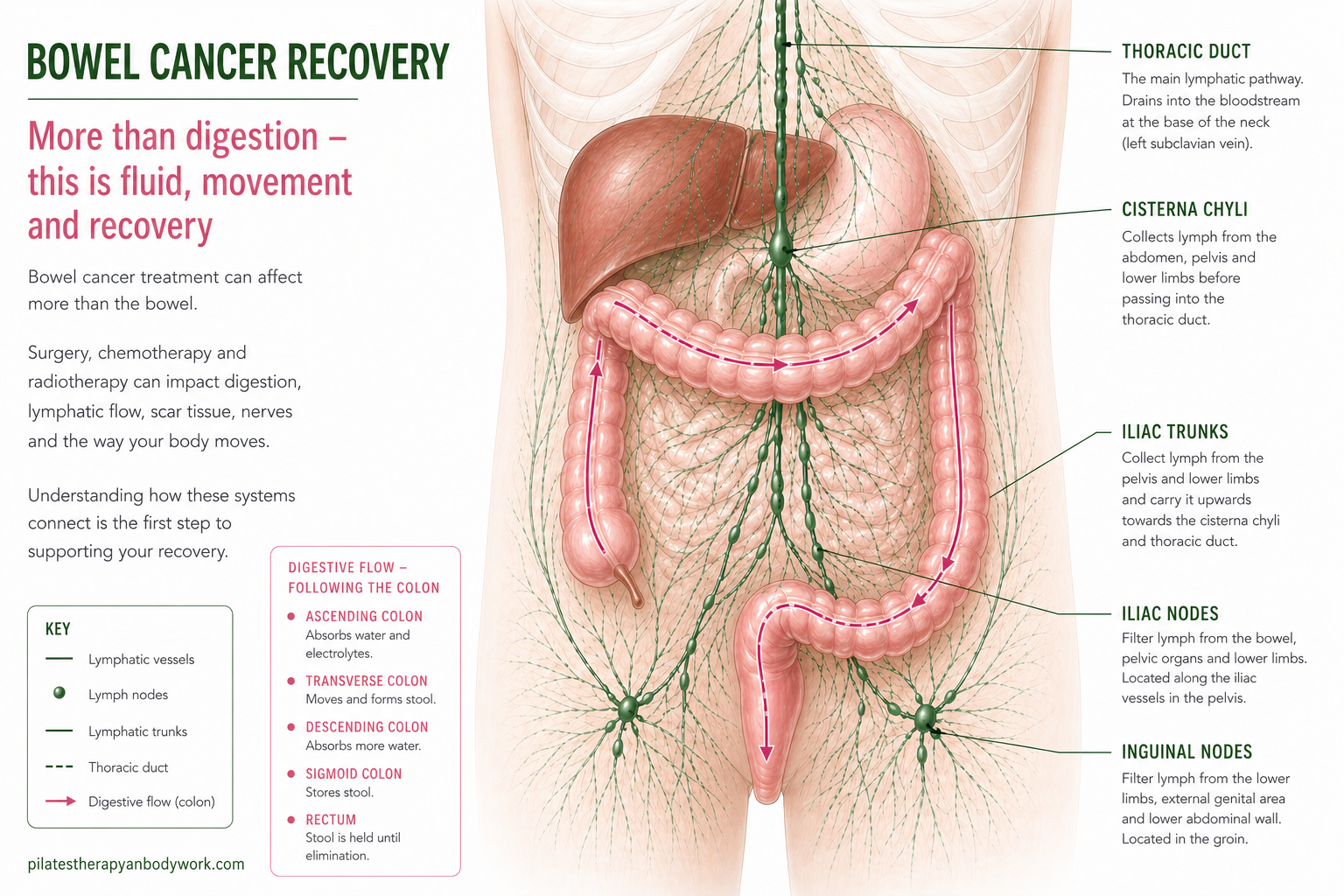
Digestion is not just digestion anymore
When part of the bowel is removed or altered, the system has to adapt.
This can lead to:
- urgency or frequency changes
- bloating
- unpredictable bowel habits
- sensitivity to certain foods
• What I often see in clinic:
People trying to “push through” or ignore this, when actually the body is asking for slower, more supported digestion.
The abdominal area becomes protective
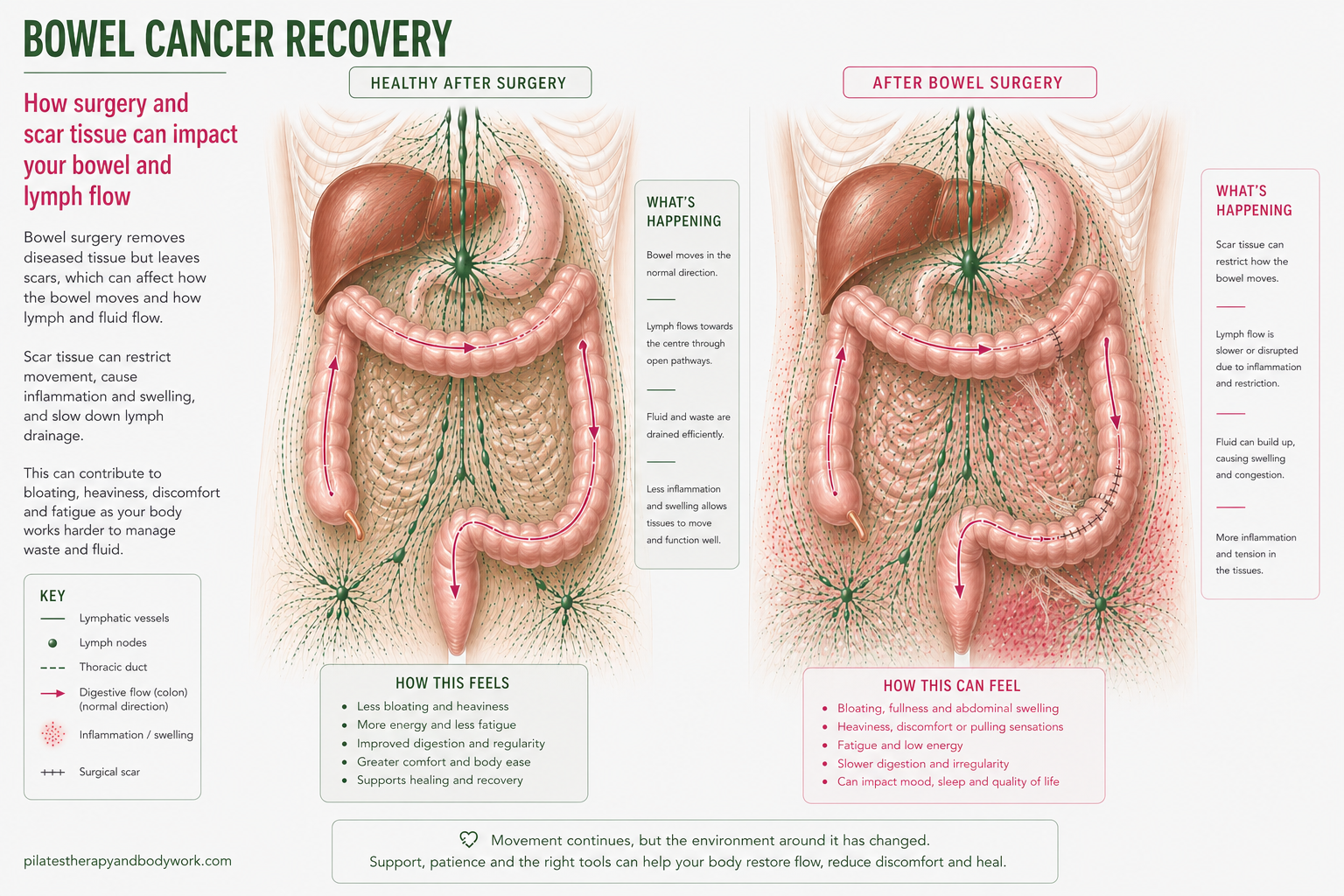
Surgery creates scar tissue.
That doesn’t just sit on the surface — it affects:
- fascia (connective tissue)
- lymphatic flow
- nerve signalling
This can feel like:
- tightness
- pulling
- reduced movement
- a sense that the area is “guarded”
• Connective tissue translation:
If the tissue can’t glide, fluid can’t move as easily either.
Where the lymphatic system comes in (this is the bit people aren’t told)
Your lymphatic system sits just under the skin and within the connective tissue.
It helps:
- move fluid
- clear waste
- support immune function
After bowel cancer treatment:
- lymph pathways may be disrupted
- abdominal movement is reduced
- inflammation can linger
This can lead to:
- subtle swelling (not always obvious lymphoedema)
- a feeling of heaviness or fullness
- slower recovery in the tissues
– This is why some people say:
“I just feel a bit puffy or stuck — but I can’t explain it.”
“When tissue can’t move, fluid struggles too”
Fatigue — it’s not just tiredness
Cancer-related fatigue is one of the most reported long-term effects.
Around 30–50% of people continue to experience fatigue months or years after treatment.
This fatigue:
- doesn’t resolve with rest
- is linked to inflammation, nervous system changes, and reduced physical capacity
- often improves with the right kind of movement — not more effort
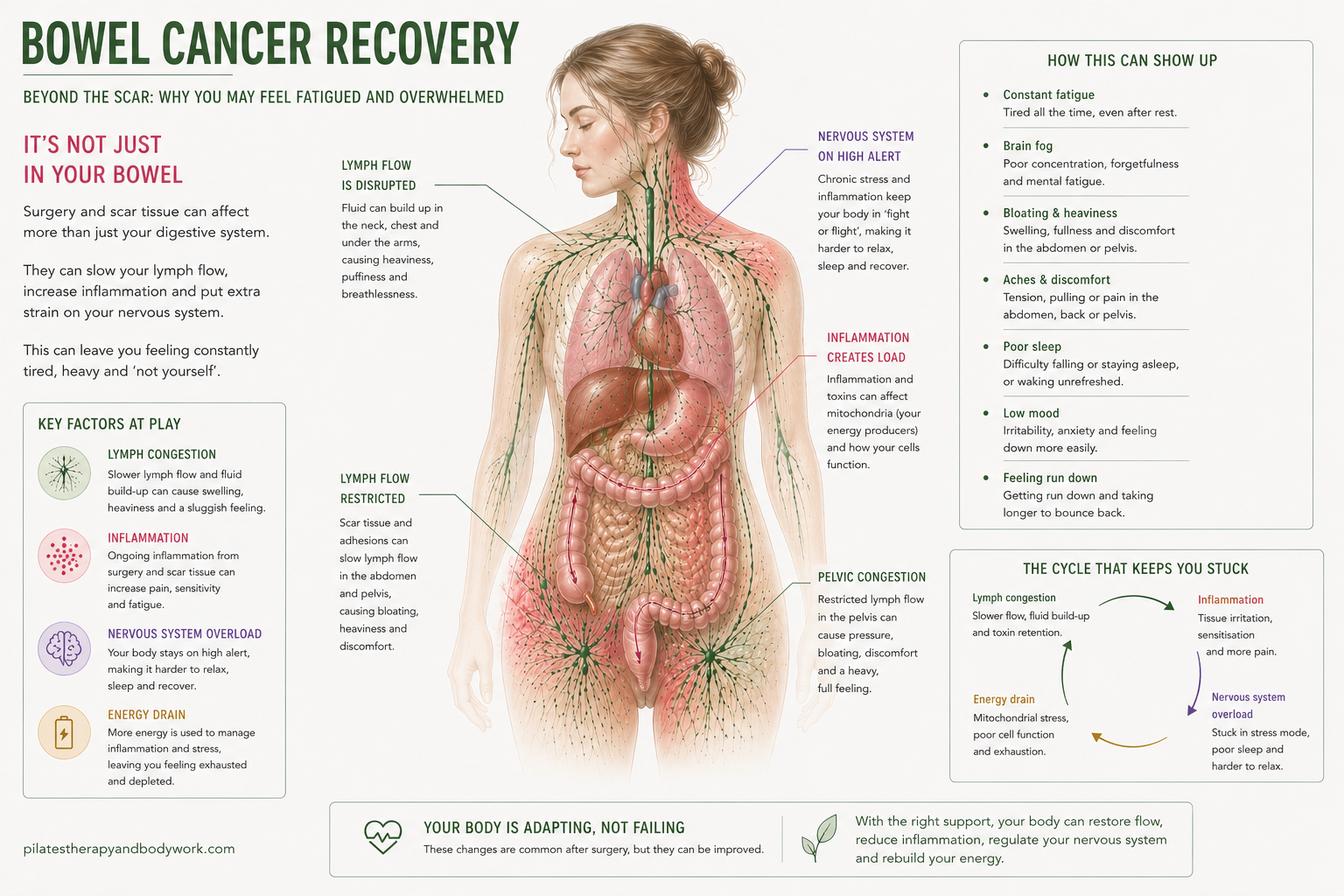
“Fatigue is not weakness — it’s a system under strain”
What actually helps
Not force.
Not pushing.
But supporting the systems that have been disrupted.
1. Gentle, consistent movement
This isn’t about fitness.
It’s about:
- encouraging lymphatic flow
- supporting digestion
- improving circulation
Research shows that regular, moderate movement:
- improves fatigue
- supports recovery
- reduces risk of recurrence in some cancer groups
– You could try Walx programme (modified nordic walking)
– You could try Cancer Rehab sessions
2. Breathing
The diaphragm sits right above the abdominal area.
When breathing is shallow:
- lymph flow reduces
- abdominal pressure changes
- digestion is affected
• Gentle breathing work can:
- stimulate lymphatic movement
- reduce tension
- support the gut
3. Manual Lymphatic Drainage (MLD)
This is not “just massage.”
It is:
- light, rhythmical, specific
- designed to redirect fluid
- supportive for post-surgical recovery
It can help:
- reduce that “heavy” feeling
- support tissue healing
- calm the nervous system
4. Scar and tissue support
Scar tissue is not just cosmetic.
Supporting it can:
- improve movement
- reduce pulling sensations
- help fluid move more freely
5. Reflexology
Through the feet, we can:
- support relaxation
- influence the nervous system
- gently encourage digestive balance
It’s not a replacement — but it’s a beautiful support alongside everything else.
A small but important note
If you notice:
- sudden swelling
- pain
- redness or heat
- unexplained changes in bowel habits
– This needs medical input first.
Recovery after bowel cancer is not one thing.
It’s not:
- just the surgery
- just the bowel
- just the fatigue
It’s a whole-body experience.
And often what’s needed is not more information —
but the right kind of support at the right time.
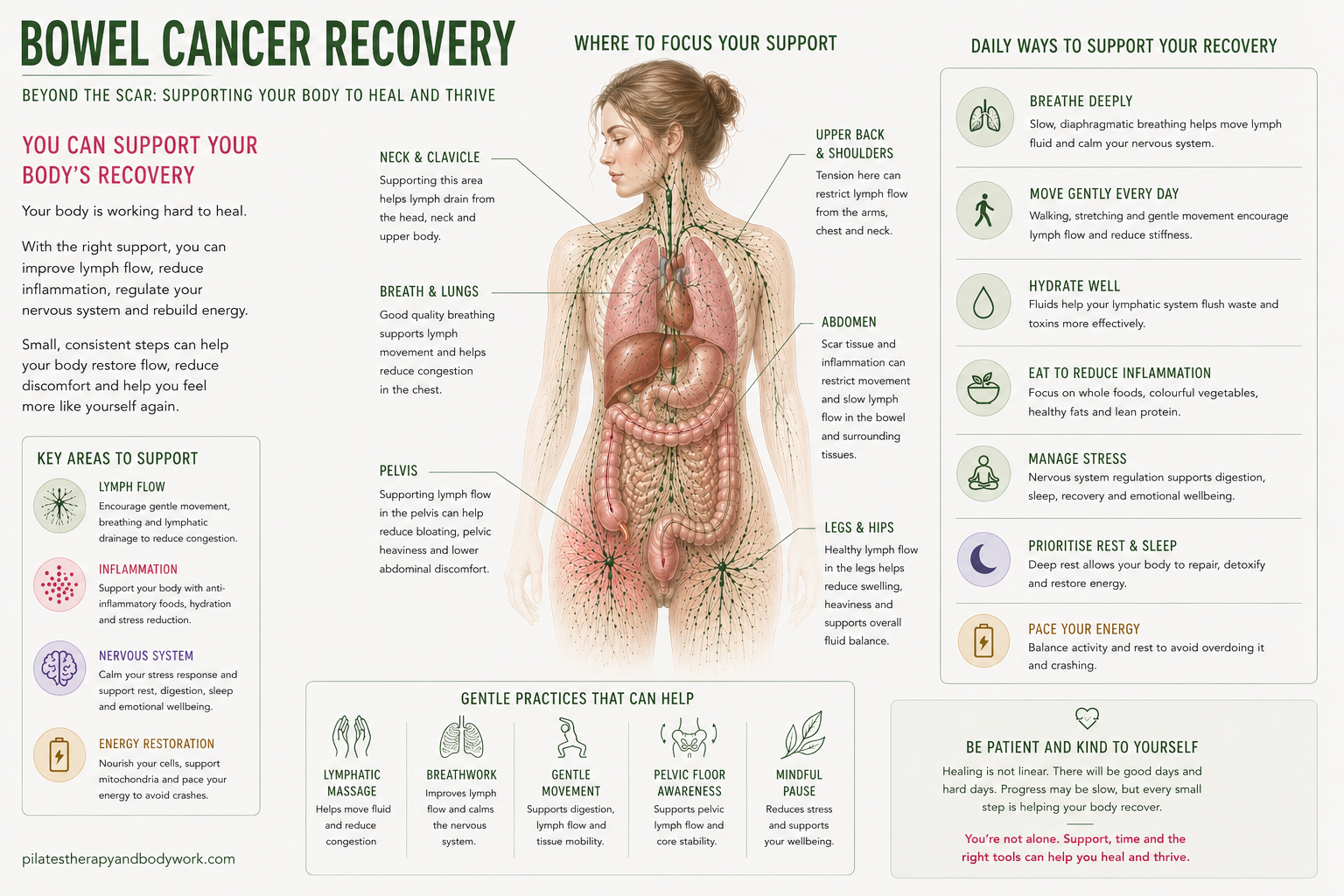
“Support, not force — helping the body do its job”
Please get in touch if you have questions or are unsure where to start
If this sounds like you, you don’t have to work it out alone.
I support people living with and beyond cancer through:
- Manual Lymphatic Drainage
- Reflexology
- gentle, structured movement
– Sessions available in Clacton-on-Sea, Bury St Edmunds, Essex and Suffolk
Or you can start gently with one of the resources here:
- [Understanding your lymphatic system]
- [Why does my swelling come and go?]
-
- Bowel Cancer UK (stats + patient info)
- NHS bowel cancer recovery guidance