
Why it’s not always “just a nerve problem” — and where Manual Lymphatic Drainage might help
Tingling.
Burning.
Pins and needles.
Numbness that doesn’t quite make sense.
Most people I see will say something like:
“I’ve been told it’s neuropathy… so it’s a nerve problem.”
And yes — that’s true.
But it’s not always the whole story.
Because what we’re starting to understand (both in research and in clinic) is this:
Sometimes it’s not just the nerve.
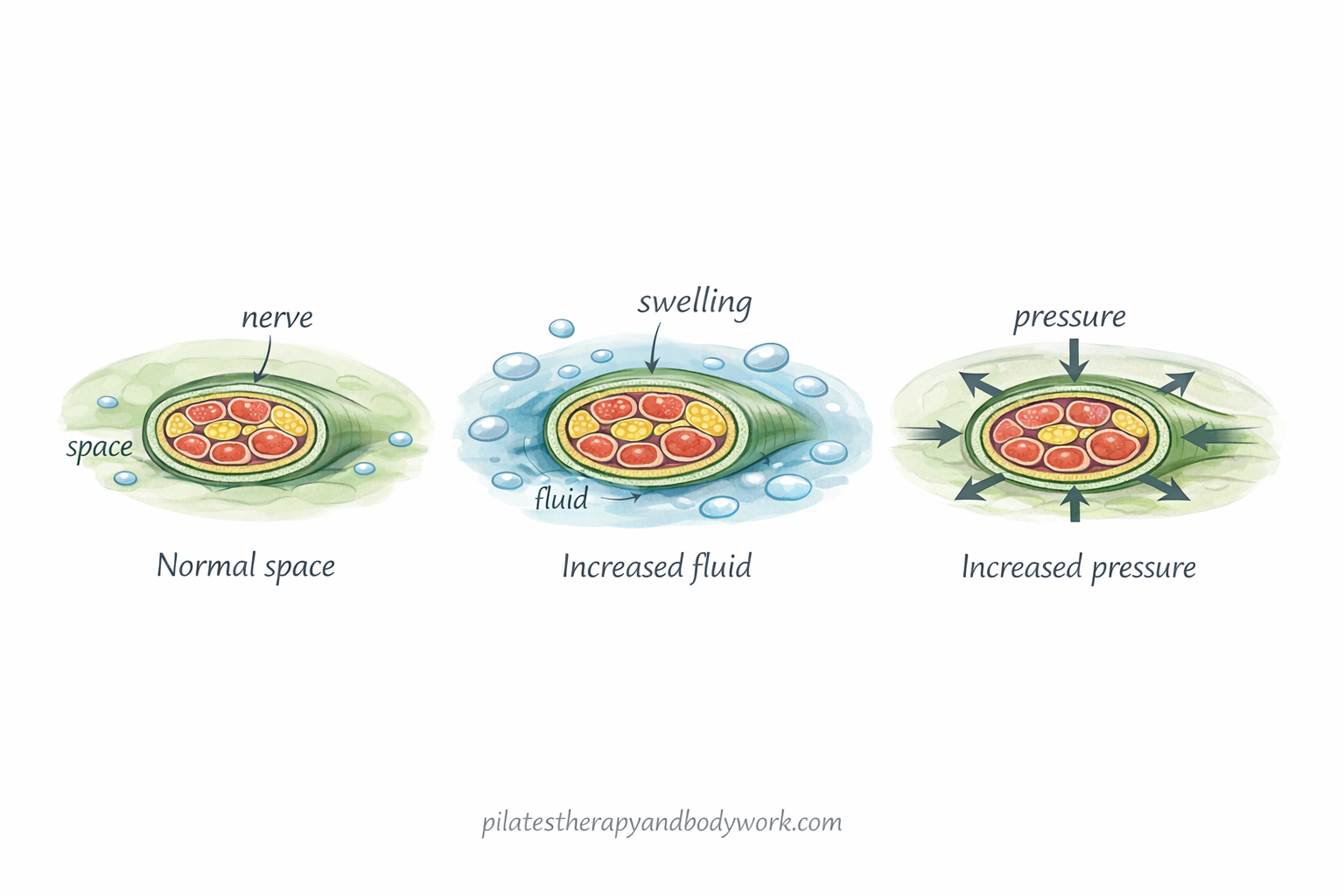
It’s the space the nerve is living in.
What do I mean by that?
A nerve doesn’t sit in isolation.
It moves through:
- connective tissue
- fluid spaces
- small blood vessels
- lymphatic pathways
It needs room to glide, space to breathe, and a healthy environment around it.
When that environment changes — even slightly — the nerve can start to behave differently.
So where does swelling come into this?
Swelling isn’t always obvious.
It might not look like classic lymphoedema.
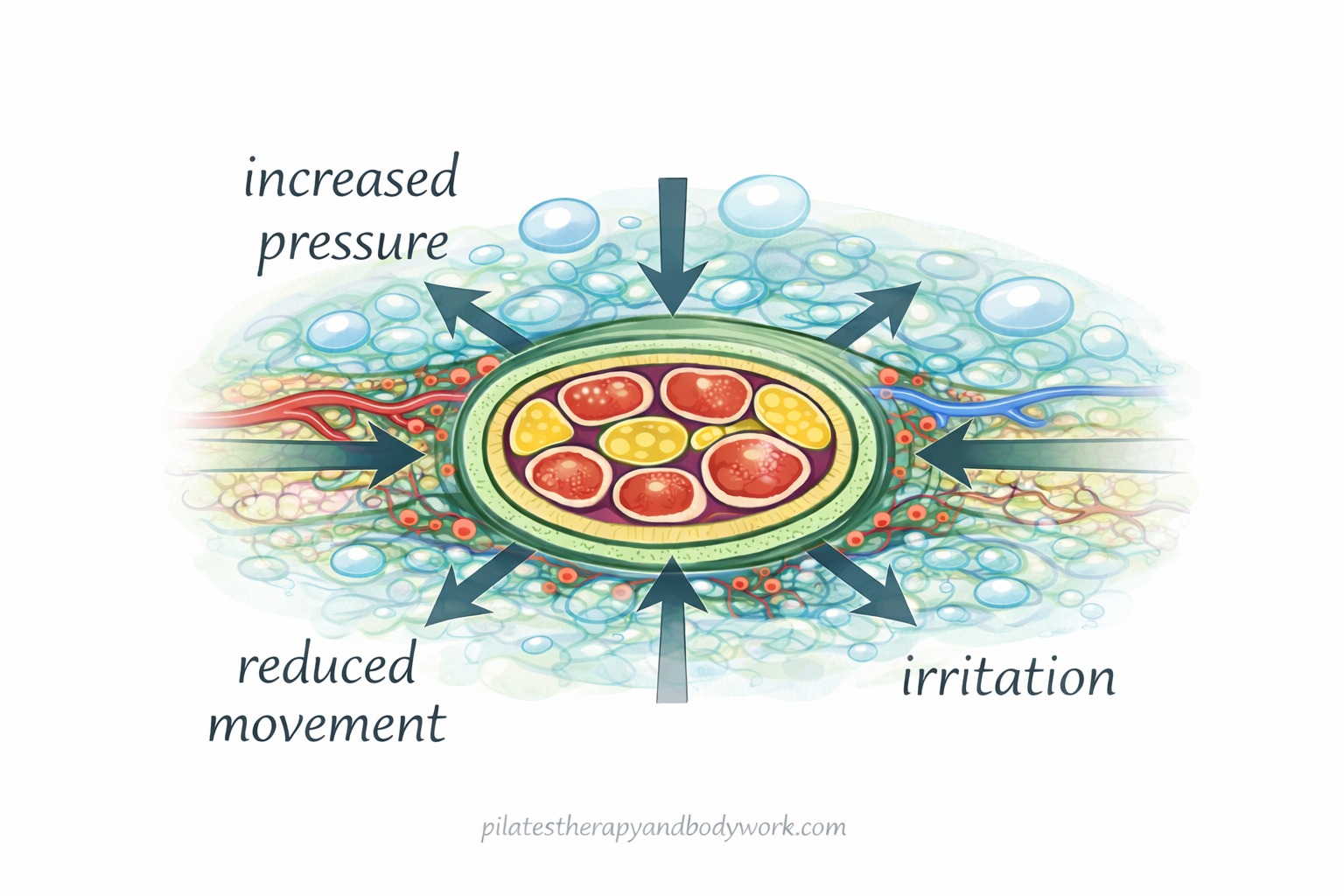
But even small changes in fluid can:
- increase local pressure
- reduce oxygen exchange
- alter how tissues slide and glide
- sensitise surrounding structures
And nerves are particularly sensitive to pressure.
Research in compression neuropathies (like carpal tunnel syndrome) shows that:
- increased pressure → reduces nerve conduction
- fluid build-up → contributes to nerve irritation
- reducing that pressure → can improve symptoms
– A recent 2025 systematic review and meta-analysis found that Manual Lymphatic Drainage (MLD) improved:
- pain
- nerve conduction
- and reduced swelling around the nerve
Recent research 2025

This is the bit I find interesting
MLD is not treating the nerve directly.
It’s not “fixing” neuropathy.
What it might be doing is:
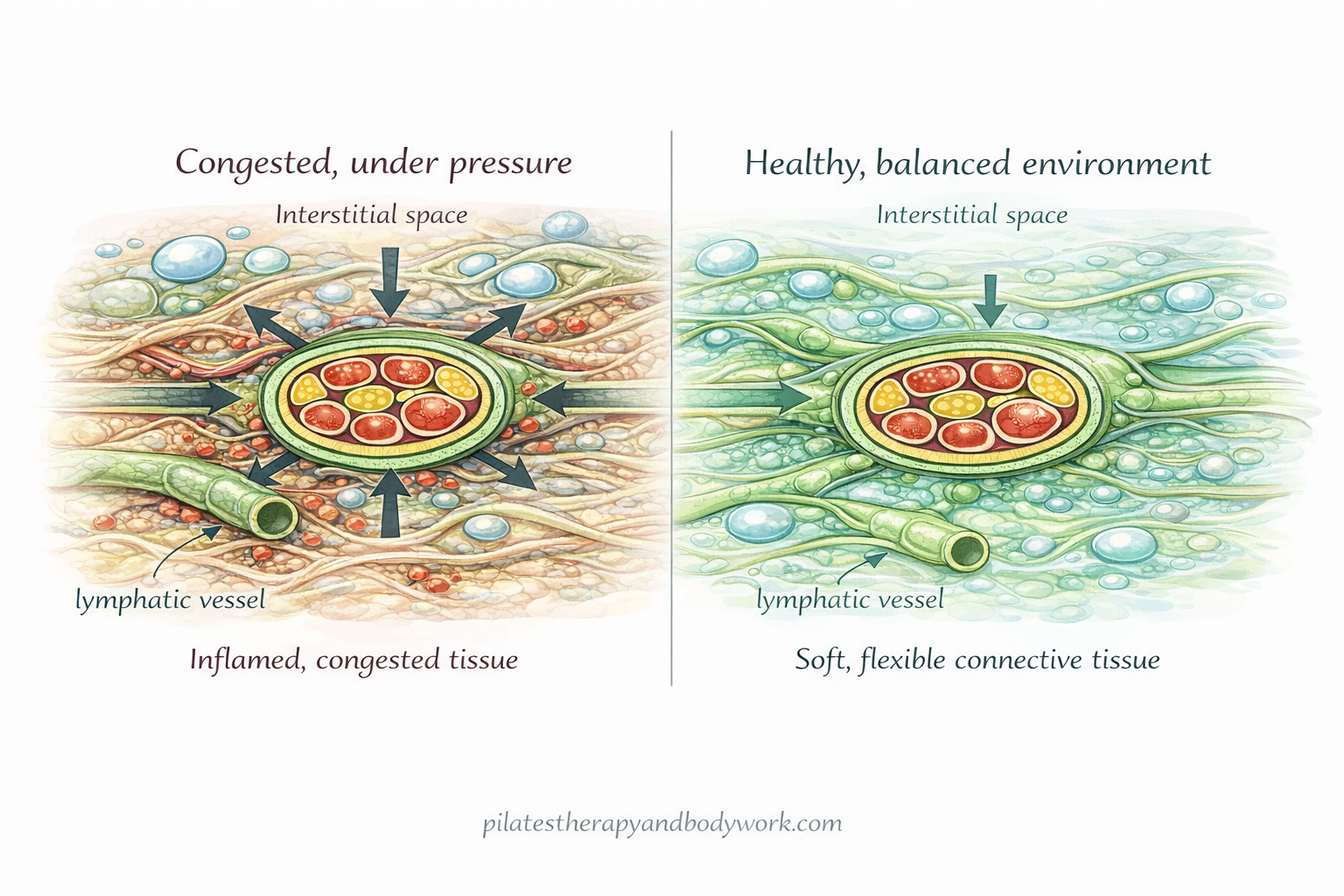
- reducing fluid in the surrounding tissues
- improving microcirculation
- changing pressure gradients
- calming the inflammatory environment
– In some studies, even the cross-sectional size of the nerve reduced after treatment — suggesting less pressure within that space.
That’s quite a shift in how we think about things.
Where I see this in clinic (this will resonate)
This isn’t just theory.
I see this pattern a lot in people who have:
- had breast cancer treatment
- swelling in the arm or chest
- post-surgical scarring
- heaviness alongside tingling or numbness
- “it feels tight and weird, not just numb”
read my blog on:
“When swelling is not just swelling”
Because often… it isn’t.
And this is where it can get missed
If we only look at the nerve:
We might say:
- “It’s damaged”
- “It’s neuropathy”
- “You’ll just have to manage it”
But if we look at the environment:
We start asking:
- Is there fluid sitting here?
- Is there pressure?
- Is there restriction from scar tissue?
- Is movement helping or making it worse?
That opens up options.
So where does MLD fit in?
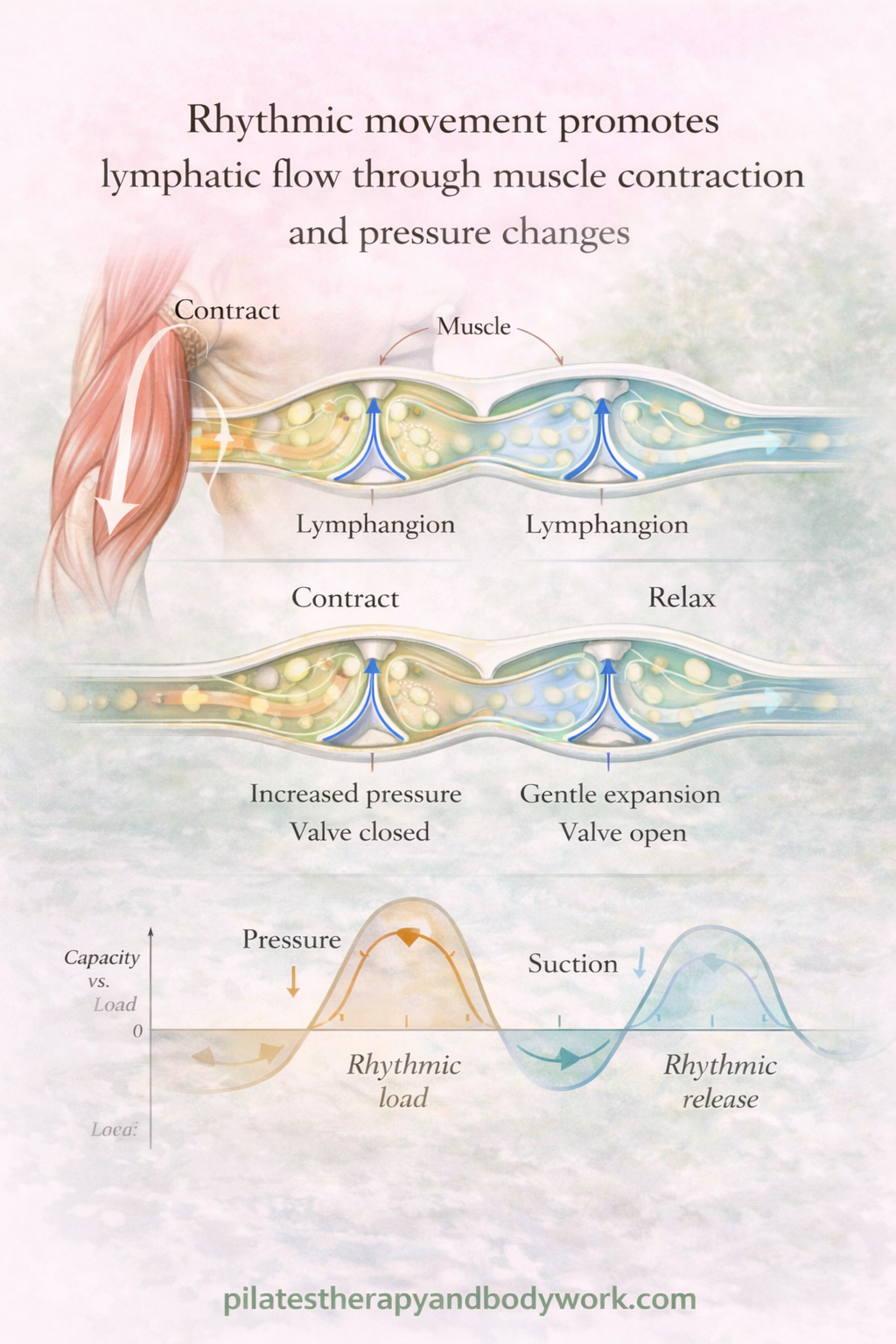
Manual Lymphatic Drainage is designed to:
- support fluid movement
- reduce congestion
- improve tissue quality
- create space
Not forcefully.
Not aggressively.
But rhythmically and gently.
And when you combine that with:
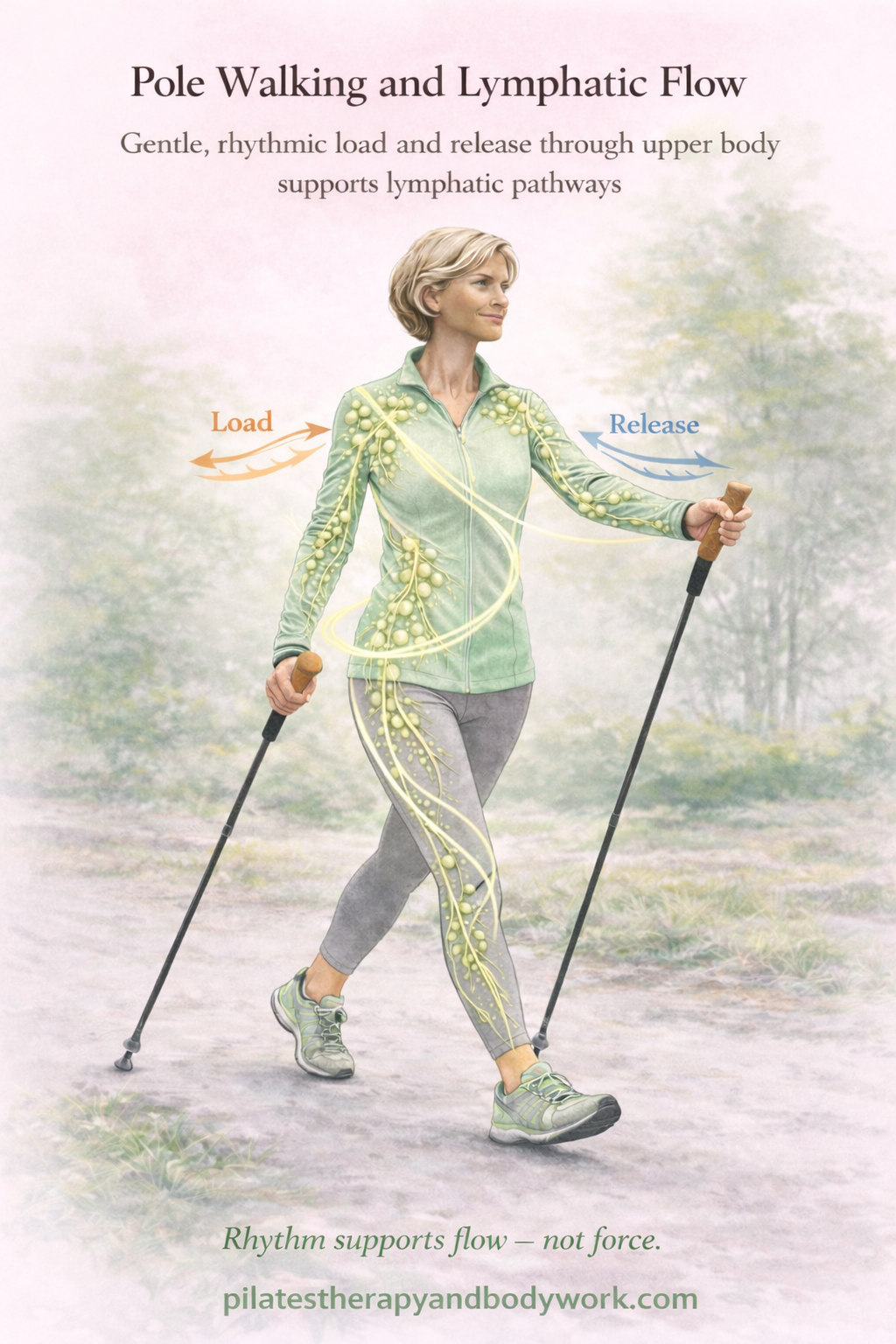
- movement (like WALX or guided rehab)
- breathing
- pacing
- sometimes compression
You start to change the environment the nerve is living in
Important — this is not a cure
I think this matters to say clearly.
MLD:
- does not repair damaged nerves
- does not replace medical care
- is not a standalone solution
The research is still developing.
Some studies are small.
Protocols vary.
And results aren’t always consistent across all outcomes.
– NICE also highlights that evidence for MLD alone in lymphoedema management is still considered low certainty.
But…
That doesn’t mean it’s not useful.
It means we use it thoughtfully.
Where this leaves us
What we can say — honestly — is:
- swelling and fluid can affect nerve function
- pressure matters
- the tissue environment matters
- MLD may help improve that environment
And for some people…
That’s enough to change how things feel.
Sometimes it’s not about fixing the nerve.
Sometimes it’s about giving it
a little more space,
a little less pressure,
and a better environment to work in.
You can find me
If you’re experiencing neuropathy alongside heaviness, swelling, or tightness — it might be worth looking beyond the nerve alone.
I offer Manual Lymphatic Drainage, reflexology, and specialist movement sessions in:
• Clacton-on-Sea
• Bury St Edmunds
• Essex & Suffolk
You can explore sessions or get in touch here:
What is MLD