
If you’ve ever felt a tender lump in your neck, armpit, or groin, you might have heard someone say:
“Your lymph nodes are clogged.”
It’s a word that’s used all the time.
It makes sense.
It feels relatable.
It gives people something to picture.
But here’s the truth:
– Lymph nodes don’t clog like pipes.
So what are lymph nodes actually doing?
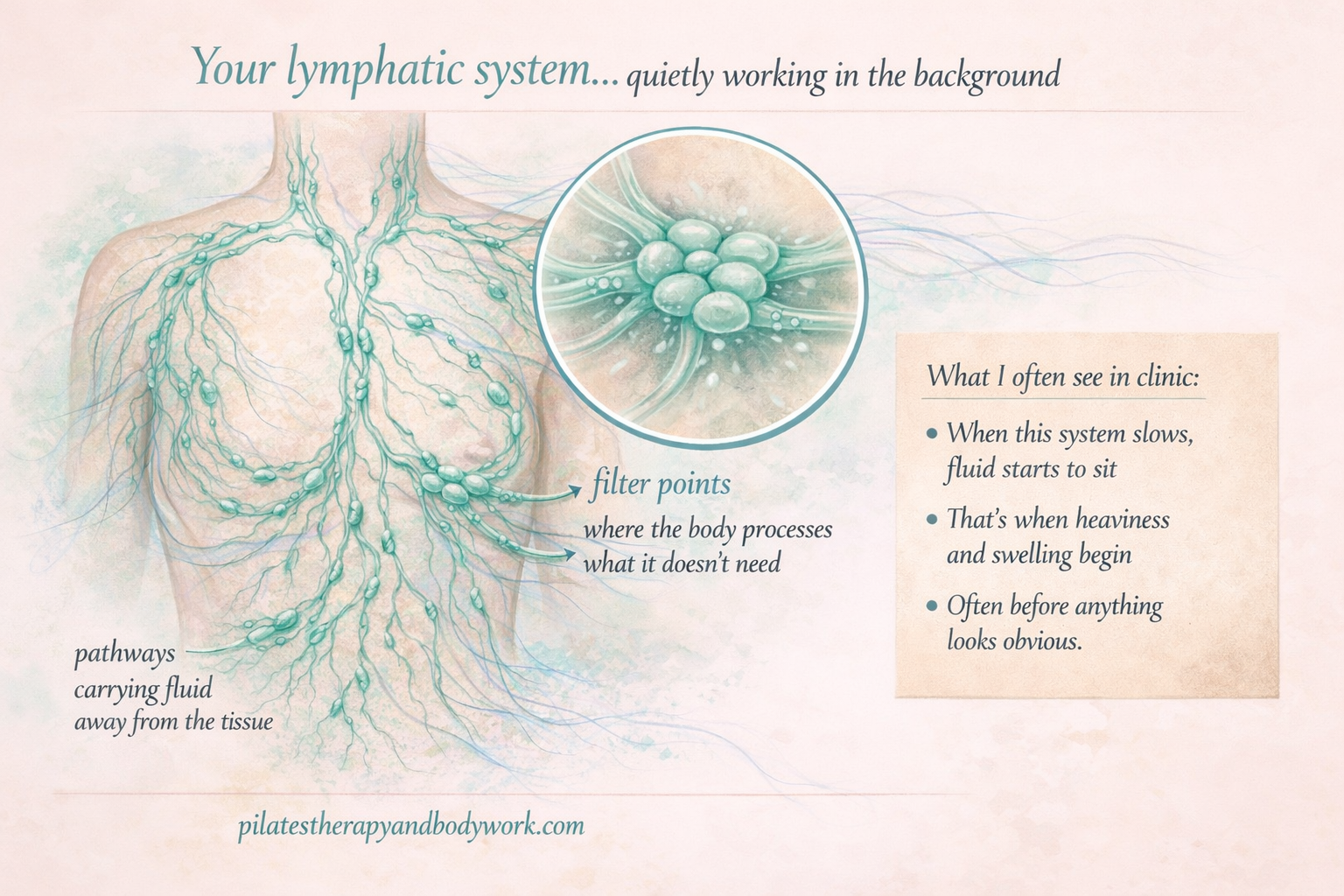
Your lymph nodes are not passive filters sitting there waiting to block up.
They are active, intelligent immune organs.
Their role is to:
- filter lymphatic fluid
- detect bacteria, viruses, and abnormal cells
- activate an immune response when needed
At any given moment, your lymphatic system is moving around 2–3 litres of fluid per day through this network
The myth: “clogged lymph nodes”
When people say “clogged”, they’re usually describing:
- swelling
- tenderness
- a feeling of fullness or pressure
But what they imagine is:
• something blocked, stuck, or backed up
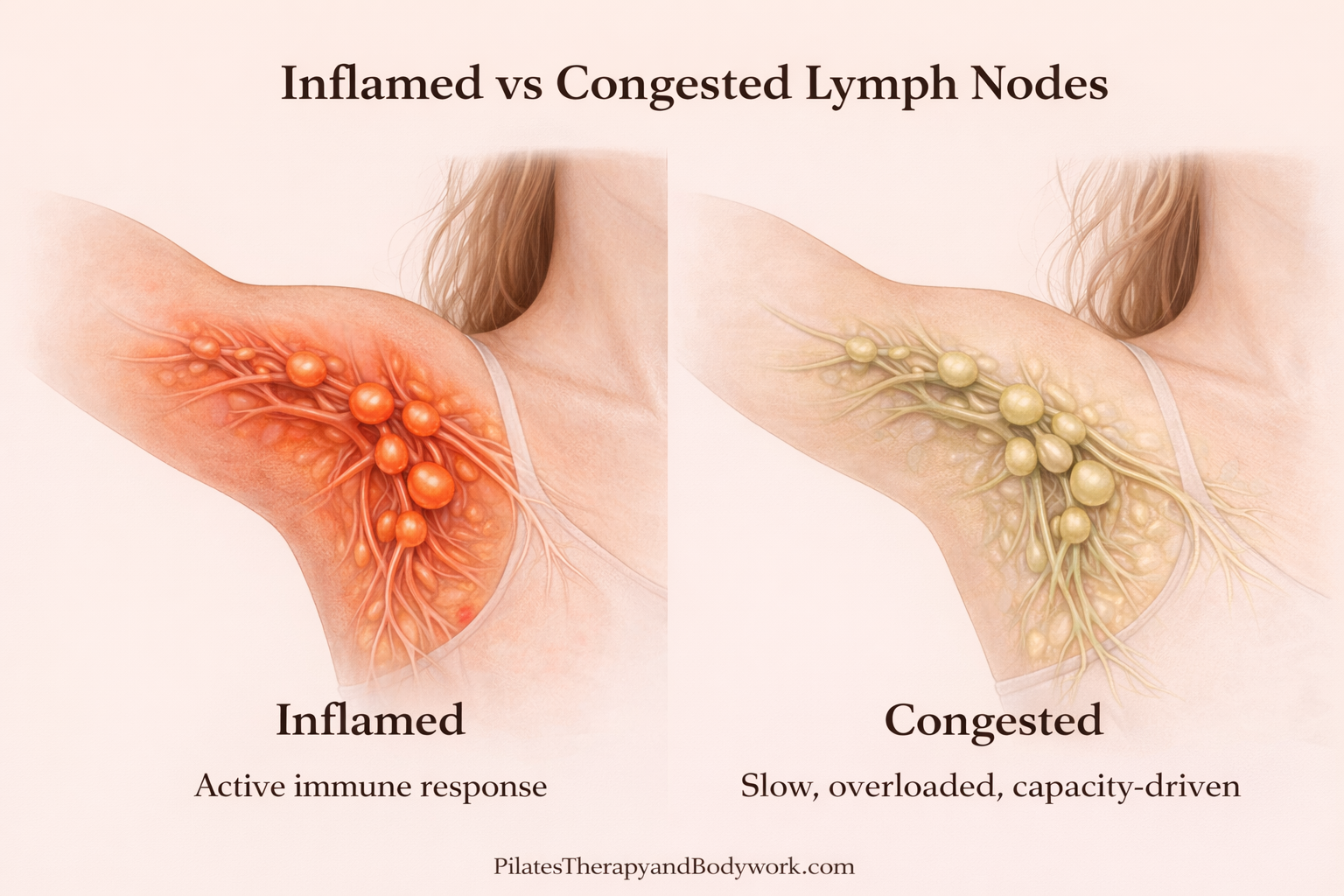
The truth: it’s usually inflammation or increased load
In most cases, a swollen lymph node is:
• doing its job
It has:
- detected a threat (infection, inflammation, injury)
- increased immune activity
- filled with immune cells
This is why lymph nodes often become:
- enlarged
- tender
- temporarily more noticeable
For example:
- around 90% of enlarged lymph nodes are linked to benign causes, most commonly infection
- upper respiratory infections are one of the most frequent triggers
That swelling is not failure.
• It’s function.
A bit of evidence
- Lymph nodes can increase in size due to lymphocyte proliferation during immune response
- Acute inflammation involves increased blood flow and vascular permeability (classic inflammatory cascade)
– This is not something to “drain away aggressively”
It’s something to respect and monitor
- Lymphoedema is estimated to affect up to 1 in 6 people globally in some form
- After breast cancer treatment, risk can range from 20–40% depending on intervention type
Why the underarm (axilla) matters so much
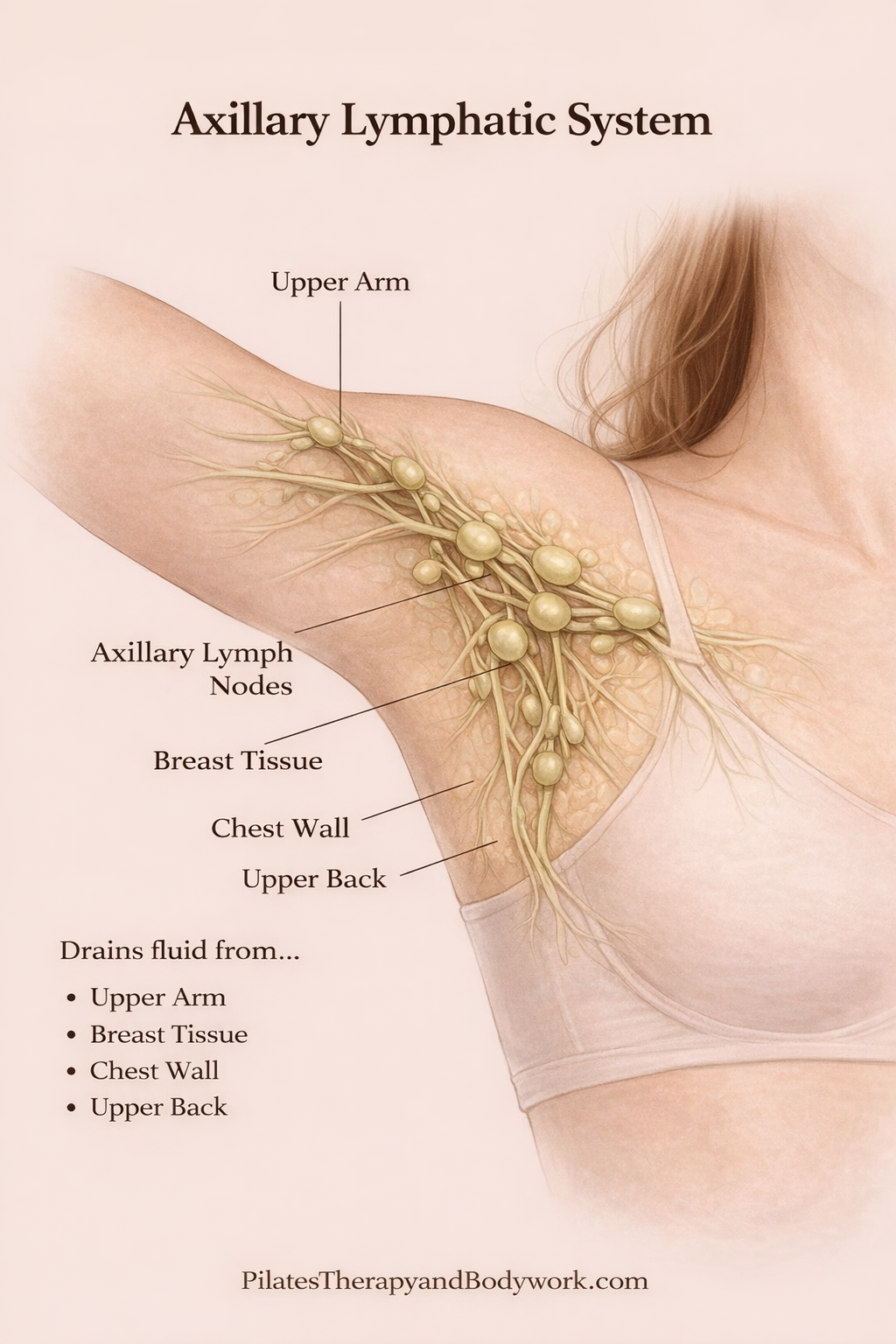
The axillary lymph nodes are a major drainage hub.
They manage fluid from:
- Arm
- Breast
- Chest wall
- Upper back
When it’s not just a normal response
This is where the “clogged” idea can actually become unhelpful.
Because not all swelling means the same thing.
There is a difference between:
1. Temporary immune response
- Comes on quickly
- Often tender
- Settles as the body recovers
2. Persistent or overloaded lymphatic system
- Swelling that lingers
- Heaviness, tightness, or fluid build-up
- May be linked to surgery, cancer treatment, or reduced lymphatic capacity
3. Something that needs medical review
- Nodes that are hard, fixed, or growing
- Unexplained swelling lasting weeks
- Accompanied by other symptoms
– This is why language matters.
Because:
If we call everything “clogged”, we miss the differences that guide the right response.
Why this matters more than you think
When people believe their lymph nodes are “clogged”, they often think:
- they need to “flush” the system
- they’ve done something wrong
- their body isn’t working properly
But the reality is:
• Your body is usually responding exactly as it should
Or…
• It’s asking for support in a very specific way
Not a generic one.
A more helpful way to think about it
Instead of:
– “My lymph nodes are clogged”
Try:
– “My lymphatic system is responding or under load”
That small shift changes everything:
- less fear
- more understanding
- better decisions about what to do next
So what actually helps?
Support depends on why the node is swollen.
But in general, your lymphatic system responds well to:
- gentle, regular movement (this is one of the main drivers of lymph flow)
- breathing (your diaphragm acts like a pump)
- hydration
- skin care and tissue health
- appropriate hands-on support when needed
The lymphatic system doesn’t need forcing.
It responds to rhythm, pressure changes, and consistency

Bringing this back to real life
In clinic, I don’t see “clogged nodes”.
I see:
- bodies responding
- systems under pressure
- people trying to make sense of mixed messages
And often, what people need most is not a fix…
• but a clearer understanding of what their body is actually doing
Your lymph nodes are not failing you.
They are:
- reacting
- adapting
- protecting
If you’re unsure what your swelling means
If you’re noticing:
- persistent swelling
- heaviness or tightness
- changes after surgery or treatment
It’s worth getting guidance.
I work with people navigating:
- lymphatic health
- cancer recovery
- swelling and tissue changes
Clinics in Clacton-on-Sea and Bury St Edmunds (Essex & Suffolk)
or feel free to reach out for a conversation if you’re not sure where to start.
Using:
Further reading
- NHS lymphoedema guidance
- Macmillan Cancer Support resources