— It’s Not Just About “Tiring Yourself Out”
This morning I saw a post from Jo in my women’s networking group talking about how exercise had helped her anxiety and improved her sleep.
And she’s absolutely right.
But it made me pause…
because it’s rarely just one thing.
It’s not just “exercise helps sleep.”
It’s:
- your nervous system
- your hormones
- your lymphatic system
- your inflammation levels
- your recovery capacity
All quietly responding in the background.
So I thought I’d use that post as a starting point…
and gently unpack what’s actually going on underneath.
We’ve all heard it:
“Exercise helps you sleep.”
And it does.
But not because you’ve “worn yourself out.”
Research shows regular exercise improves sleep quality, reduces insomnia symptoms and helps you fall asleep more easily.
The impact of exercise on sleep and sleep disorders
In menopausal women, aerobic exercise has also been shown to improve sleep disturbances:
The effect of aerobic excercise on sleep disorder in menopausal women: a systematic review and meta-analysis
What’s actually happening?
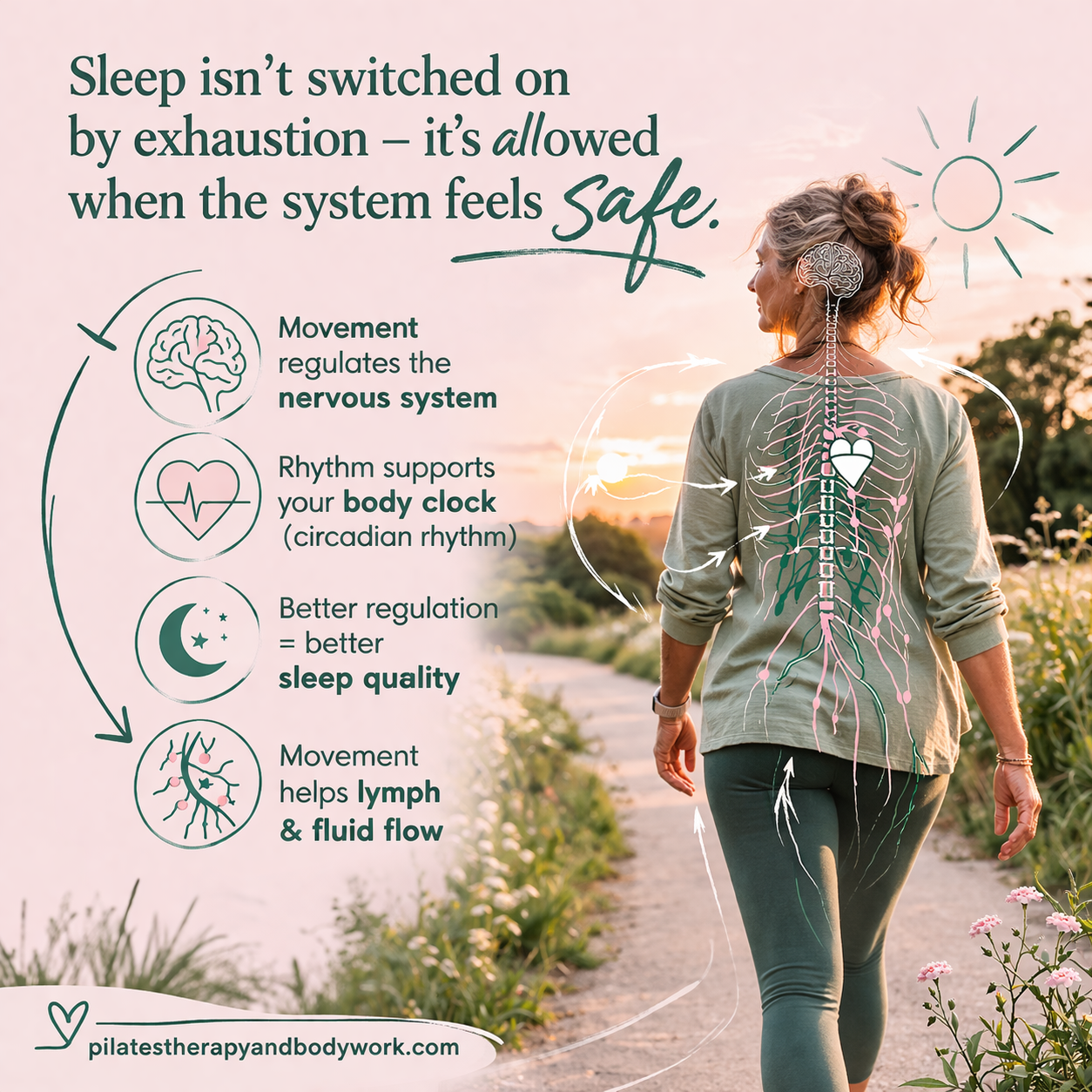
- Your circadian rhythm stabilises
- Sleep pressure builds naturally
- Your nervous system regulates more effectively
It’s not exhaustion.
It’s regulation.
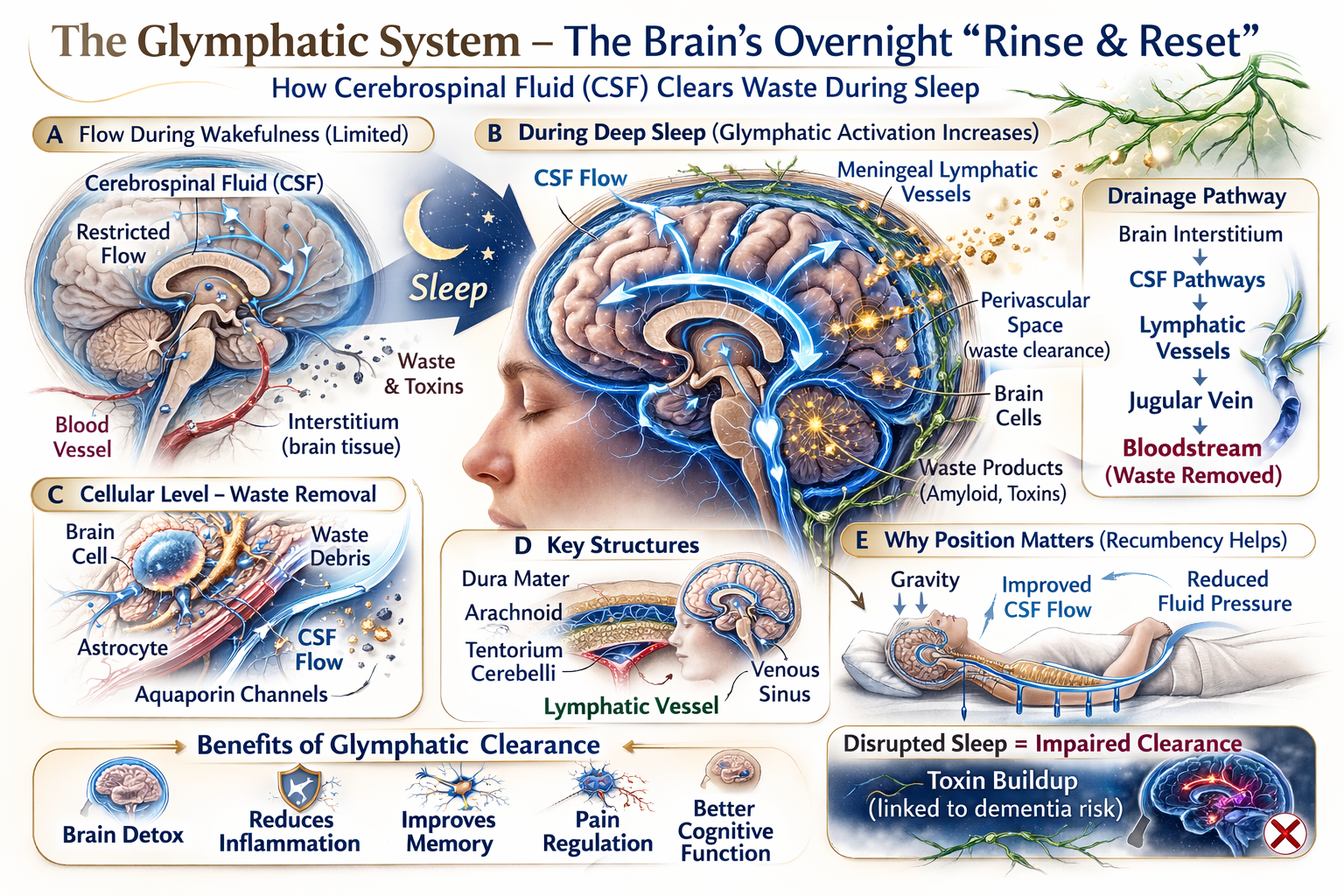
If you want to go deeper into what happens overnight, this links nicely to my blog on sleep and recovery:
• Glymphatic / sleep blog
Anxiety Lives in the Body (Not Just the Mind)
“Anxiety often isn’t something to think away — it’s something the body needs to move through.”
Jo mentioned anxiety — and this is where I see the real shift in clinic.
Because anxiety isn’t always thoughts.
Sometimes it’s:
- energy that hasn’t discharged
- a body that hasn’t moved
- a system sitting slightly “on edge” all day
Exercise gives that somewhere to go.
There’s strong evidence that exercise reduces anxiety and improves mood:
• Mechanisms of exercise against anxiety disorder
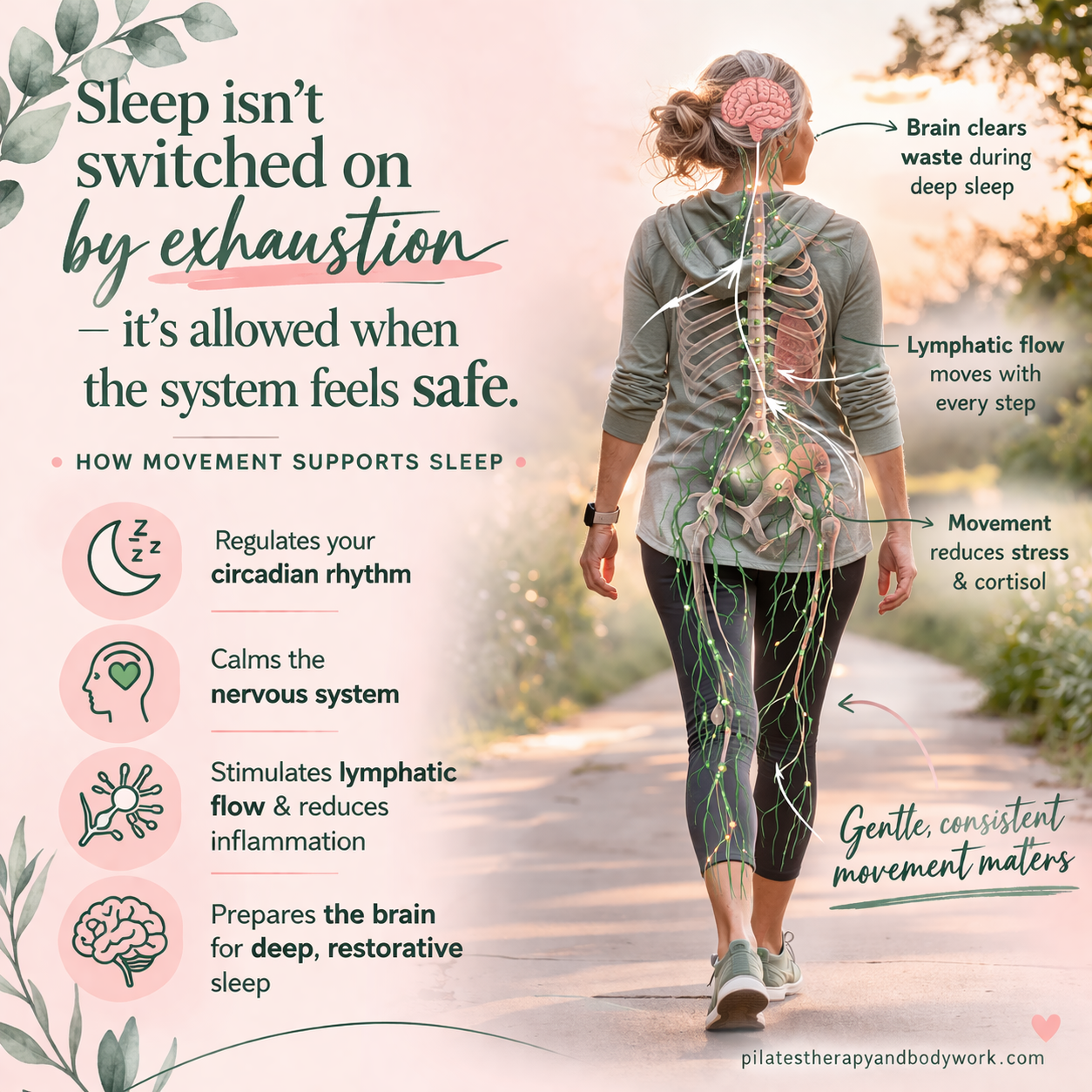
It also helps regulate cortisol — your stress hormone — which directly affects sleep:
• The effect of physical activity on cortisol and sleep
And this is where something like WALX walking fits beautifully.
It’s not about fitness.
It’s about rhythm, repetition and support.
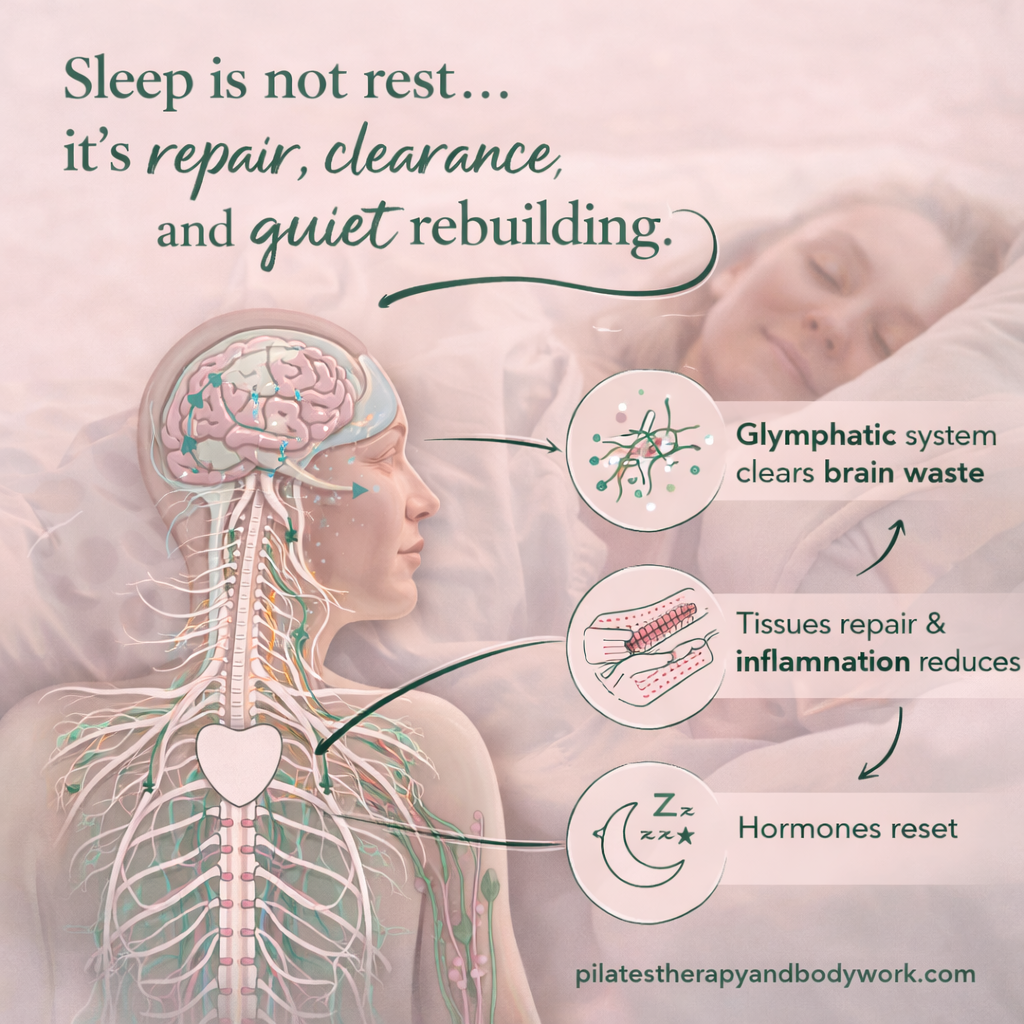
“Sleep is not rest… it’s repair, clearance and quiet rebuilding.”
Sleep isn’t passive.
It’s when:
- your brain clears waste (glymphatic system)
- your tissues repair
- your hormones reset
Poor sleep has been linked to increased inflammation, reduced recovery and higher risk of chronic conditions.
This is why exercise matters…
Because what you do in the day sets up what your body can do at night.
Movement, Inflammation & The Lymphatic System
This is the bit I care deeply about.
Because movement isn’t just muscles.
It’s fluid.
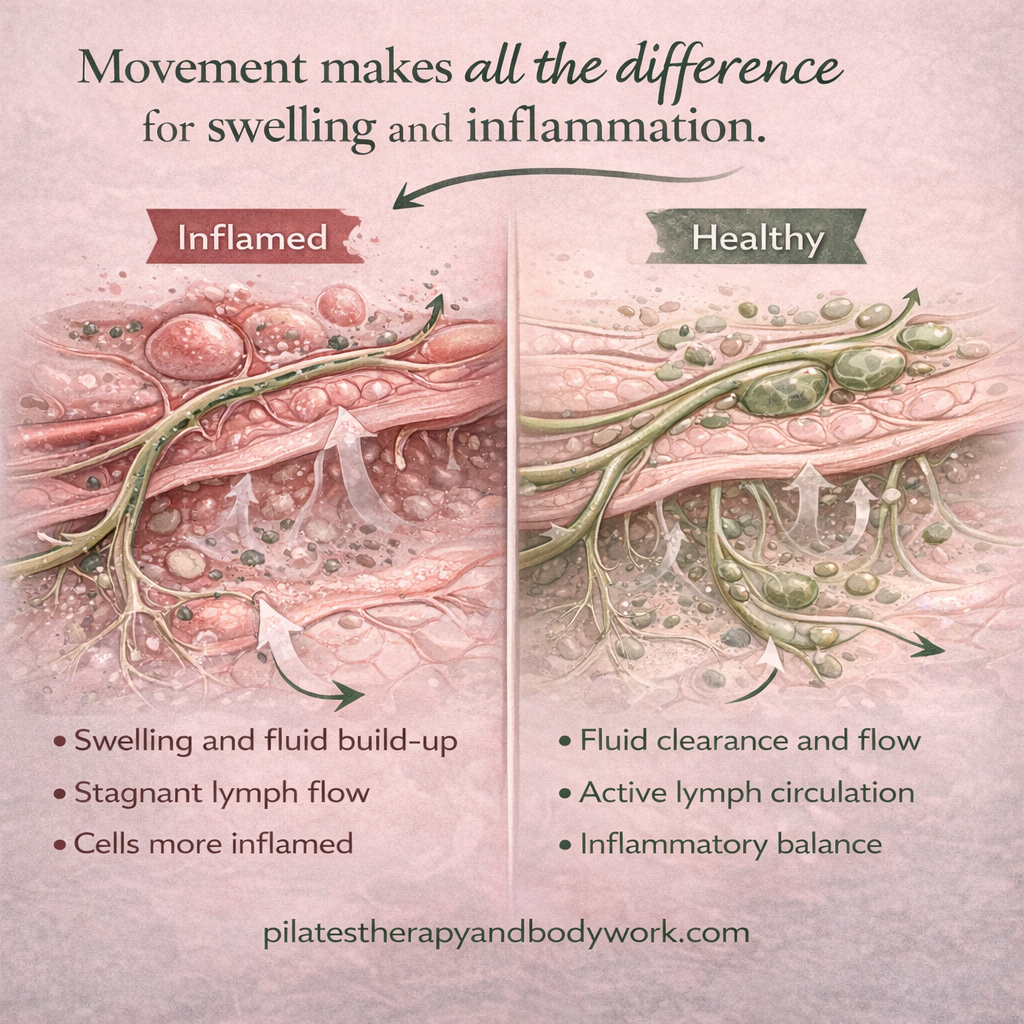
Your lymphatic system:
- has no pump
- relies on movement, breath and pressure
So when you move:
- fluid shifts
- inflammation can reduce
- waste products are cleared
When you don’t:
- things stagnate
- tissues feel heavier
- swelling can worsen
This links closely to:
• “When swelling is not just swelling”
When Is the Best Time to Exercise?
This is where people often get confused.
–Morning
Best for:
- body clock regulation
- energy
- consistency
- weight management
–Afternoon
Best for:
- strength
- performance
- stress release
–Evening
Best for:
- calming movement
- stretching
- nervous system down-regulation
But high intensity late at night can interfere with sleep:
• Dose-response relationship between evening exercise and sleep
For Different Goals
Sleep:
→ gentle movement + consistency
Anxiety:
→ rhythm + repetition
Weight:
→ routine matters more than timing
Inflammation / lymphatics:
→ little and often beats intense and occasional
More is not always better.
Too much intensity can:
- increase cortisol
- disrupt sleep
- leave the system overstimulated
Exercise helps regulate stress…
but only when your body can recover.
If Sleep Is Struggling — Start Here
- Walk most days
- Add gentle rhythm
- Avoid intense late sessions
- Be consistent
- Let your system settle
That post this morning was right.
Exercise does help anxiety and sleep.
But it’s not just exercise.
It’s:
- movement → nervous system
- nervous system → sleep
- sleep → recovery
- recovery → everything else
And when you see it like that…
It stops being about fitness.
And becomes:
support.
If you’re feeling stuck between poor sleep, anxiety or ongoing swelling…
this is exactly the work I support in clinic.
Gentle movement, lymphatic support and hands-on therapy.
Available in Clacton-on-Sea, Bury St Edmunds, Essex and Suffolk.