
“In my previous blog (Does gentle touch matter after surgery_, I discussed why gentle Manual Lymphatic Drainage often makes physiological sense after surgery. But this leads into another important question…”
“Does an immediate result always mean better healing?”
Swelling, inflammation, scar tissue and the hidden side of recovery
One of the biggest problems with modern recovery culture is that we are often taught to judge healing by what we can immediately see.
Less swelling.
Flatter tissues.
Visible “before and after” changes.
Quick dramatic results.
But healing is far more complex than appearance alone.
Recently, after treating a lady recovering from a tummy tuck and arm lift, we spoke about how different post-surgical treatments can feel. She described hearing stories in online recovery groups about very deep, painful “lymphatic drainage” treatments that left people bruised afterwards.
And I found myself thinking:
What if the immediate visual result is not always telling the full biological story?
Because while fluid may temporarily move, healing tissues are also responding to:
- pressure
- inflammation
- oxygen supply
- tissue stress
- immune signalling
- collagen production
- scar formation
And sometimes the body responds to overload by protecting itself even more.
Healing Is Not Just About Removing Fluid
After surgery, swelling is not simply “water”.
The fluid in healing tissues may contain:
- proteins
- inflammatory chemicals
- immune cells
- cellular waste products
- clotting factors
This is part of the body’s repair system.
Research into wound healing shows that inflammation is a necessary and highly coordinated stage of tissue repair. Macrophages — immune cells involved in healing — help regulate fibroblasts, the cells responsible for collagen production and tissue rebuilding.
Fibroblasts are essential.
Without them, wounds would not close.
But healing is partly about balance.
Too little repair activity creates delayed healing.
Too much prolonged inflammatory signalling may contribute to excessive fibrosis and thickened scar tissue.
Clinical reflection
This is why I think we need to be cautious about assuming that aggressively “forcing fluid out” is always the best approach early on. Healing tissues are biologically active, sensitive and constantly adapting to the environment surrounding them.
How much is too much? Instant visible results vs long-term results
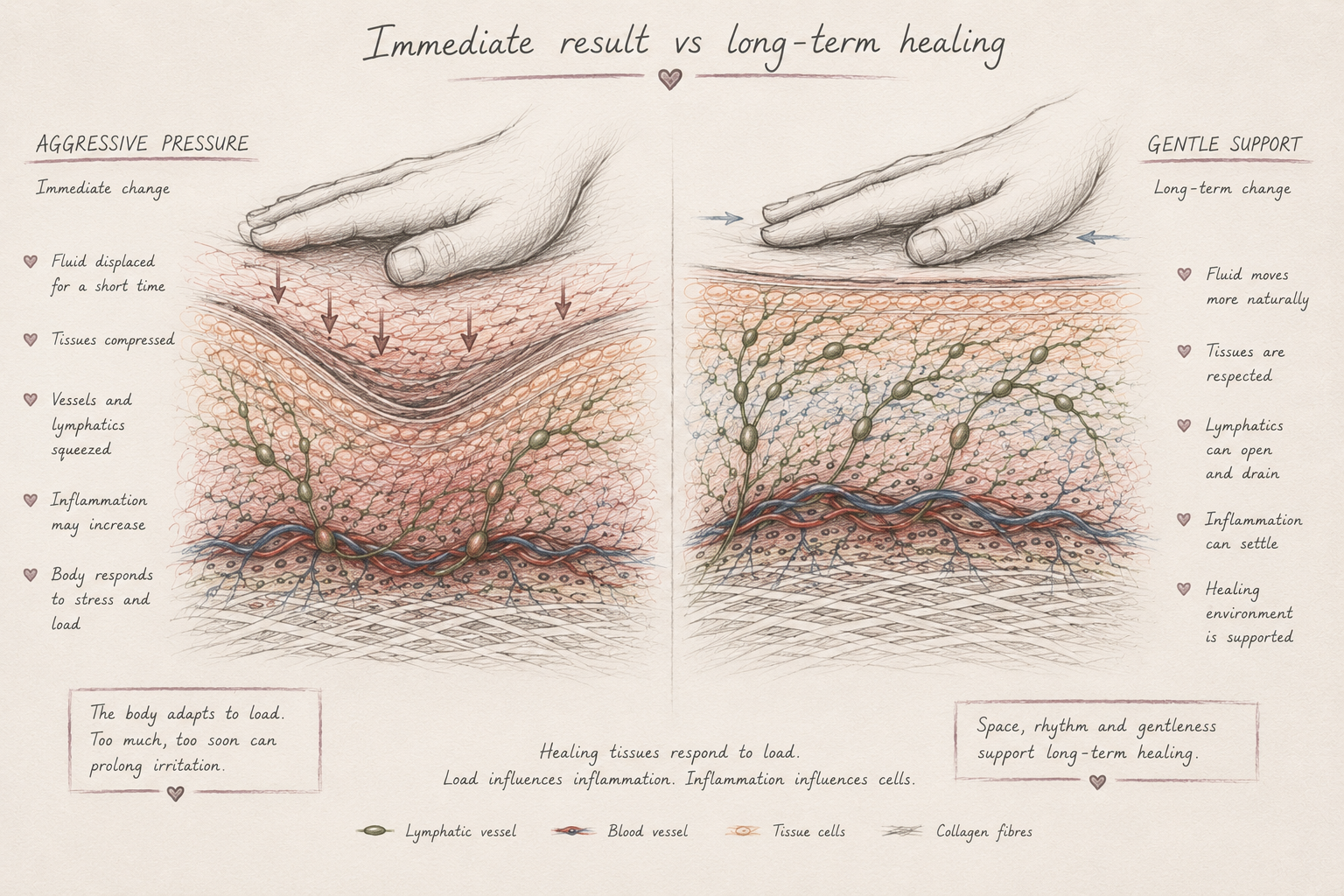
The Body Responds To Mechanical Load
Healing tissue is not passive.
Cells constantly respond to:
- pressure
- stretch
- compression
- tension
- movement
This field is known as mechanobiology or mechanotransduction — essentially how cells respond to mechanical forces.
Research shows that excessive mechanical stress during healing may influence inflammatory pathways and fibroblast behaviour, potentially contributing to fibrosis and altered scar formation.
That does not mean touch is harmful.
Far from it.
Appropriate touch, movement and pressure are extremely important during recovery.
But dose matters.
Timing matters.
Force matters.
Clinical reflection
One of the questions I quietly ask myself during treatment is:
“What environment am I encouraging this tissue to heal within?”
Not simply:
“Can I reduce swelling quickly?”
Because tissues do not only remember surgery.
They also respond to the forces applied afterwards.
Why Immediate Results Can Sometimes Be Misleading
This is the difficult conversation.
A deep treatment may absolutely create:
- visible flattening
- rapid fluid displacement
- temporary reduction in swelling
- dramatic “after” photographs
And understandably, people may think:
“That worked brilliantly.”
But healing is not only about the next hour or the next day.
If tissues become:
- re-irritated
- overloaded
- inflamed again
- excessively compressed
…then the body may continue behaving as though protection is still needed.
Research into fibrosis consistently shows that prolonged inflammatory environments may contribute to ongoing collagen deposition and tissue thickening.
Clinical reflection
An immediate reduction in swelling does not automatically mean the tissue environment is optimal for long-term healing.
Sometimes calmer healing creates slower-looking — but healthier — recovery.
Space Matters In Healing
One of the words I come back to repeatedly in clinic is:
SPACE.
Healing tissues need:
- circulation
- oxygen
- lymphatic drainage
- tissue glide
- pressure variation
- movement
- breath
After surgery, tissues are often swollen, guarded and compressed.
If pressure becomes excessive externally as well, small blood vessels and lymphatic pathways may also become compressed.
This matters because healing tissues rely on healthy circulation and fluid exchange.
The lymphatic system itself is delicate.
Superficial lymphatic vessels sit just beneath the skin and respond to gentle directional stretch rather than force.
Clinical reflection
Sometimes the most supportive thing we can do is not to aggressively push harder, but to create enough space for the body to begin regulating fluid and pressure more efficiently again.
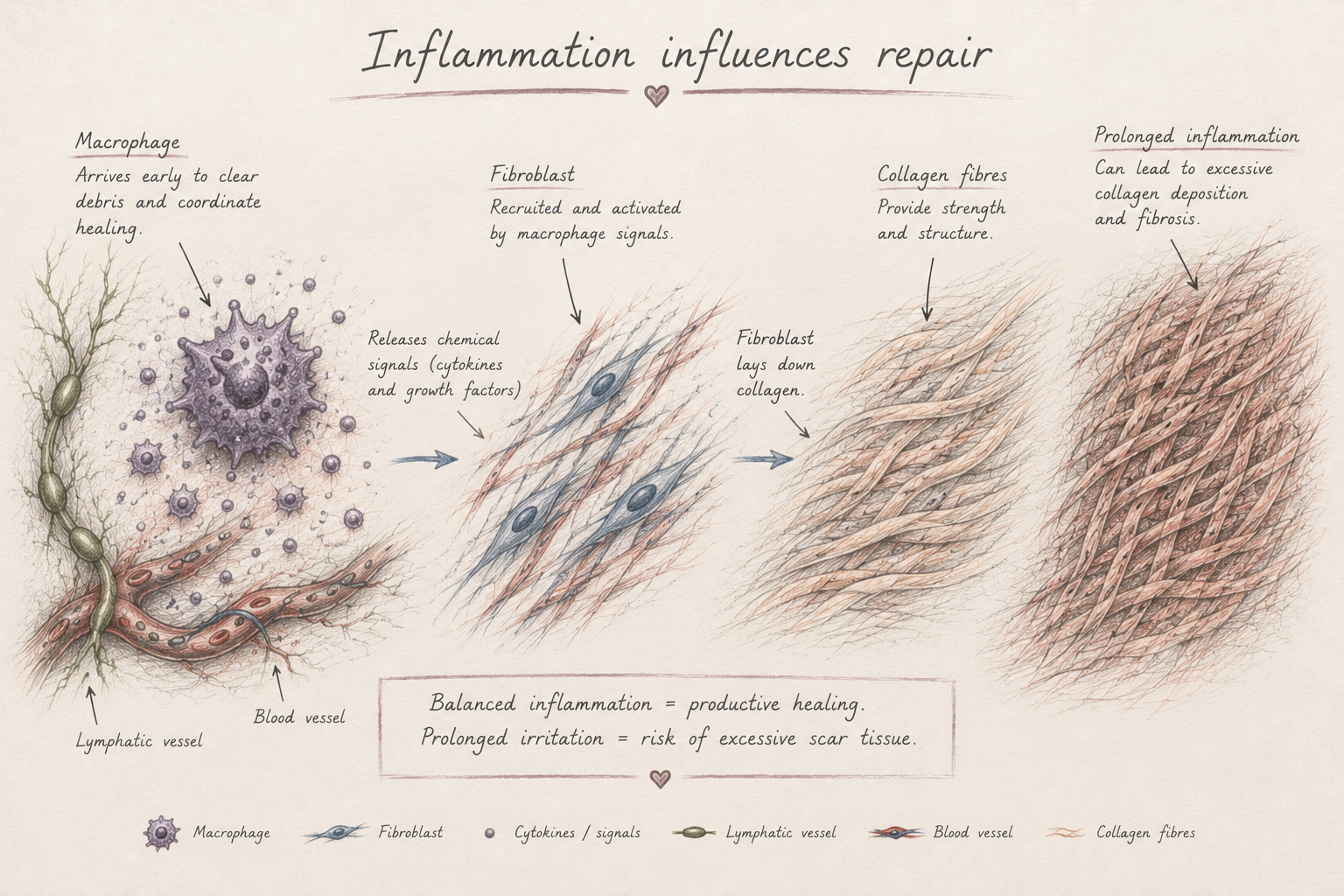
Macrophages, Fibroblasts and Scar Tissue
One of the most fascinating areas of healing research is the relationship between inflammation and scar formation.
Macrophages help coordinate repair.
Fibroblasts lay down collagen.
Collagen creates structure and stability.
But excessive or prolonged inflammatory signalling may contribute to:
- fibrosis
- thicker scar tissue
- tissue stiffness
- altered glide between tissue layers
Research increasingly supports the idea that healing tissues respond dynamically to their mechanical and inflammatory environment.
Again, this does not mean all firmer treatment is “wrong”.
Later-stage scar work may be extremely valuable when tissues are ready.
But early healing tissue is not the same as mature scar tissue.
Different stages require different strategies.
Clinical reflection
This is why timing matters so much in post-surgical recovery. The body’s needs at three weeks are very different from its needs at six months.
The Pressure System We Often Forget
After abdominal surgery especially, people often stop breathing normally.
They brace.
Guard.
Move less.
Hold tension.
Fear stretching.
But breathing is deeply connected to:
- pressure regulation
- venous return
- lymphatic drainage
- rib cage movement
- abdominal pressure
- pelvic floor behaviour
The diaphragm acts like a pressure pump within the body.
When movement becomes restricted, fluid movement may also change.
Clinical reflection
Sometimes gentle breathing work, walking and soft movement may support healing more profoundly than people realise — because the body heals best when circulation, pressure and movement can begin working together again.
My Thoughts As A Therapist
I am not against post-surgical treatment.
Far from it.
I think good Manual Lymphatic Drainage, breathing work, movement and scar-aware therapy can be incredibly supportive.
But I also think we need to move away from the idea that:
- deeper means better
- pain means effectiveness
- bruising means success
- faster visible change always equals healthier healing
The body does not just heal from surgery.
It heals from the environment surrounding the surgery.
And in my opinion, informed by both clinical practice and healing research, calmer tissues often heal more efficiently than constantly irritated tissues.
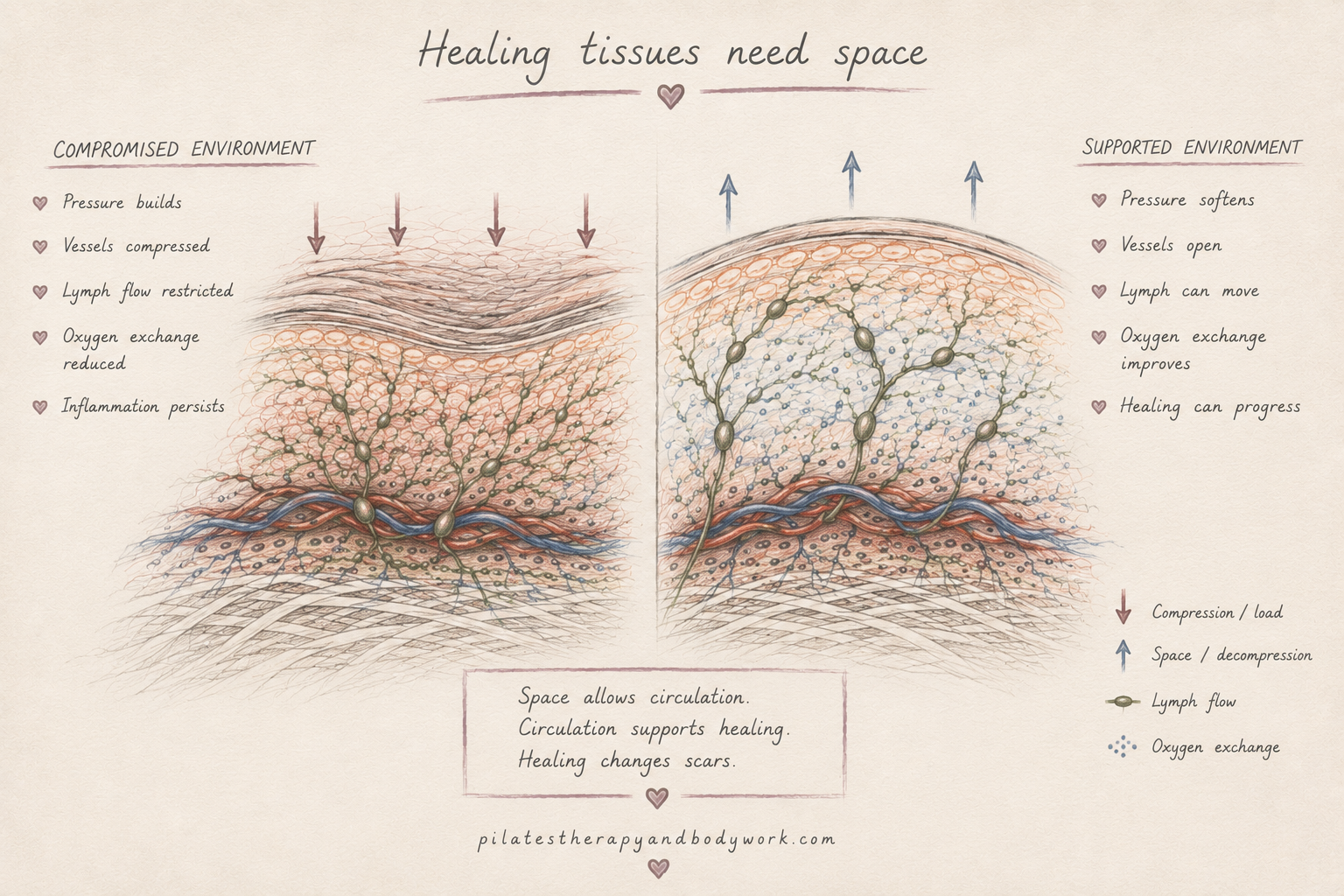
Gentle Support During Recovery
I offer gentle, clinically informed Manual Lymphatic Drainage and scar-aware therapy in Clacton-on-Sea, Bury St Edmunds, Essex and Suffolk.
My approach is based around:
- tissue physiology
- healing timelines
- pressure systems
- lymphatic health
- scar behaviour
- movement and breathing relationships
The goal is not simply to force change.
The goal is to support healing well.