
Understanding Fibrosis, Swelling and What Your Body Needs
You might not think about scar tissue much…
until something doesn’t feel quite right.
A scar that once felt soft starts to feel thicker.
An area feels tight when you move.
There’s a sense of pulling… or even a quiet heaviness underneath.
And you find yourself wondering…
“Is this just normal healing… or is something else happening?”
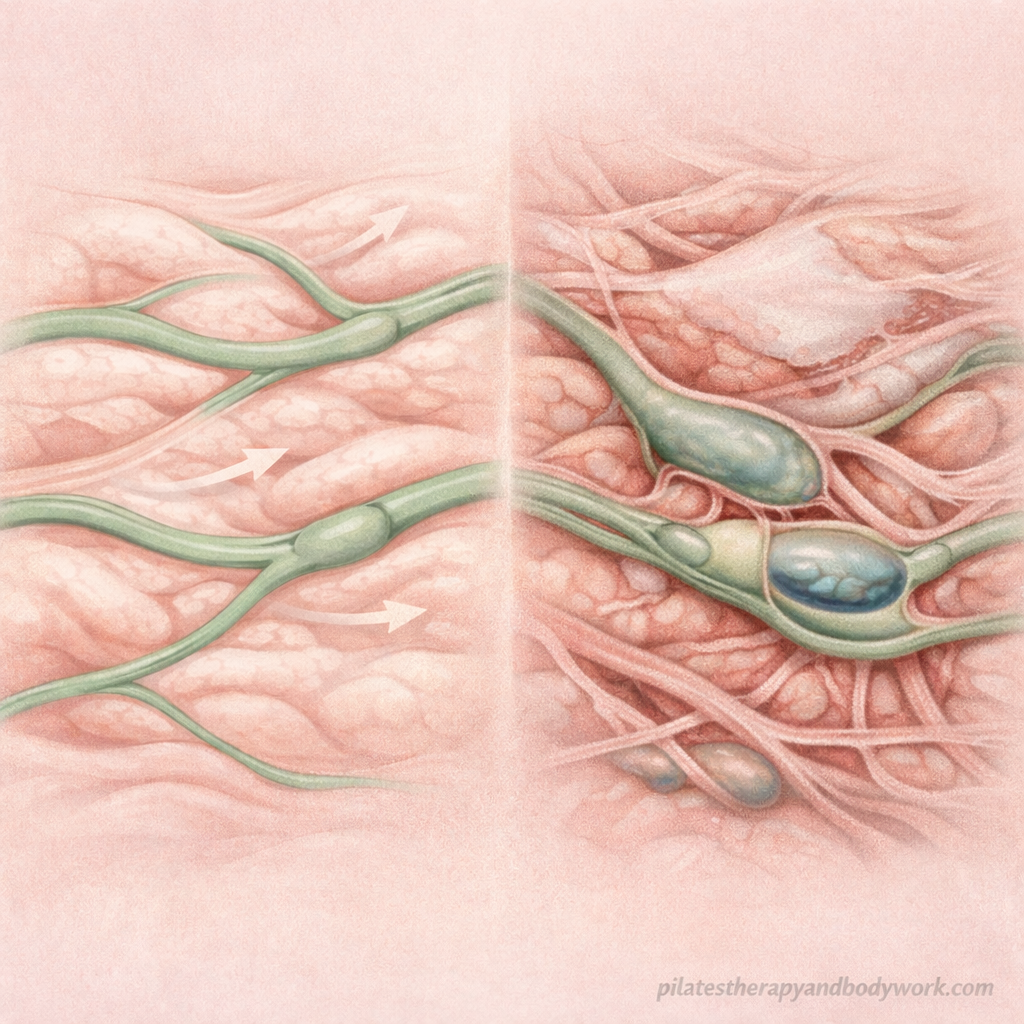
What is a scar, really?
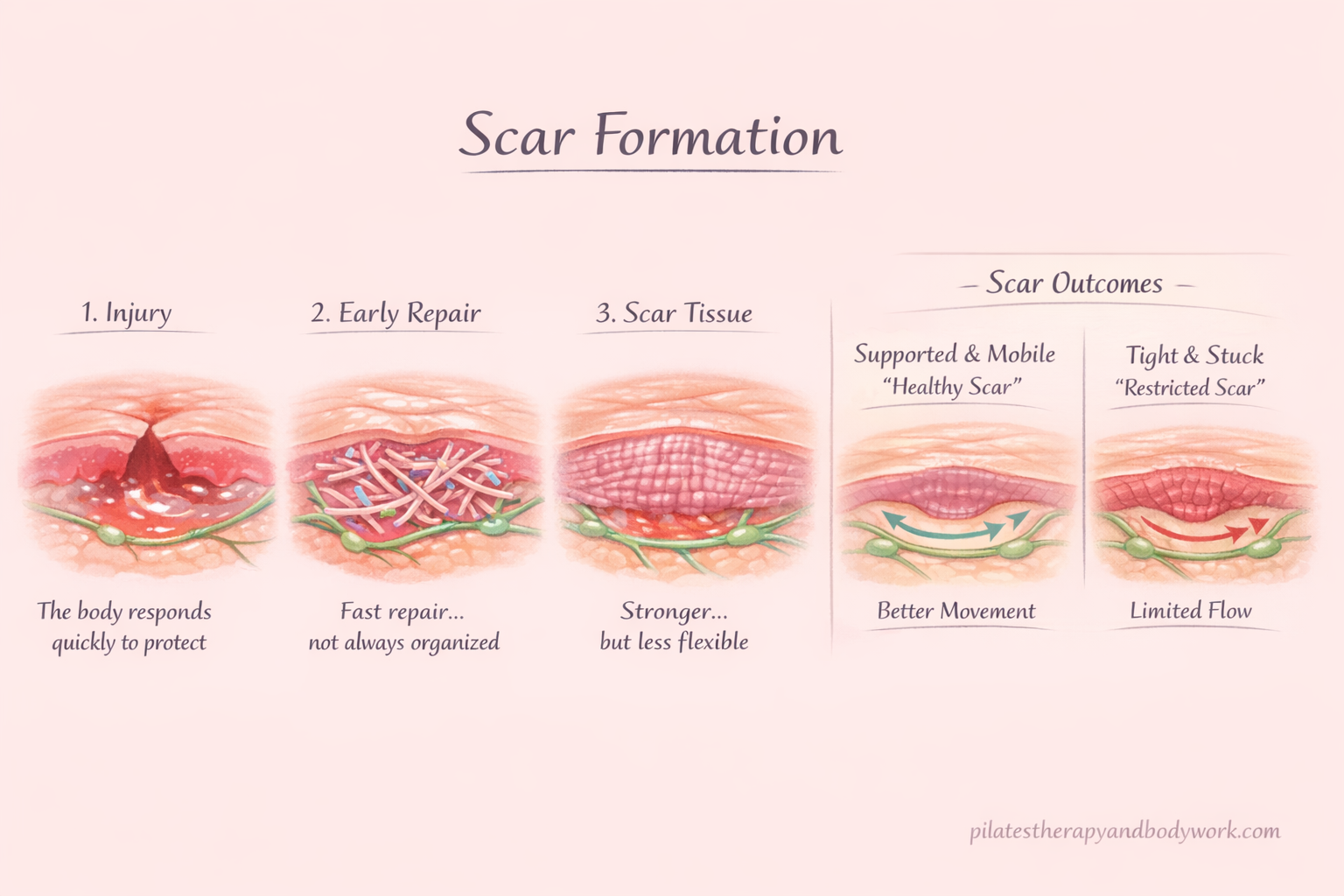
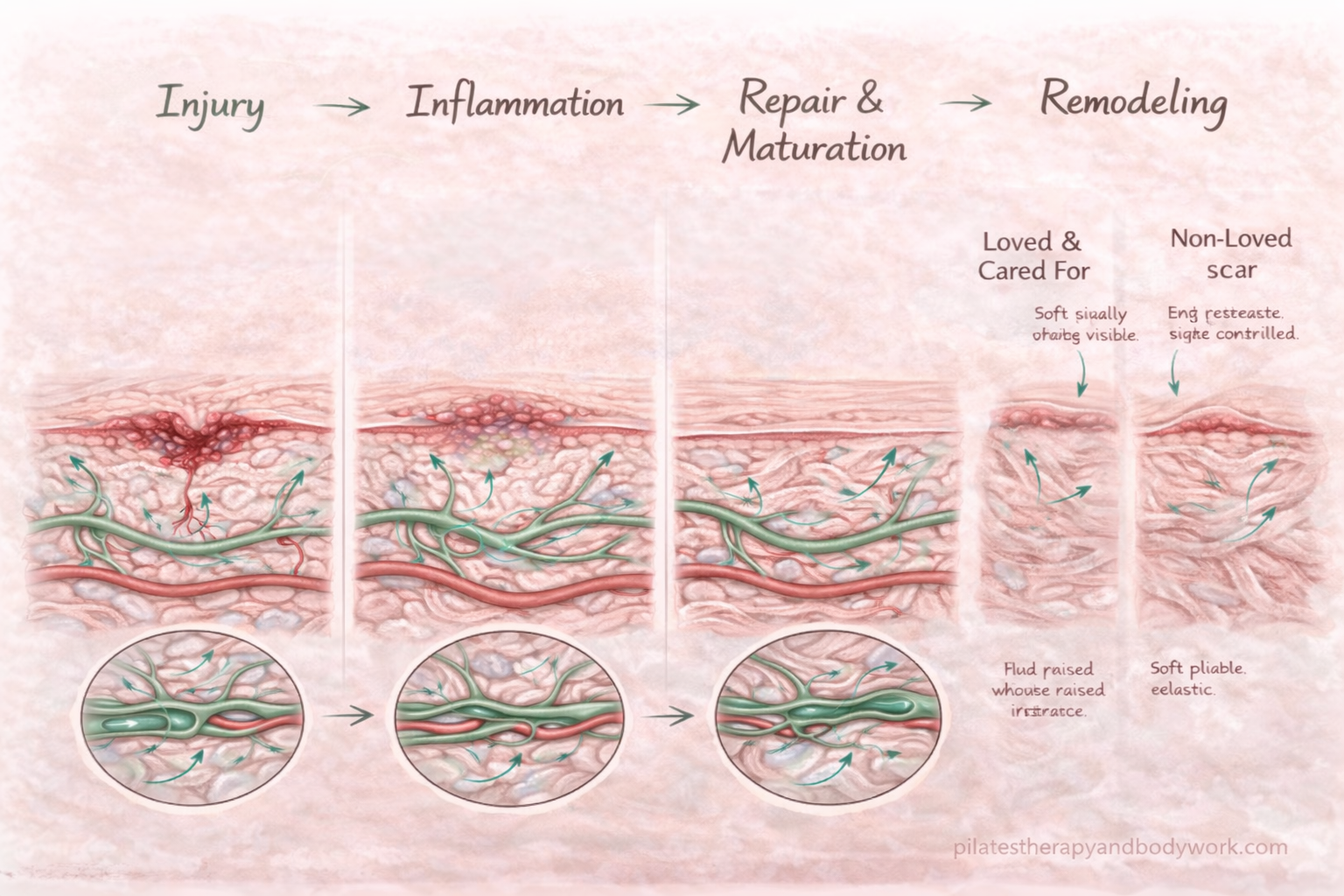
A scar is your body’s way of repairing.
After surgery, injury, or treatment, your body lays down new tissue to close and protect the area.
This tissue is made largely of collagen — strong, supportive, and essential.
But here’s the bit that often gets missed…
Scar tissue isn’t quite the same as the tissue that was there before.
It can be:
- less elastic
- less organised
- more sensitive to movement and pressure
And sometimes… it changes over time.
Research supports what many people feel in their own body — scar tissue is structured differently.
Collagen fibres tend to be laid down in a more disorganised way compared to healthy tissue, which can affect how it moves and feels.
So that sense of tightness or difference you notice… it’s real, and it has a reason.
So what is fibrosis?
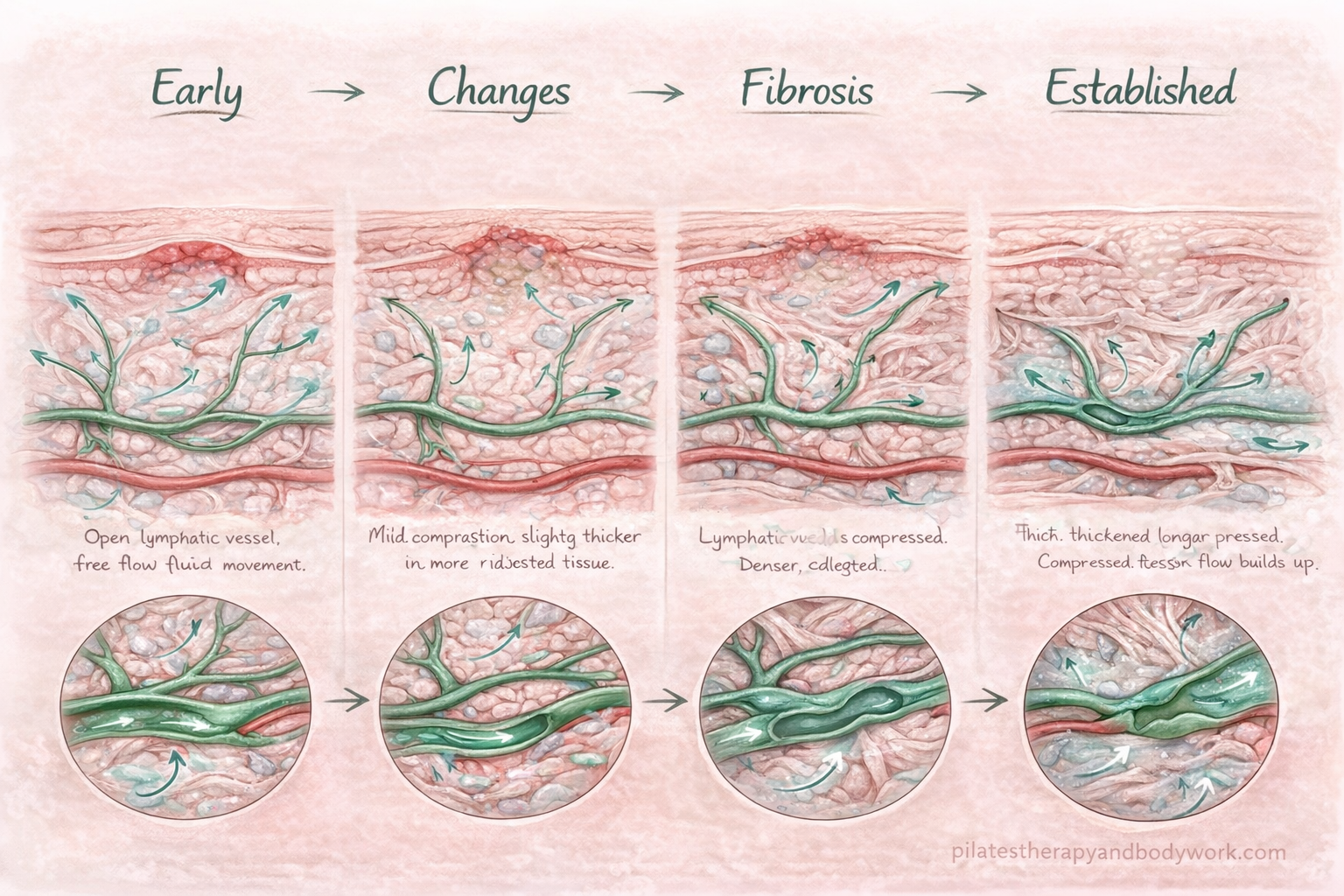
Fibrosis is when that healing process becomes a little overactive or prolonged.
Instead of soft, adaptable repair…
the tissue becomes:
- thicker
- denser
- less mobile
-almost like the body has added extra reinforcement where it thinks it’s needed
A simple way to think about it:
If a scar is a patch…
– fibrosis is when that patch becomes layered, stiffer, and less flexible over time.
Research describes fibrosis as an increase in collagen and ongoing low-level inflammation that keeps the tissue in a more “fixed” state.
It’s not that your body has got it wrong… it’s that it hasn’t quite switched off the repair process.
How it often feels (this is what I hear in clinic)
People don’t come in saying “I have fibrosis”.
They say:
- “It feels tight”
- “It’s hard underneath”
- “It doesn’t move like the other side”
- “It feels full or heavy”
- “It just doesn’t feel like mine anymore”
And often… they’ve been told everything looks “fine”.
But feeling is information too.
The bit most people are never told — fluid matters
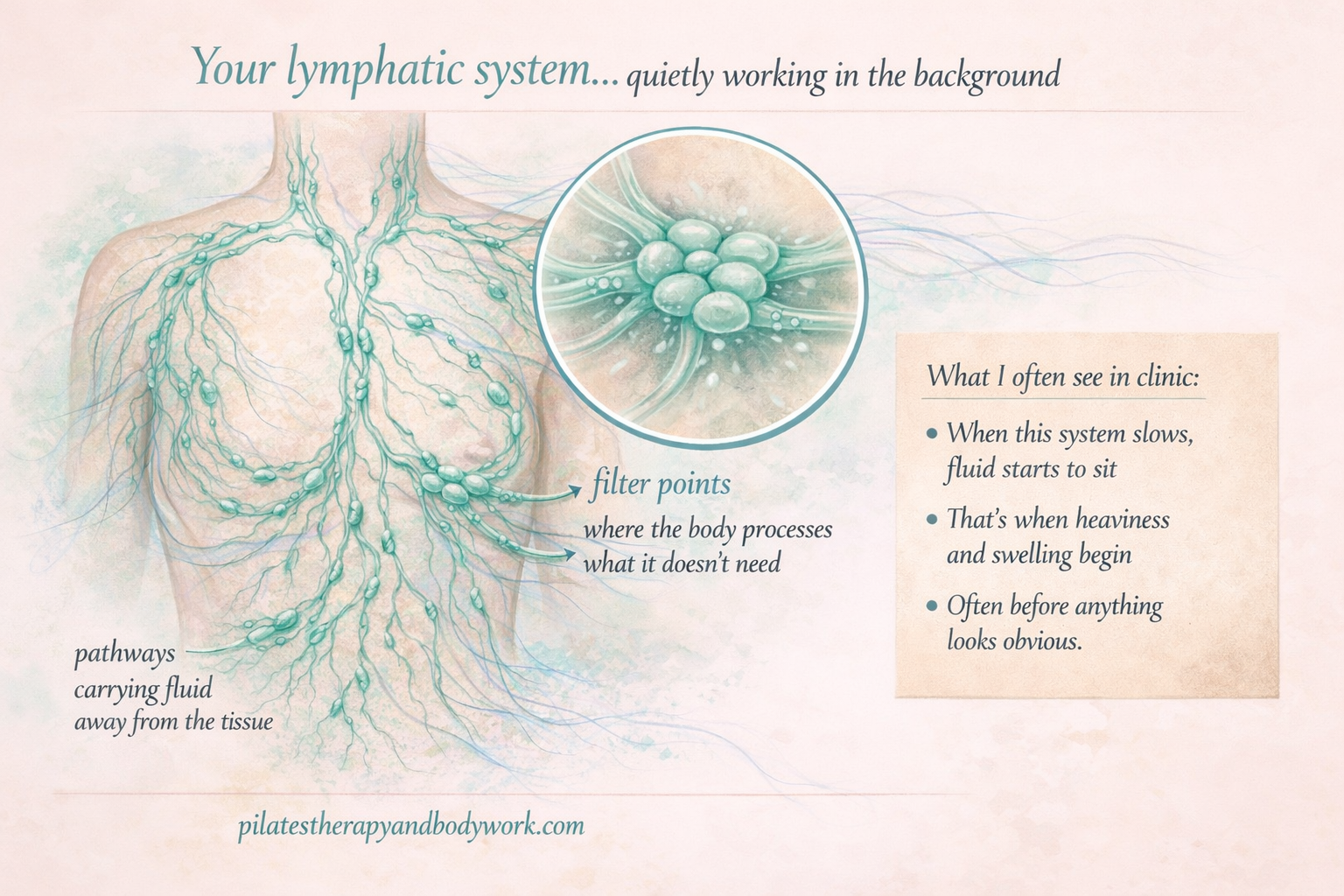
Your lymphatic system helps to:
- clear excess fluid
- move proteins
- support immune activity
- keep tissue environments balanced
When this system is:
- slowed
- disrupted (for example after surgery or radiotherapy)
- or simply under more demand
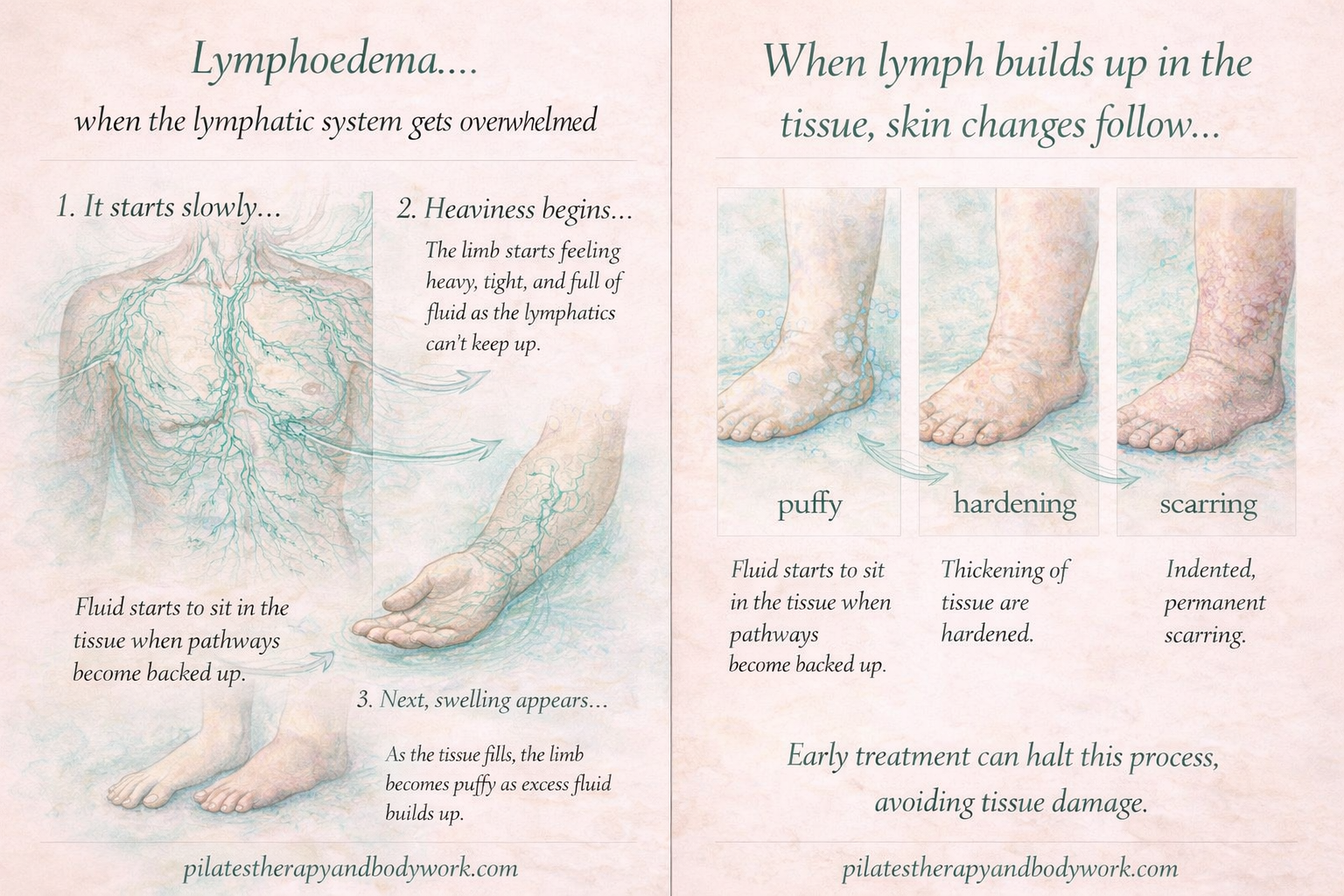
– fluid and proteins can remain in the tissue longer than ideal
Over time, that can start to influence how the tissue behaves.
Cancer and lymphoedema research shows that when lymphatic pathways are affected, fluid can build up in the tissues — and that environment can contribute to longer-term changes like swelling and fibrosis.
– Where fluid lingers… tissue can start to change.
Skin care — not superficial, part of the system
This is one of the simplest things… and one of the most overlooked.
Healthy skin supports:
- elasticity
- circulation
- lymphatic flow
- comfort with movement and touch
A simple routine can help:
- gentle daily moisturising
- light touch and awareness
- noticing changes early
Skin is not separate from what’s underneath — it’s part of the whole system.
Movement, vessels and gentle pressure
Movement isn’t about pushing harder.
It’s about helping your body do what it’s designed to do.
Your lymphatic system doesn’t have a strong central pump like the heart.
It relies on:
- muscle movement
- breathing
- pressure changes
So when things feel stuck…
it often means those systems need a little support.
Research around lymphoedema and recovery consistently includes movement and compression as part of supporting fluid movement and reducing build-up over time.
Your body responds best to gentle, consistent input — not force.
What can help (and why it’s rarely just one thing)
This is where it’s easy to look for a single fix.
But in reality, it’s usually a combination that works best.
Depending on you, your history, and what your body is showing:
- Manual Lymphatic Drainage (MLD)
- Scar therapy
- Gentle movement and breathwork
- Compression (when appropriate)
- Skin care and simple daily awareness
Research continues to grow in this area, but what we do know is that supportive approaches can help manage swelling, improve comfort, and support how tissue behaves over time.
It’s not about forcing change… it’s about creating the right environment for the body to adapt.
A small but important reminder
If something feels tight, heavy, or different…
it’s worth paying attention.
Not everything needs fixing.
But it does deserve understanding.
If you need a bit of guidance
I work with people navigating swelling, scar changes, and recovery after treatment — helping you make sense of what you’re feeling and what your body might need next.
Clinics in Clacton-on-Sea and Bury St Edmunds
Supporting cancer recovery, swelling, and scar care
You might also find helpful:
- Why does my arm feel heavy after cancer treatment?
- What does the lymphatic system actually do?
- Scar therapy support options
Further reading & research
- Cancer Research UK – Lymphoedema and ongoing research
- Macmillan Cancer Support – Understanding lymphoedema
- Research on collagen structure in scar and fibrotic tissue (PubMed)
- Reviews exploring fibrosis and lymphatic involvement (ScienceDirect)