
Understanding Fitness Qualifications in the UK– Why it Matters for Clients, Carers and Clinicians
❓If you’ve ever wondered why one fitness class feels relaxed and free-flowing, while another feels structured and specific – or you’ve been confused by terms like Level 2, Level 3, Level 4, specialist, clinical, exercise referral or rehabilitation– you are absolutely not alone.
That isn’t a failure of individuals – it’s a systems issue. The result is confusion for clients, carers and even healthcare professionals trying to understand what level of support someone is qualified to offer.
It leads to everyone trying to shout louder or shout at someone else for not doing the same as them.
Fitness qualification levels– plain English
Here’s a broad overview of what people actually mean when they talk about levels.
• Level 2– Foundation instruction. Typically allows delivery of general exercise sessions and work with apparently healthy adults. This is where many people first enter the industry and where group classes often sit.
• Level 3– A broader level of teaching and referral understanding. It includes safe progression, basic screening, adaptation and working with a wider range of people.
• Level 4– This indicates deeper training in condition-specific work or specialist populations, such as cancer rehabilitation, neurological conditions, cardiac rehab.
What these levels don’t tell you is what someone has actually studied, how they apply it, or how they translate it into listening, awareness and adaptation for your body right now.
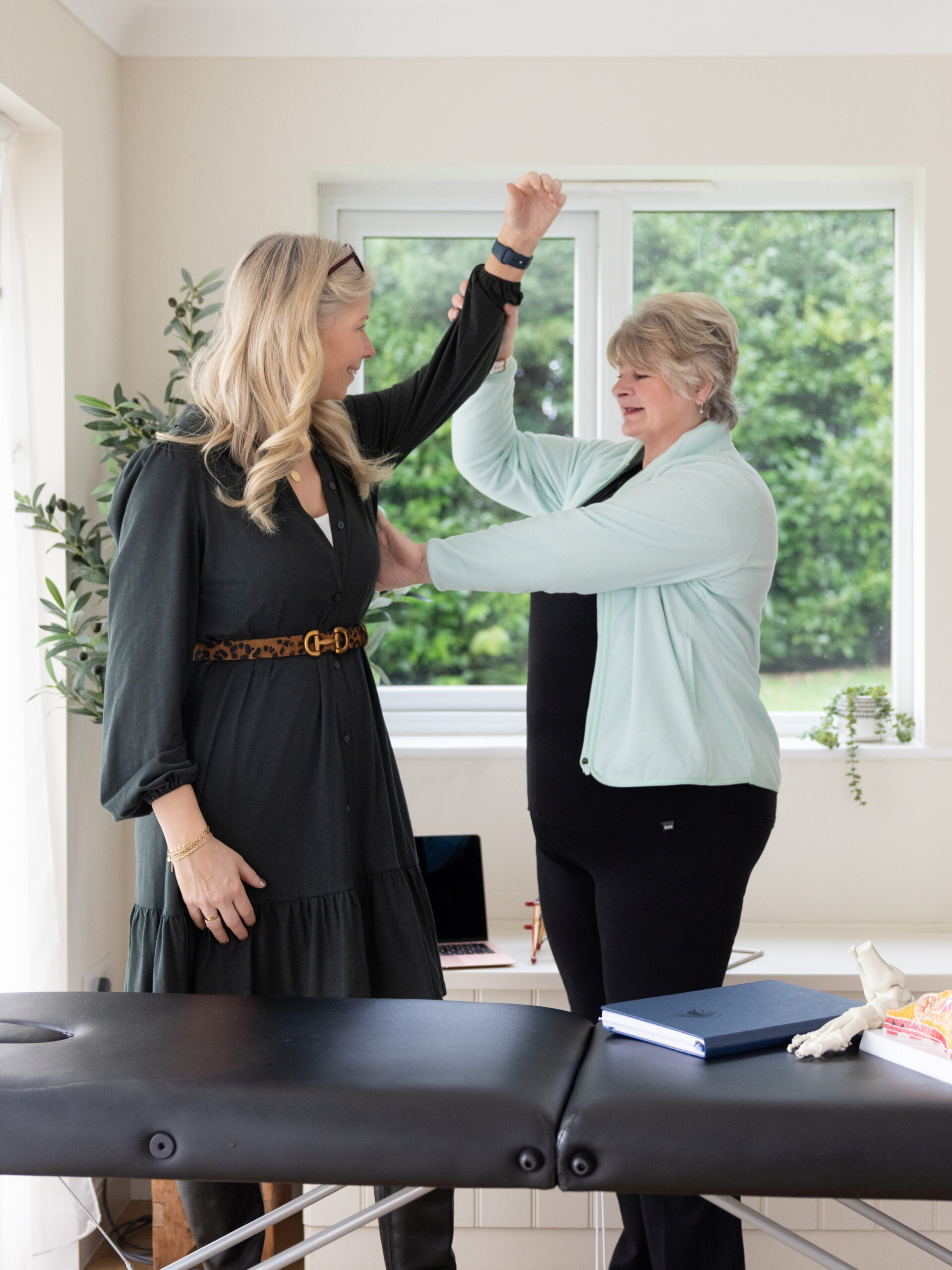
Working with someone who understands testing, pacing, screening can feel profoundly different from a generic class because the session becomes adapted to you or prescritive to you.
A little more detail and breakdown
Level 2 – Foundation instruction
(Typical training hours 40-80)
This is the entry level for fitness professionals. (This is where I entered with Exercise to Music)
Typically allows:
• delivery of general exercise sessions
• working with apparently healthy adults
• basic screening using tools such as a PAR-Q
Classes may feel: energetic, relaxed, less structured
This isn’t because the instructor doesn’t care – it’s because their scope of practice is intentionally limited.
Level 3 – Main teaching and referral level
(Typical training hours 150-250+ again huge differences depending on who is delivering the course and then on top of this would be an additional 60-120 training hours for Exercise referral)
Level 3 is the core qualification level for many disciplines, including
• Pilates
• Yoga
• Older adult exercise
• Exercise referral (GP referral)
At this level, instructors are trained to:
• screen more thoroughly
• understand risk and contraindications
• make informed decisions about inclusion, adaptation or referral
• work with clearer boundaries
Classes often feel: more deliberate, more paced, more targeted
The structure reflects responsibility, not lack of confidence.
Level 4 – Specialist or advanced practice
(Typical additional hours per qualification 150-300+)
Level 4 qualifications are usually population- or condition-specific, such as:
• low back pain
• long-term conditions
• cardiac rehabilitation
• cancer rehabilitation
• neurological conditions
Here the instructors work with: tighter governance, more specific screening, defined referral and escalation pathways.
Movement may look quieter– but the thinking behind it is deeper.
🤯 Why “levels” don’t always mean the same thing: two real UK examples
One of the reasons fitness qualifications are so confusing is that the word “level” is used in different ways by different organisations.
Sometimes it refers to a regulated qualification level on the UK framework.
Sometimes it refers to a method-based training pathway within a specific school or programme.
Example 1– Regulated Level 3 Pilates vs branded APPI “levels”
A regulated Level 3 Pilates qualification sits on the UKs Regulated Qualifications Framework (RQF). It involves substantial guided learning hours, assessment and defined learning outcomes, and qualifies someone to teach Pilates to the general population within an insured scope of practice. (150-250+ hours training)
Alongside this, many Pilates teachers undertake method-based training, such as APPI. APPI uses its own internal levels (Matwork Levels 1-4 and studio). APPI is widely respected, but it is important to understand that:
• APPI levels are not equivalent to regulated level 2, 3, 4 qualifications (30-50 hours per module, so 150-300+ hours across multiple modules)
• APPI courses often assume prior learning
• many practitioners complete APPI training on top of a regulated qualification
APPI also recognises prior learning– meaning experienced practitioners (for example physiotherapists or already-qualified Pilates teachers) may enter the pathway at different points depending on background.
Neither replaces the other. They work together. They will work as a standalone for someone coming in with a professional background or as additional training for a Level 3 Pilates instructor.
Example 2– Regulated Level 3 Older Adult qualification vs branded (FABS) Move it or Lose it
Another area of common confusion is older-adult exercise.
A regulated Level 3 Older adult qualification builds on Level 2 fitness training, supports broader programme design and adaptation and is often required for insurance beyond general fitness, wider adult provision and referral work.
This training will explore ageing physiology in depth. (Additional training hours likely 60-120 for GP referral and 120-200+ for Older Adult). The hours training reflect the topics covered and depth, things like balance, strength, bone health and falls risk.
Move it or Lose it is different, it is a branded exercise programme, designed to teach delivery of that specific format. It is a branded format, not broad prescription. It is a chair-based or supported standing session (Training hours typically 20-40) and the training provider describes the training as equivalent to level 2. It does not make Move it or Lose it “less than”. It just means the instructor is qualified to deliver that programme, not design or adapt exercise broadly for all older adults.
Both have value– when their scope is understood.
Training hours vary by provider, but regulated qualifications typically involve significantly more guided learning and assessment than branded delivery programmes, reflecting broader scope of practice and insurance expectations.
Yoga
There is no statutory government regulation in the UK specifically for Yoga teachers.
Yoga teaching is a largely self-regulated profession– meaning that standards come from industry bodies, training organisations and workplaces.
There are some organisations that set benchmarks, provide accreditation, and offer recognised qualifications.
British Wheel of Yoga (BWY) seems to set the standard with a level 4 Diploma (500+ hours of training)– ability to adapt for different needs. Teaching methodology in greater detail. They are highly regarded in their approach and care around standards. The level 4 is considered the highest standard in the UK.
There are 200 hour trainings which is an entry level
There is a Level 3 Diploma (300-400+ hours of study, including practical teaching experience)- suited to those teaching general classes and safe progressions – this seems to sit with the general level 3 fitness qualifications and working with healthy individuals.
The thing that is a bit less clear is where the level 4 sits. I read some things that say it sits between fitness 3 and 4 and other things that say it is the same as level 4 fitness. If you look at a diploma with ITEC/VTCT then you have diploma level 3,4,5.
Asking good questions about who someone trained with and training hours is a great starting point. Using CIMSPA (chartered Institute for the Management of Sport and Physical Activity) which endorses, recognises and sets standards for qualified yoga teachers and training providers could be a another way to help you gain information to help you ask the right questions.
Screening, referral and responsibility: the key principle
When an instructor screens for a condition through a PAR-Q, they must either:
• Refer on, or
• Have the training, scope of practice and insurance to manage it
That is why referral should be seen as– professional judgement, not rejection.
Why being referred on is a good thing
. • the instructor understands their scope
• governance and insurance are being respected
• you are being guided to a more appropriate setting
This protects: You, the instructor and the organisation delivering the service.
Referral is a sign of care and responsibility.
Questions worth asking (as a client or carer) for the general public Simple Questions to help you find the right class
You are absolutely allowed to ask:
• What training have you done?
• Is it regulated or additional?
• Who is this class designed for?
• What are you insured to teach?
• If this class isn’t right for me, what would you recommend instead?
For professionals: why structure matters
If you work with:
• older adults
• referral populations
• people affected by cancer
… then structure is not restrictive– it’s protective
Guidelines, screening, risk assessments and referral pathways exist to: keep people safe, support ethical decisions and protect long-term practice sustainability
Making this easier: downloadable resources
Because this system is complex, I’ve created practical resources for both audiences
Simple Questions to help you find the right class
Choosing the right fitness class
• what qualification levels mean (and don’t mean)
• why screening happens
• why referral is positive
• questions to ask before joining a class
Professional toolkit and assessment
• screening expectations at levels 2, 3, 4
• decision pathways: include, adapt or refer
• how to align scope, insurance and delivery
• adaptable risk assessment template with an example
This was an exercise for myself to help me understand why people might assume one class is better than another, and help me explain to someone else in a factual way about differences in training.
What I really hope– I have sparked curiosity, so next time someone is doing something we would not do: we think about level of training and therefore delivery, we have a clear way to explain to our peers the differences at each level. We start to educate our clients in what to look for or ask to get the class that fits them best. You as the end user start to ask informed questions.