
If you’ve ever searched online about swelling or lymphoedema, you’ve probably seen the terms MLD and CDT used as though they mean the same thing.
They don’t.
And honestly, this confusion matters — because many people are receiving one small piece of support without understanding the bigger picture of long-term lymphoedema management.
What is MLD?
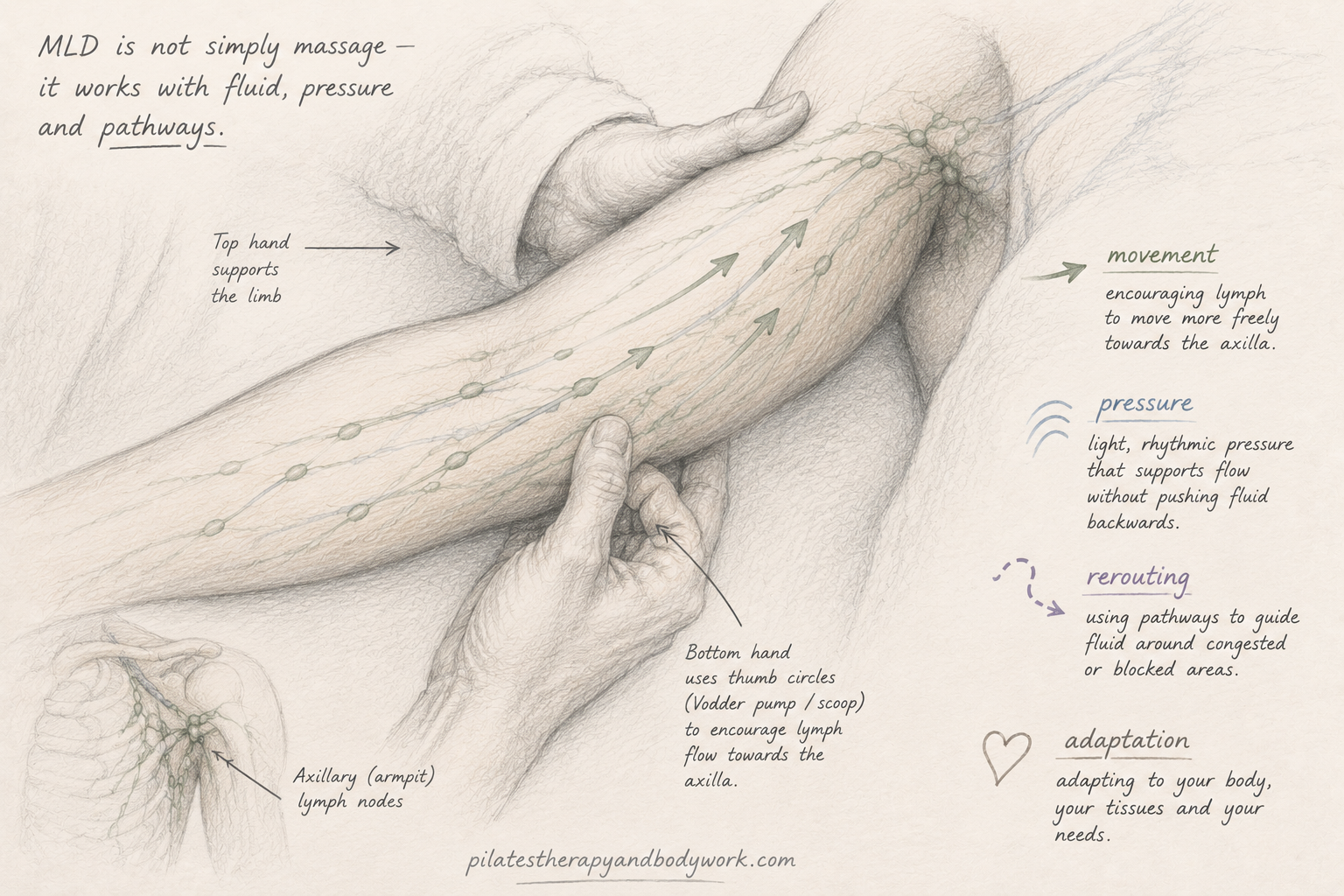
Manual Lymphatic Drainage (MLD) is the gentle hands-on treatment many people recognise.
It uses slow, rhythmic, skin-stretching techniques to help encourage lymph fluid to move through the body more effectively.
A properly trained therapist works with:
- lymphatic pathways
- pressure changes
- rerouting around congested areas
- tissue softening
- swelling management
- relaxation of the nervous system
For many people, MLD can help reduce:
- feelings of heaviness
- tightness
- discomfort
- fibrosis or hardened tissues
- that “full” or pressured feeling in an arm, leg, chest or abdomen
Sometimes people describe feeling lighter or freer after treatment — particularly after cancer treatment, surgery, or long-term swelling.
“MLD is not simply massage — it works with fluid, pressure and pathways.”
But here’s the important part:
MLD is usually not a stand-alone long-term solution for lymphoedema.
And this is where confusion often starts.
Because lymphoedema management is rarely about one treatment.
The lymphatic system also doesn’t work in isolation.
Breathing, movement, muscle activity, pressure changes and tissue health all influence how fluid moves through the body. This is one reason why swelling can fluctuate throughout the day and why management often needs a broader whole-body approach.
You may also enjoy reading:
• What Is Lymphoedema and Why Does Swelling Happen?
• Why Does My Swelling Come and Go?
What is CDT?
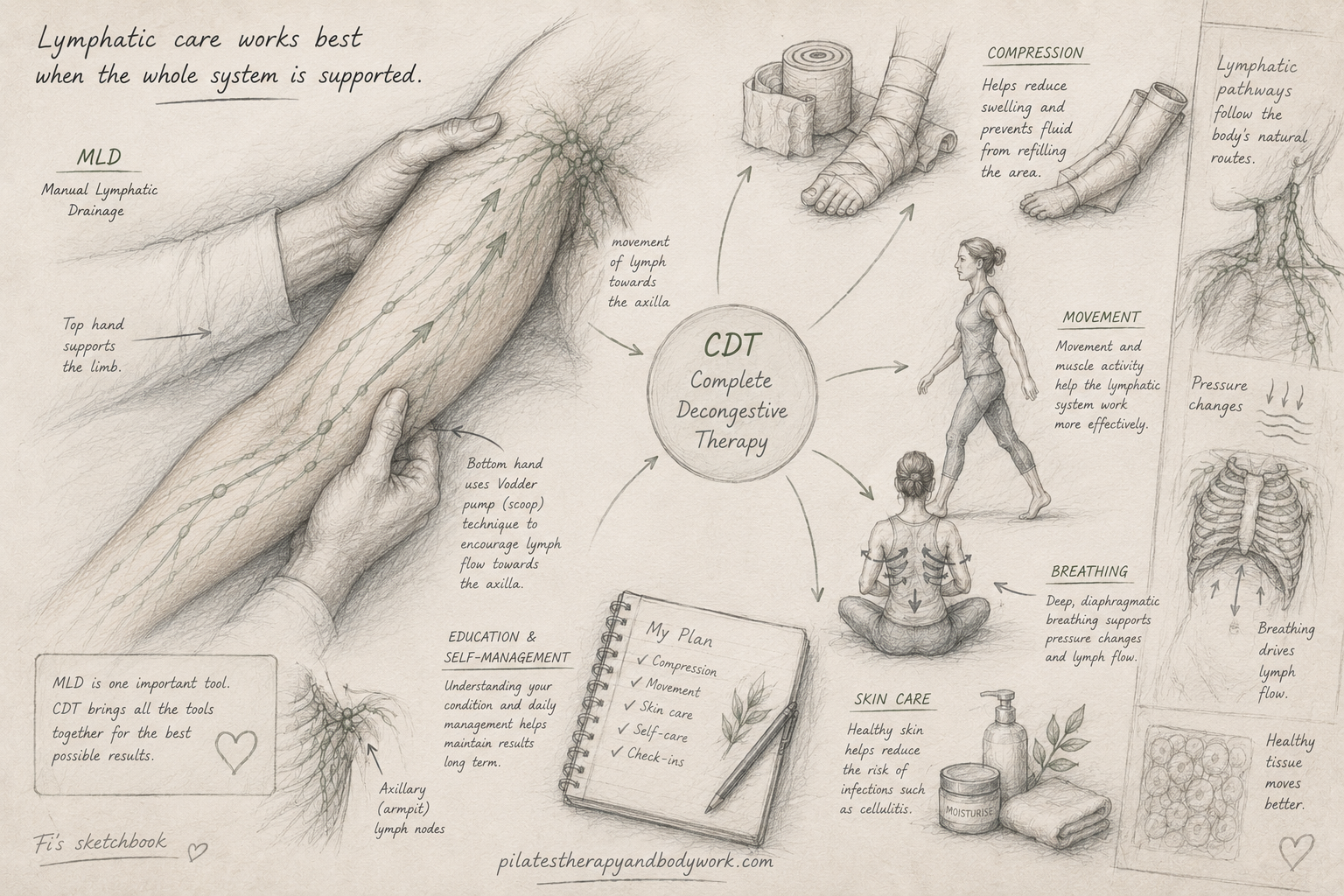
Complete Decongestive Therapy (CDT) is widely recognised as the gold-standard conservative approach for lymphoedema management.
MLD is one component of CDT — not the whole thing.
CDT usually includes:
- Manual Lymphatic Drainage (MLD)
- Compression therapy (bandaging or garments)
- Exercise and movement
- Skin care
- Education and self-management
The aim is not simply to move fluid temporarily.
The aim is to:
- Reduce swelling
- Improve tissue health
- Support long-term maintenance
- Reduce complications and progression over time
A simple way to think about it
MLD = one tool
CDT = the whole toolbox
Or another way:
MLD helps move fluid.
Compression helps stop it immediately returning.
Movement helps muscle activity and pressure changes assist drainage.
Skin care helps reduce infection risk.
Education helps someone manage their condition safely long-term.
These systems work together.
“Lymphatic care works best when the whole system is supported.”
Why compression often matters
One of the most common things people say is:
“I had lymphatic massage before but the swelling came back.”
And often that’s because treatment stopped at the massage stage.
In many cases, without some form of compression or maintenance support, fluid can simply refill the area again.
That doesn’t mean the MLD “didn’t work.”
It means lymphoedema management usually requires a broader strategy.
This is also why specialist assessment matters.
Because not all swelling is the same.
You may also find helpful:
• Fluid Retention vs Lymphoedema — What’s the Difference?
Lymphoedema is not just cosmetic swelling
This is another important conversation.
Lymphoedema management is not vanity care.
Untreated or poorly managed swelling can progress over time and may increase risk of:
- fibrosis (hardening of tissues)
- skin thickening and changes
- cellulitis or recurrent infections
- discomfort and pain
- reduced movement
- heaviness and fatigue
- worsening swelling patterns
Early support and education can make a significant difference.
What does the research say?
Research consistently supports Complete Decongestive Therapy (CDT) as one of the most effective conservative treatment approaches for lymphoedema management.
Studies have shown CDT can help:
- reduce limb volume
- improve symptoms
- improve quality of life
- soften fibrotic tissue
- support function and mobility
Research also suggests that MLD may be particularly helpful when combined with compression, exercise and skin care rather than used in isolation, especially in moderate to complex swelling presentations.
Some studies show mixed findings regarding MLD alone — which again reinforces why lymphoedema care is usually about the combination approach rather than one single technique.
You can find further information here
- International Society of Lymphology Consensus Document
- British Lymphology Society
- National Lymphoedema Partnership
- NICE Cellulitis Guidance
My own thoughts as a therapist
One thing I’ve noticed over the years is that people are often desperately trying to piece together support from different places.
Compression from one service.
Massage elsewhere.
Exercise advice online.
Fear and confusion in between.
Good lymphatic care should feel educational, supportive and realistic — not overwhelming.
And not everybody needs the same level of intervention.
Some people may need full CDT.
Others may benefit from movement, education, MLD and symptom management.
Others may need referral onward for medical assessment.
That’s why individual assessment matters so much.
If this sounds familiar…
If you’re living with swelling, heaviness, tightness, post-surgical changes or lymphatic concerns after cancer treatment, surgery or chronic health conditions, support is available.
I offer:
- Manual Lymphatic Drainage (Vodder method)
- lymphatic-focused movement support
- scar therapy
- reflexology
- gentle rehabilitation support
Clinics in Clacton-on-Sea and Bury St Edmunds, supporting people across Essex and Suffolk.