
Manual Lymphatic Drainage: What it is, Who It Is For, and What to Look For
Manual Lymphatic Drainage: What It Is, Who It’s For, and What to Look For
Why I’m writing this
I didn’t set out to specialise in Manual Lymphatic Drainage.
I trained initially because of my stepdaughter. She was diagnosed with breast cancer and underwent a double mastectomy with reconstructive surgery. There was no lymph node removal, but I wanted to support her safely, so I completed a short MLD course.
From there, my work with people affected by cancer gradually grew — particularly with breast cancer. I now see many clients for scar therapy, Manual Lymphatic Drainage, and movement support during and after treatment.
Alongside this, I found myself referring people back to their GP or local lymphoedema clinic when something felt outside my scope. What I noticed, again and again, was that people were often told they were “not chronic enough” to be treated, or were given compression garments without much explanation or follow-up.
Here’s the uncomfortable truth: my original MLD training — like most short courses — only allowed me to work with healthy lymphatic systems. It did not qualify me to work where lymph nodes had been removed, or where swelling had not yet been properly investigated.
Using my background in oncology scar therapy, breathwork, and modified movement, I could often create meaningful change. I knew I had relevant skills — but I also knew where the limits were.
When I looked more closely, I discovered that in the UK there is really only one register for medically recognised Manual Lymphatic Drainage practitioners: MLD UK. It’s a voluntary register, and in my area, practitioners are limited — despite growing need.
I am now part-way through my Vodder MLD training. Even with far more hours than my original short course, and an entrance exam requiring a 70% pass rate, I am still limited to working only with healthy lymphatic systems. To work with compromised lymphatics — and to be eligible for referral from healthcare professionals — specialist training and full certification are essential.
That, more than anything, made something very clear to me:
the lymphatic system needs gentle, skilled, expert care.
And, perhaps unexpectedly, this training arrived in my 60th year. I wasn’t looking to retrain at this stage of life — but it presented itself, and I’m genuinely looking forward to celebrating turning 60 while being able to support many more people, more appropriately and more safely.
Why this matters now
Manual Lymphatic Drainage has become increasingly visible. You’ve probably seen it discussed online, offered in clinics, or presented through machines and tools rather than hands. You may have been recommended lymphatic work following surgery or cancer treatment.
With that visibility comes confusion.
Not all “lymphatic massage” is the same, and not all training is equal.
This matters — especially when the lymphatic system has been affected by surgery, radiotherapy, scarring, or lymph node removal.
What is Manual Lymphatic Drainage (MLD)?
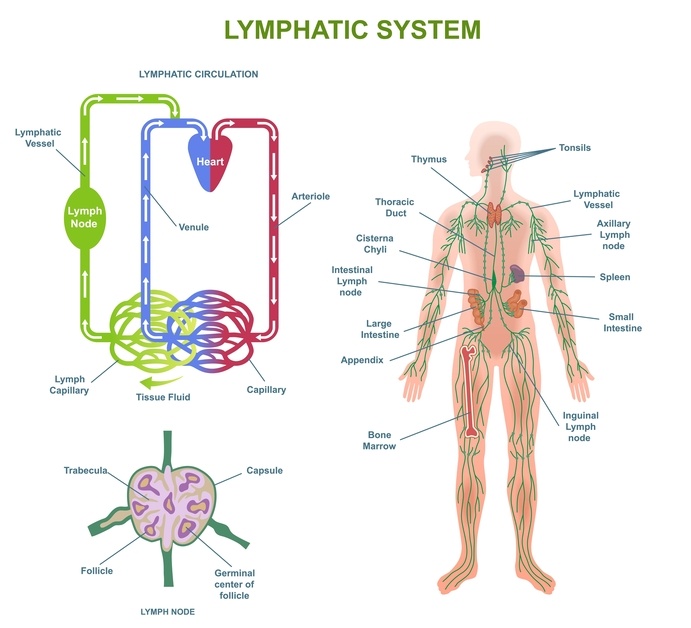
Manual Lymphatic Drainage is a specialised, gentle manual therapy designed to support the movement of lymphatic fluid through the body.
Unlike general massage, MLD:
-
uses very light, rhythmic, precise techniques
-
follows the anatomy and physiology of the lymphatic system
-
is adapted to medical history, surgery, and current health
-
begins by preparing central lymphatic areas to receive fluid
Gentle does not mean simple.
MLD requires clinical reasoning, anatomical knowledge, and restraint — not force.
When lymphatic systems are compromised
The lymphatic system plays a vital role in fluid balance and immune health. When it is compromised, people may experience:
-
swelling (oedema or lymphoedema)
-
heaviness or tightness
-
discomfort or pain
-
increased infection risk
-
delayed healing or skin changes
Lymphatic damage can be lifelong, even when swelling is not immediately visible. This is particularly relevant following:
-
breast cancer surgery
-
gynaecological cancers
-
melanoma
-
head and neck cancers
In these situations, lymphatic work must be appropriately timed, adapted, and delivered by someone with recognised specialist training.
Not all lymphatic work is the same
“Lymphatic massage” is not a regulated term. It can describe anything from relaxation-based treatments to cosmetic or machine-led approaches.
These are not necessarily wrong — but they are not interchangeable, particularly when the lymphatic system is compromised.
Broadly speaking in the UK:
-
Aesthetic or wellness lymphatic techniques are suited to healthy, intact lymphatic systems – The Federation of Holistic Therapists (FHT) represents this level of therapists
-
Manual Lymphatic Drainage (MLD) requires extensive postgraduate training and clinical reasoning
-
Advanced lymphoedema-focused training (LDT / CDT) is essential for diagnosed or suspected lymphoedema
Each level has its place. What matters is that the training matches the need.
Why recognition matters
Not all MLD training is recognised by surgeons, GPs, or lymphoedema services.
MLD UK provides guidance on medically recognised training programmes and maintains a voluntary register of practitioners who meet these standards. For the public, this offers reassurance. For healthcare professionals, it provides a clear reference point for safe referral.
What to look for when choosing an MLD practitioner
If you are seeking lymphatic support following surgery, cancer treatment, or persistent swelling, it is reasonable to ask:
-
What MLD training have you completed?
-
How many hours was the training, and was it medically recognised?
-
Are you insured specifically for MLD?
-
Are you listed with MLD UK or another recognised professional body?
A suitably trained practitioner will welcome these questions.
A final thought
The growing awareness of lymphatic health is a good thing.
But light touch does not mean low responsibility.
Clear information, appropriate training, and transparency protect clients — and protect this work.
For me, continuing this training at 60 feels less like a career move and more like a natural next step: an opportunity to support people more safely, more honestly, and with the depth they deserve.