
Understanding congestion, pressure, inflammation — and why some people seek reflexology or lymphatic support during allergy season
Every year, as spring and summer arrive, many people brace themselves for the same thing:
- blocked sinuses
- streaming eyes
- sneezing
- headaches
- pressure around the face
- exhaustion that feels completely disproportionate to “just hayfever”
For some people, it is mild irritation.
For others, it can feel like walking around with a swollen, foggy, heavy head for weeks.
And increasingly, people are looking for ways to support their body alongside medication — especially approaches that help them feel calmer, less congested, and less overwhelmed.
This is where therapies such as reflexology and Manual Lymphatic Drainage (MLD) often enter the conversation.
Not because they “cure” hayfever — they do not — but because many people report feeling:
- more relaxed
- less puffy or congested
- better able to breathe deeply
- less stressed by symptoms
- and more supported overall during difficult allergy seasons.
What actually happens during hayfever?
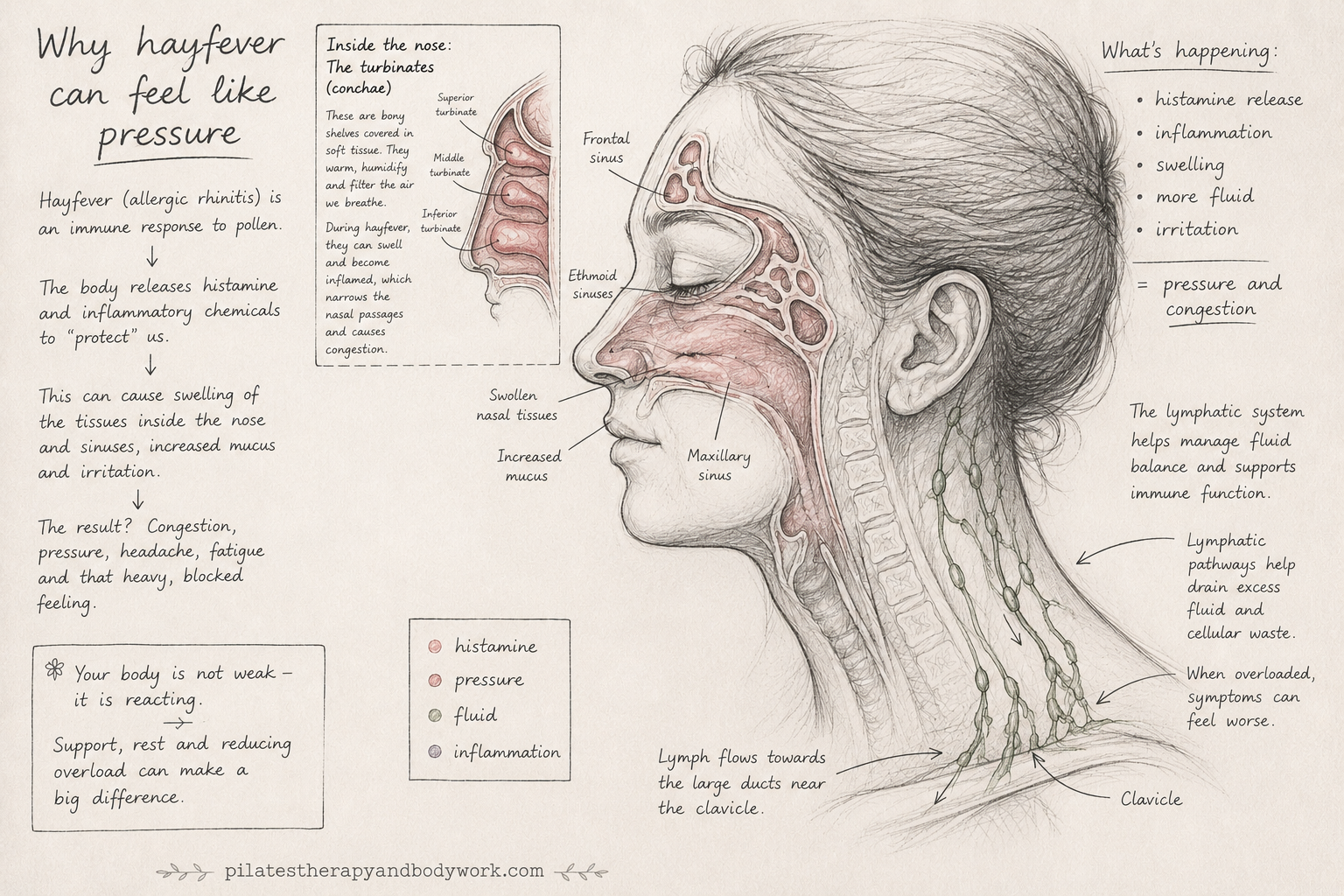
Hayfever (seasonal allergic rhinitis) is an immune response.
When pollen enters the body, the immune system mistakenly reacts as though it is harmful. This triggers the release of histamine and other inflammatory chemicals.
That response can lead to:
- swelling inside the nasal passages
- increased mucus production
- watery eyes
- irritation
- sneezing
- sinus pressure
- fatigue and brain fog.
In the UK, allergic rhinitis affects around 1 in 4 people at some point in their lives, making it one of the most common allergic conditions.
What many people do not realise is that inflammation creates fluid and pressure changes within tissues.
Your nose, sinuses, eyes and throat are not isolated structures. They are part of a connected system involving:
- circulation
- lymphatic drainage
- breathing mechanics
- nervous system responses
- and immune activity.
That is one reason why stress, poor sleep, fatigue and overload can sometimes make symptoms feel even worse.
“Why hayfever can feel like pressure”
Where reflexology may help
Reflexology is not about forcing the body to “fix itself”.
For many people, it is more about creating an environment where the nervous system can soften a little.
When somebody feels congested, stressed, exhausted and uncomfortable for weeks, even a short period of relaxation can feel significant.
Some reflexologists report clients experiencing:
- reduced feelings of congestion
- improved relaxation
- better sleep
- reduced stress levels
- a feeling of easier breathing after treatment.
Research in complementary therapies is still developing, and evidence specifically for hayfever remains limited. However, reflexology has been studied for stress reduction, wellbeing and relaxation responses, which may indirectly support people coping with inflammatory conditions.
And honestly?
Sometimes support matters too.
Feeling calmer, sleeping better, slowing breathing, reducing tension around the neck, jaw and chest — all of these can influence how overwhelmed somebody feels by symptoms.
Why lymphatic drainage and congestion are often linked
This is the part many people find interesting.
The tissues inside the nose and sinuses are highly vascular and influenced by fluid balance and immune activity.
When tissues become irritated and inflamed, swelling can increase. That swelling contributes to the heavy, blocked, pressurised feeling many people describe during hayfever season.
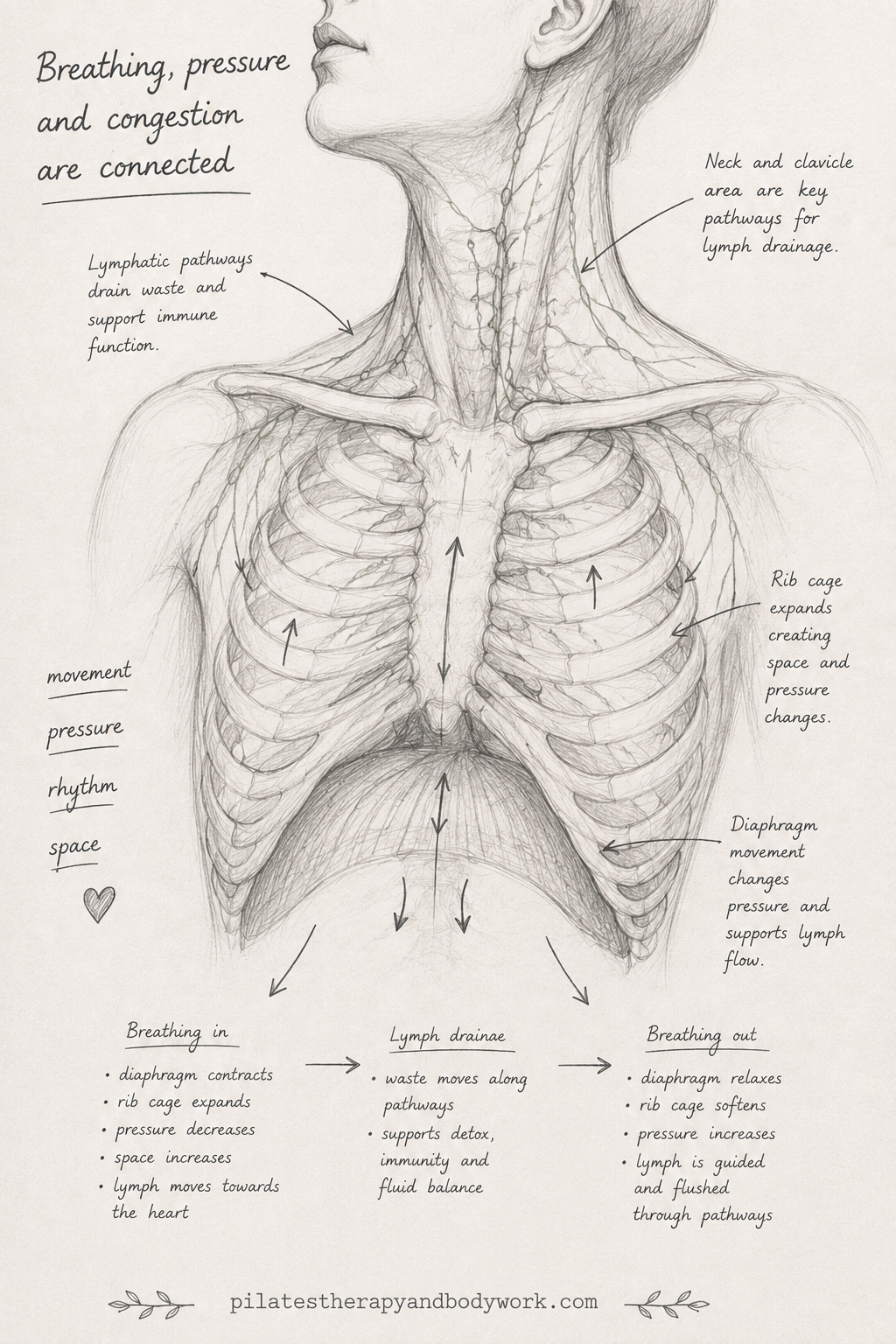
The lymphatic system helps manage fluid balance and supports immune function throughout the body.
Manual Lymphatic Drainage (MLD) is a gentle hands-on therapy designed to support lymphatic movement and fluid dynamics.
Some people seek MLD-focused treatments when they experience:
- puffiness around the face
- sinus congestion
- feelings of heaviness
- post-illness swelling
- inflammatory overload
- or stress-related tension.
Importantly:
MLD is not a treatment for hayfever itself.
But some people report feeling:
- clearer
- calmer
- lighter
- and less congested afterwards.
This may relate to relaxation, breathing changes, gentle tissue stimulation, and support for fluid movement around congested areas.
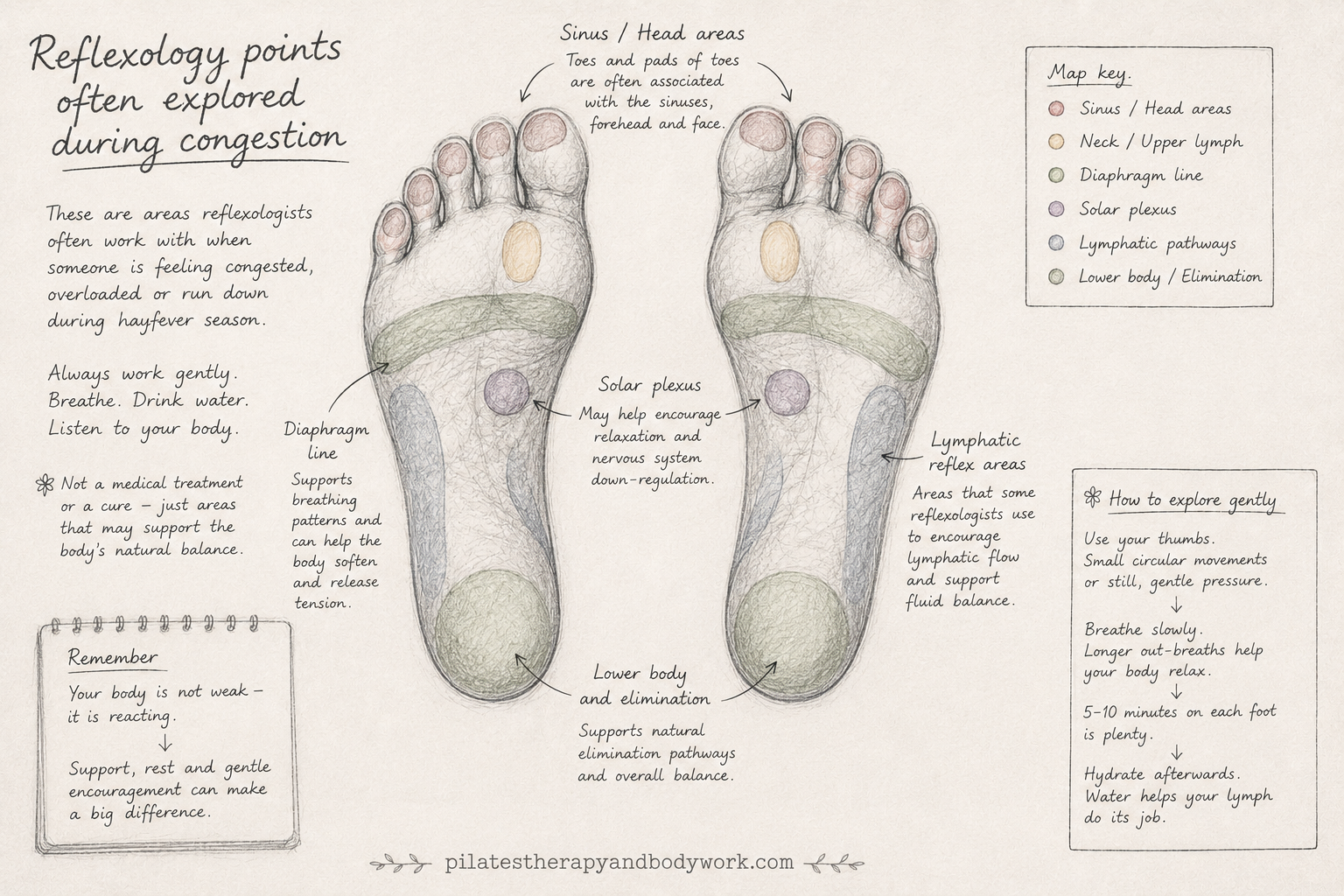
“Reflexology points often explored during congestion”
This is a very basic image – Reflexology maps all vary due to copyright of the original. You may find that if you gently thumb walk in the crease you can see at the base of the big toe, it can help neck, nose and throat. A gentle pressure applied on the diaphragm line beetween the points for solar plexus and neck can be very calming.
Simple reflex points people sometimes explore at home
These are not medical treatments or guaranteed fixes — but they are areas reflexologists often work with when somebody feels congested or overloaded.
Toe/sinus reflex areas
The tips and pads of the toes are often associated with the sinus and head regions in reflexology mapping.
Gentle pressure or circular movements here may feel soothing for some people.
Diaphragm line
Breathing patterns often change when people are congested.
The diaphragm reflex area may be worked to encourage relaxation and softer breathing patterns.
Solar plexus point
Many people hold stress physically during allergy flare-ups.
This area is often used to encourage calming and downregulation.
Lymphatic reflex areas
Some reflexologists include reflex areas associated with lymphatic support and circulation when clients feel puffy, heavy or sluggish.
A few simple things that may help during hayfever season
Alongside medical advice and prescribed treatment, some people find these small habits helpful:
- rinsing pollen from hair and skin after being outdoors
- staying hydrated
- using saline nasal rinses if appropriate
- keeping windows closed during high pollen periods
- drying washing indoors on very high pollen days
- gentle walking and movement
- slower breathing exercises
- reducing stress where possible
- prioritising sleep and recovery.
Sometimes the body simply copes better when overall load is lower.
“Breathing, pressure and congestion are connected”
The bigger picture: support, not perfection
One of the things I often say in clinic is this:
“Your body is not weak — it is reacting.”
Hayfever can leave people feeling tired, irritable, foggy and disconnected from themselves.
Sometimes support is not about “fixing” everything.
Sometimes it is about:
- calming the nervous system
- helping someone slow down
- supporting breathing
- reducing tension
- and helping the body feel a little less overwhelmed.
That is often where gentle touch therapies can fit beautifully.
Further reading:
If you are looking for gentle reflexology, Manual Lymphatic Drainage (MLD), or supportive bodywork in Clacton-on-Sea, Bury St Edmunds, Essex or Suffolk, my work focuses on calm, clinically informed support for people dealing with swelling, stress, recovery, fatigue and persistent body overwhelm.
Because sometimes helping the body feel safer and less overloaded matters too.