

Your Brain Has a Drainage System (And It Only Works Properly When You Sleep)
We talk a lot about the body.
Muscles.
Joints.
Circulation.
The lymphatic system.
But what about the brain?
Because here’s something most people have never been told:
Your brain has its own clean-up system.
And it only really switches on properly when you sleep.
The easiest way to understand it
I often describe this to clients as:
“An overnight rinse for the brain.”
Not in a dramatic way…
Just in a quiet, practical, this-is-how-your-body-works kind of way.
During the day, your brain is busy:
-
thinking
-
processing
-
reacting
-
dealing with stress
All of that activity creates waste.
And that waste needs clearing.
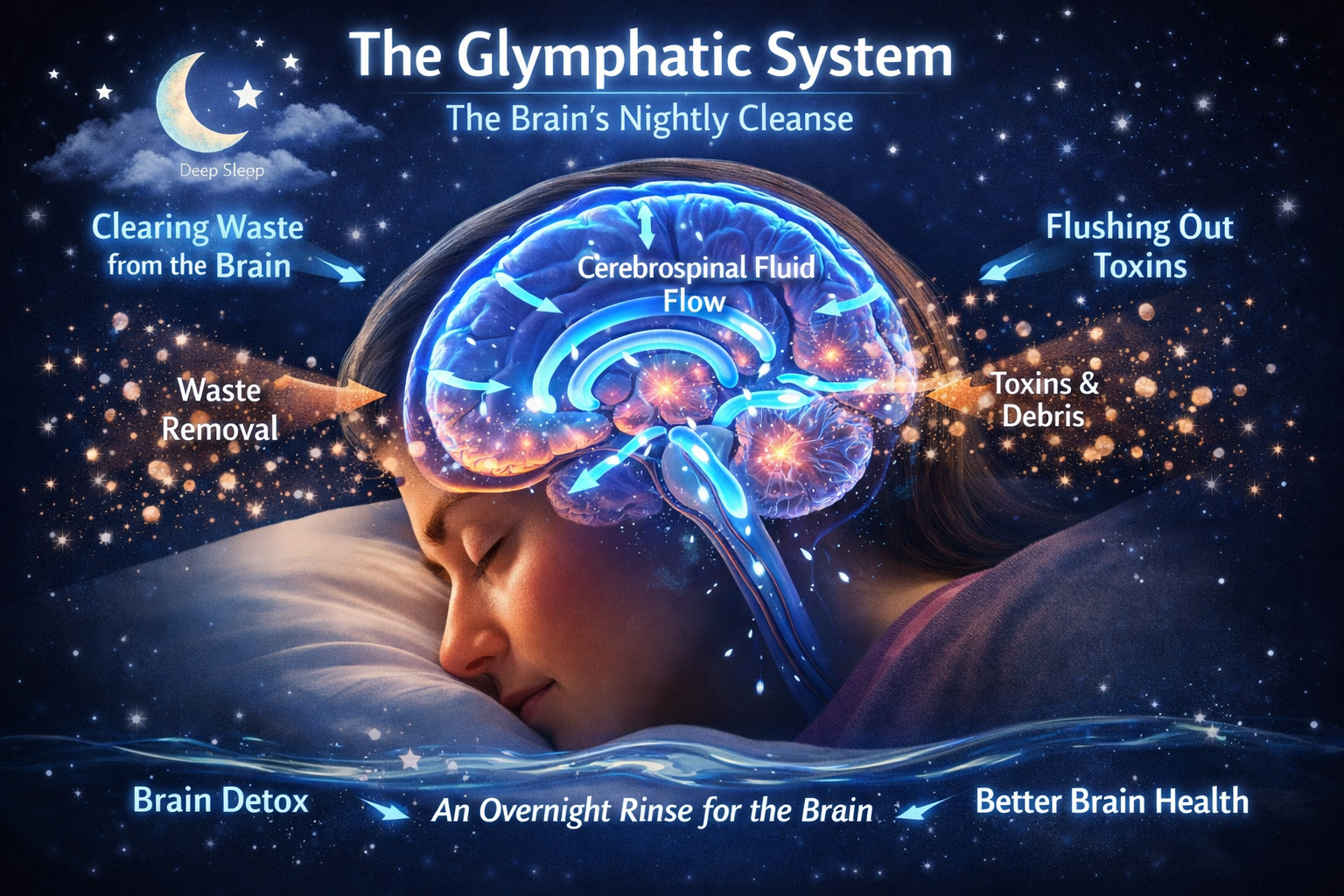
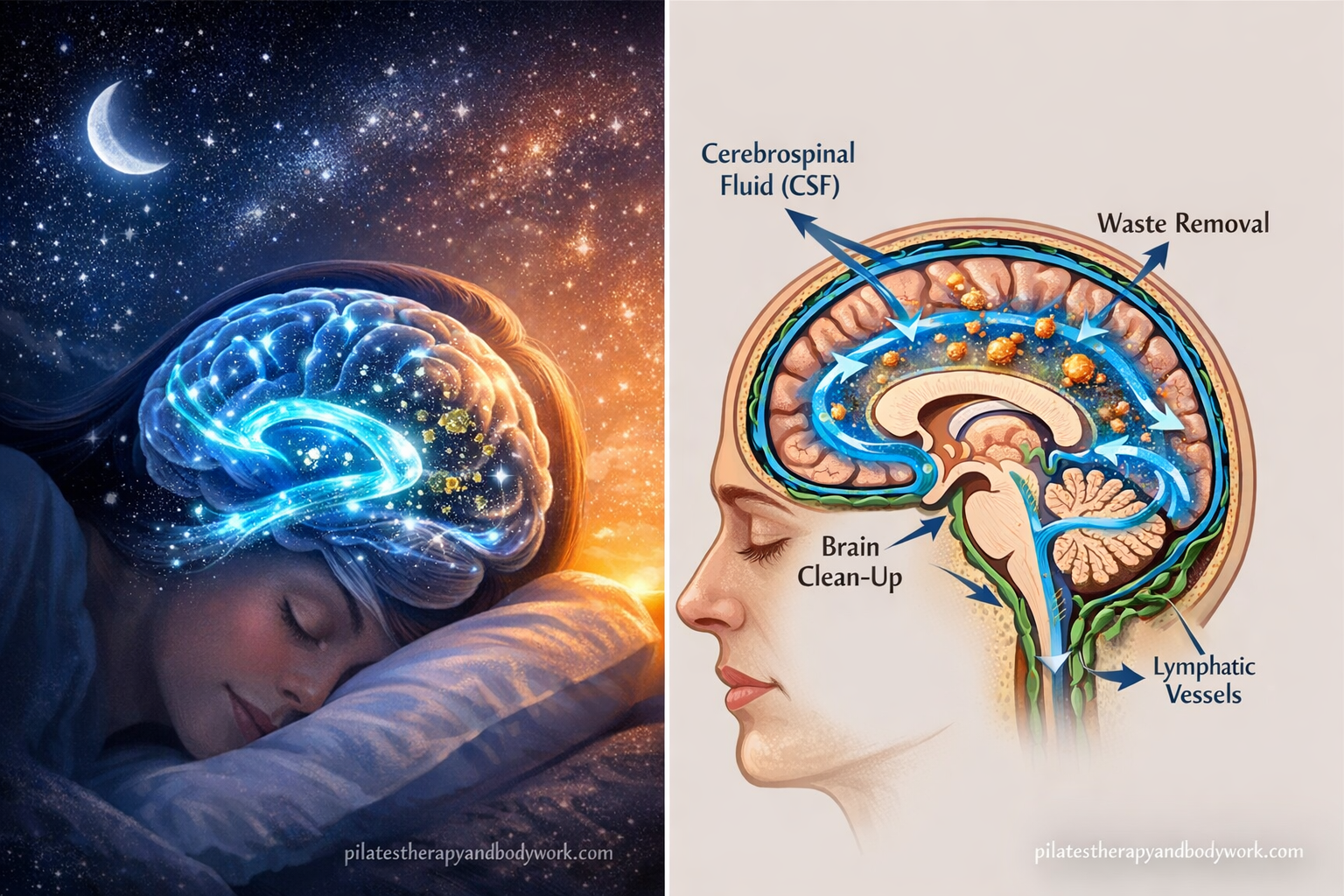
So what is the glymphatic system?
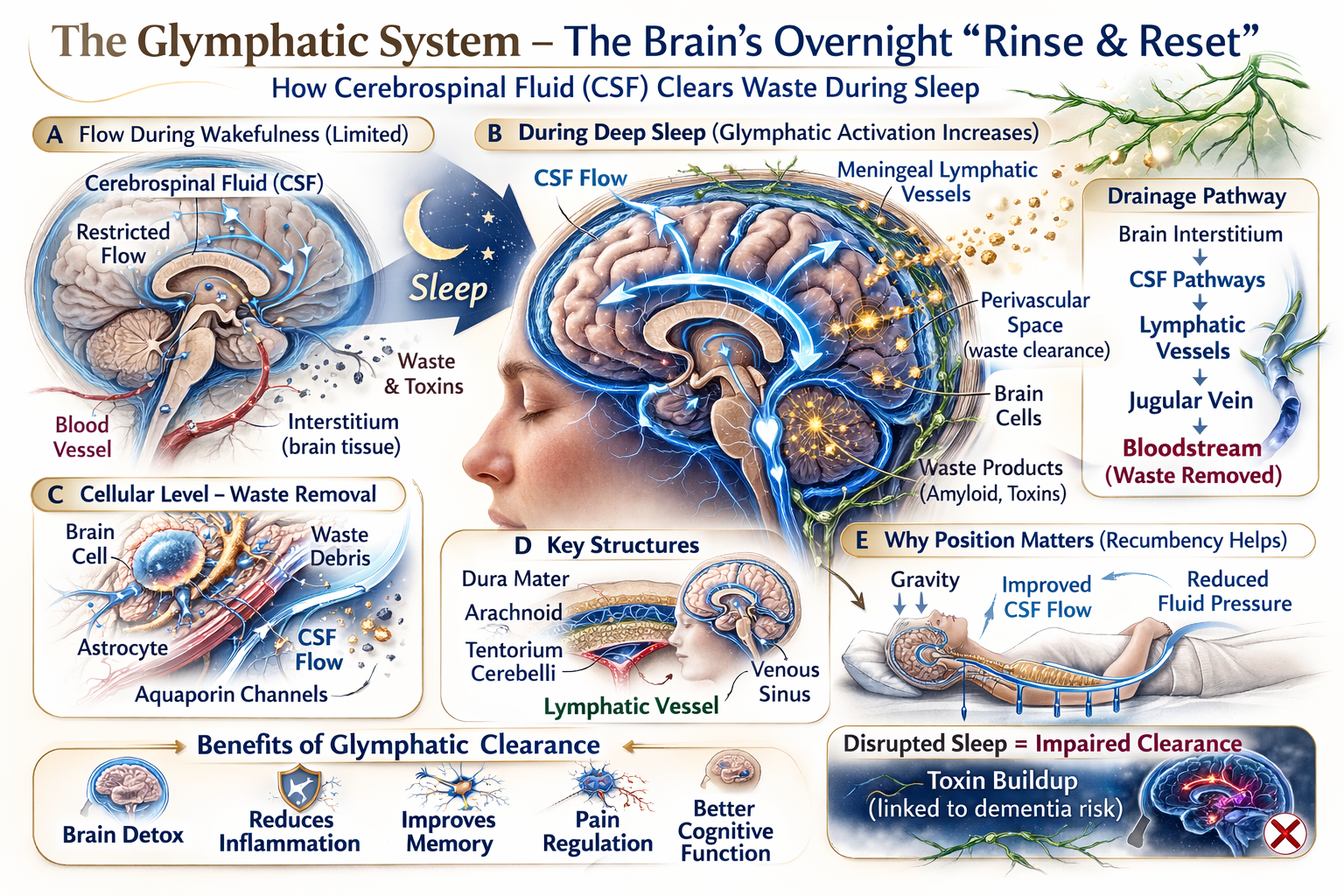
The glymphatic system is a network that helps clear waste from the brain.
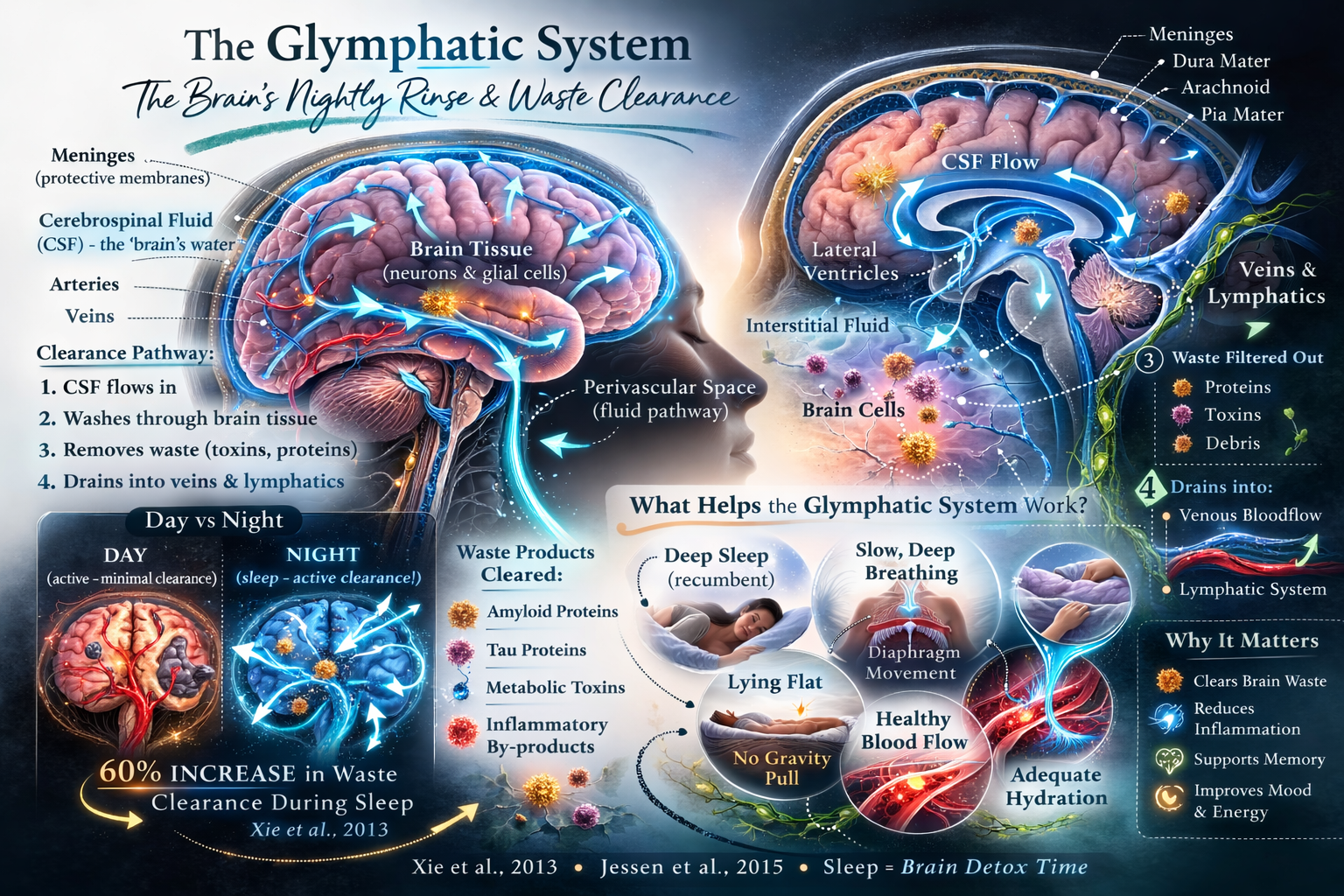
It moves fluid (cerebrospinal fluid) through brain tissue and washes away metabolic by-products.
Think of it like:
a gentle flushing system
or a rinse cycle
Why sleep matters (this is the key bit)
Research has shown that this system becomes far more active during sleep.
One of the most well-known studies (Xie et al., 2013) found that the space between brain cells increased during sleep, allowing fluid to move more freely and clear waste — with around a 60% increase in clearance activity.
So when sleep is poor…
That clean-up process is reduced.
Not stopped completely.
But not working as efficiently as it could.
What does that feel like in real life?
This is where people start nodding.
Because they already know this feeling:
-
Brain fog
-
Slower thinking
-
Forgetfulness
-
Feeling “not quite with it”
That is not just tiredness.
It is your brain not having had the chance to properly reset.
And it’s not just the brain
This is where your work comes in beautifully.
Because the body is not separate from the brain.
Sleep is also when:
-
The body is lying down (recumbent)
-
Fluid is not constantly pulled down by gravity
-
The lymphatic and venous systems can catch up
-
Breathing tends to become slower and deeper
So while the brain is clearing…
The body is also rebalancing fluid and pressure
A quiet connection
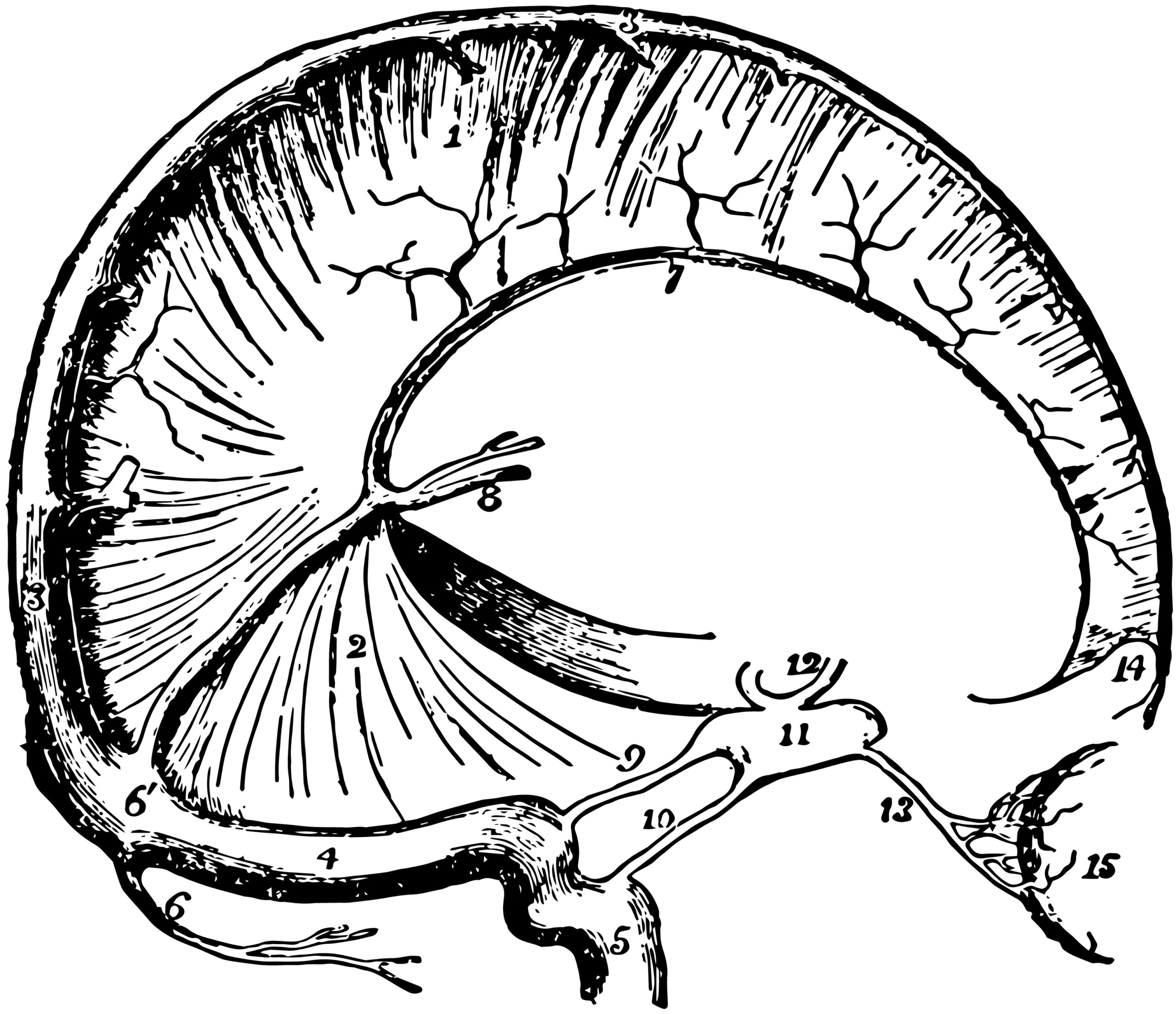
Inside the skull, structures like the tentorium cerebelli and surrounding membranes connect closely with venous drainage pathways.
And newer research is exploring how fluid movement, brain health and these structures are more connected than we once thought.
You don’t need to remember the names.
Just this:
The brain has structure, fluid, and drainage — and sleep supports all of it
What happens when sleep is poor?
We see patterns:
-
More inflammation
-
Reduced ability to cope with stress
-
Increased sensitivity to pain
-
Slower recovery
And over time…
A system that feels more overwhelmed than supported
Simple ways to support your “brain rinse”
You don’t need a perfect routine.
Start with small, realistic steps:
-
Give yourself enough time in bed (even if sleep isn’t perfect)
-
Reduce bright light and screens before bed
-
Let your body wind down gradually
-
Use breathing, meditation or Yoga Nidra to help settle
Related blog: Why sleep matters more than you think (for swelling and recovery)
Final thought
Your body already knows how to do this.
You don’t have to “make” your brain clean itself.
You just need to give it the conditions where it can.
And sleep is one of the biggest ones.
Research
-
Xie et al. (2013) — increased glymphatic activity during sleep (~60%)
-
Jessen et al. (2015) — sleep supports brain waste clearance
-
NHS — sleep linked to concentration, mood and overall health
If sleep feels difficult, or your body feels heavy, foggy or not quite right…
You’re not imagining it.
Sometimes understanding what is happening is the first step.
And from there, we can start to support the system more gently.
Clacton-on-Sea, Bury St Edmunds, Essex & Suffolk

The glymphatic system_ cleaning the brain