
I’ve been thinking a lot lately (dangerous, I know).
Partly because I’m in the middle of my Vodder lymphoedema training…
Partly because I’m seeing more people in clinic during or after cancer treatment… And yes this is also cold and flu season.
But mostly because I keep hearing:
“I don’t want anything too deep.”
or
“I like a firm massage — it feels like it’s doing something.”
And it made me realise that we don’t always talk about the aim of hands-on therapy.
Because it’s not always about muscles.
The Body is Always Trying to Find Its Balance
Your body is constantly adjusting itself to stay in balance — chemically, hormonally, neurologically and mechanically.
That ongoing balancing act is what we call equilibrium.
And the process of maintaining that internal balance?
That’s homeostasis.
(A very simple way to think of it is: the body’s ability to keep things “just right” on the inside, even when life on the outside is anything but.)
Sleep, digestion, immune response, temperature, fluid levels, hormone levels…
All of these are being quietly regulated in the background.
Until they’re not.
Illness, surgery, cancer treatment, chronic stress, fatigue, persistent pain — all of these can shift the system away from that steady middle ground.
And sometimes what the body needs isn’t more input.
It needs less.
“So If I’m Unwell… Massage Would Help Bring Me Back Into Balance, Right?”
This is something people often ask — sometimes out loud, sometimes quietly by turning up anyway.
If hands-on therapy supports homeostasis (balance), then surely having a massage when you’ve got a cold, fever or feel unwell would help bring the body back into balance?
It sounds like it should.
But actually — this is one of the times when massage is usually not advised.
When you’re fighting an infection, your immune system is already working hard.
Your lymphatic system is already busy.
Your temperature regulation may already be altered.
Your inflammatory responses are already active.
Hands-on therapy — even gentle work like Manual Lymphatic Drainage — can increase circulation, influence fluid movement and alter autonomic responses.
And while that’s helpful in many situations, during an active infection it may:
-
increase metabolic demand
-
encourage wider fluid movement
-
place additional load on an already working immune system
-
or simply leave you feeling more fatigued afterwards
So sometimes the most supportive thing we can do for homeostasis…
Is rest.
Hydration.
Sleep.
And postponing treatment until your system has stabilised.
Supporting balance isn’t always about adding input.
Sometimes it’s about not interfering with the body’s current priorities.
When Waiting is the Most Supportive Option
Occasionally, someone will message on the morning of their appointment to say they’ve woken up feeling unwell — perhaps with a cold, fever, sickness bug or flare of fatigue.
And they’ll often add:
“But I don’t want to let you down…”
or
“I thought maybe it would still help me feel better.”
And this is where it’s important to gently say:
You’re not letting me down by rescheduling.
In fact, choosing to rest when your system is already working hard is often the most supportive thing you can do for your own homeostasis.
A Quiet Word About Cancellation Policies
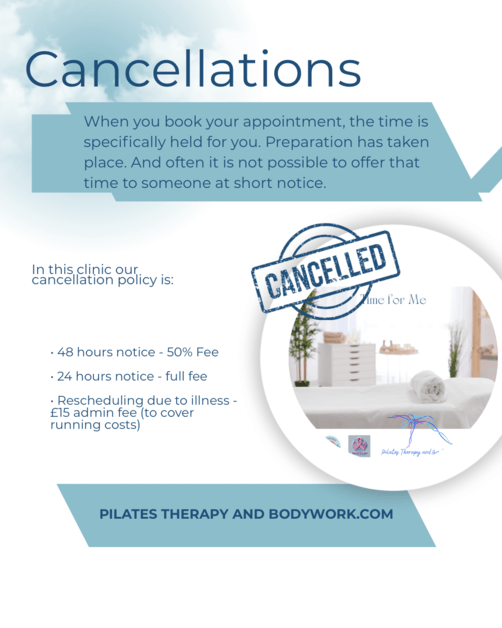
Because of this, most therapeutic clinics will have a cancellation or rescheduling policy in place.
Not as a punishment — but to protect the sustainability of the service.
When an appointment is booked, that time is held specifically for you.
Preparation may already have taken place.
And it’s often not possible to offer that time to someone else at short notice.
In this clinic:
-
48 hours’ notice — 50% fee
-
24 hours’ notice — full fee
-
Rescheduling due to illness — £15 admin fee (to cover room and running costs)
This small fee allows you to prioritise your health when needed, whilst helping the clinic remain available for others who rely on these services as part of their recovery.
It’s simply about sharing the responsibility of keeping the space open, calm and sustainable for everyone.
Not All Massage is Trying to Do the Same Thing
Deep work often aims to:
-
mechanically influence tissue
-
improve circulation
-
change muscle tone
-
increase range of movement
And there’s a place for that.
But some therapies — like Manual Lymphatic Drainage, oncology massage or reflexology — may be aiming for something quite different.
Sometimes we are trying to:
-
reduce sympathetic nervous system activity
-
improve lymphatic uptake
-
support fluid exchange
-
reduce inflammatory load
-
lower pain sensitivity
-
create a sense of safety in tissue
-
allow parasympathetic processes (repair, digestion, immune function) to take place
Not to “break down” anything.
But to support regulation.
A Word You Might Not Hear Often: Sympathicolysis
You might hear me use this in clinic from time to time.
The sympathetic nervous system is responsible for:
-
alertness
-
protection
-
mobilisation
-
fight or flight responses
Useful when you need to run for the bus.
Less helpful when you’re trying to sleep, digest food, repair tissue or manage inflammation.
Sympathicolysis simply means reducing excessive sympathetic activity.
Helping the body move out of a constant state of alert.
Light, rhythmic touch — as used in MLD — can support this shift.
And when sympathetic drive reduces, we often see improvements in:
-
sleep
-
digestion
-
fluid regulation
-
pain perception
-
immune function
Which is why these therapies are not always about pressure.
They’re about permission.
Light vs Deep — Different Aim, Different Target
Deep work may be targeting:
-
muscle tone
-
fascia
-
joint mobility
-
local circulation
Light, rhythmic work may be targeting:
-
mechanoreceptors
-
baroreceptors
-
autonomic tone
-
lymphatic uptake
-
interstitial pressure
-
nociceptive input
Different dose.
Different system.
Neither better.
Just different.
Why This Matters After Cancer
Post-treatment bodies may already be:
-
fatigued
-
inflamed
-
lymphatically compromised
-
hormonally disrupted
-
sensitised to input
So the aim of therapy often becomes:
supporting homeostatic recovery
not adding further load.
Another Piece of the Puzzle
In our Pieces of the Puzzle interview series, we often talk about how recovery doesn’t sit with one profession or one modality.
It might include:
-
skin care with MooGoo
-
peer support – there are several groups local including Together after Breast Cancer
-
breast awareness education with Early Breast Aware
-
community support like North Essex Lymphoedema Support Group
-
walking groups such as 5K Your Way Move Against Cancer
-
or even digital confidence when running a business alongside fatigue – interview with Sarah Jane Mensah, interview with Jackie Golynia
Each conversation shares a different piece of the puzzle — because recovery, wellbeing, and care are never one-size-fits-all.
Hands-on therapy is simply one more way of creating the internal conditions the body needs to restore balance.
I run clinics monthly in Bury st Edmunds and weekly in Clacton-on-Sea. I specialise in treatments that support those going through cancer and their families. Treatments include scar therapy, reflexology, Vodder MLD and therappeutic movement: Cancer rehab, Specialist movement sessions after breast cancer, Walx modified pole walking. Please get in touch for more information or to book your treatments.