
When Should I Worry About Swelling?
Understanding Chronic Oedema, Lymphoedema and the Early Signs to Look For
You might not think about swelling…
until something starts to feel a bit different.
Your rings feel tighter by the afternoon.
Your legs feel heavier at the end of the day.
One arm, one ankle, one area just doesn’t quite feel like the other.
And you find yourself wondering:
– “Is this just normal… or is my body trying to tell me something?”
When swelling becomes something more
Not all swelling is a problem.
We all experience temporary fluid shifts — after travel, heat, long periods of sitting, or hormonal changes.
But when swelling:
- keeps coming back
- lingers for longer
- feels heavier, tighter, or different
- starts to affect one area more than the other
…it may be moving into something we call chronic oedema.
A quiet but growing issue
Chronic oedema is far more common than many people realise.
UK research suggests:
- Around 1 in 5 people over 65 may be living with some form of chronic swelling
- Many cases remain undiagnosed or mislabelled
- Early stages are often dismissed as “just fluid retention”
– This means many people are managing symptoms without understanding what’s actually happening.
Chronic oedema vs lymphoedema — what’s the difference?
This is where it can get confusing.
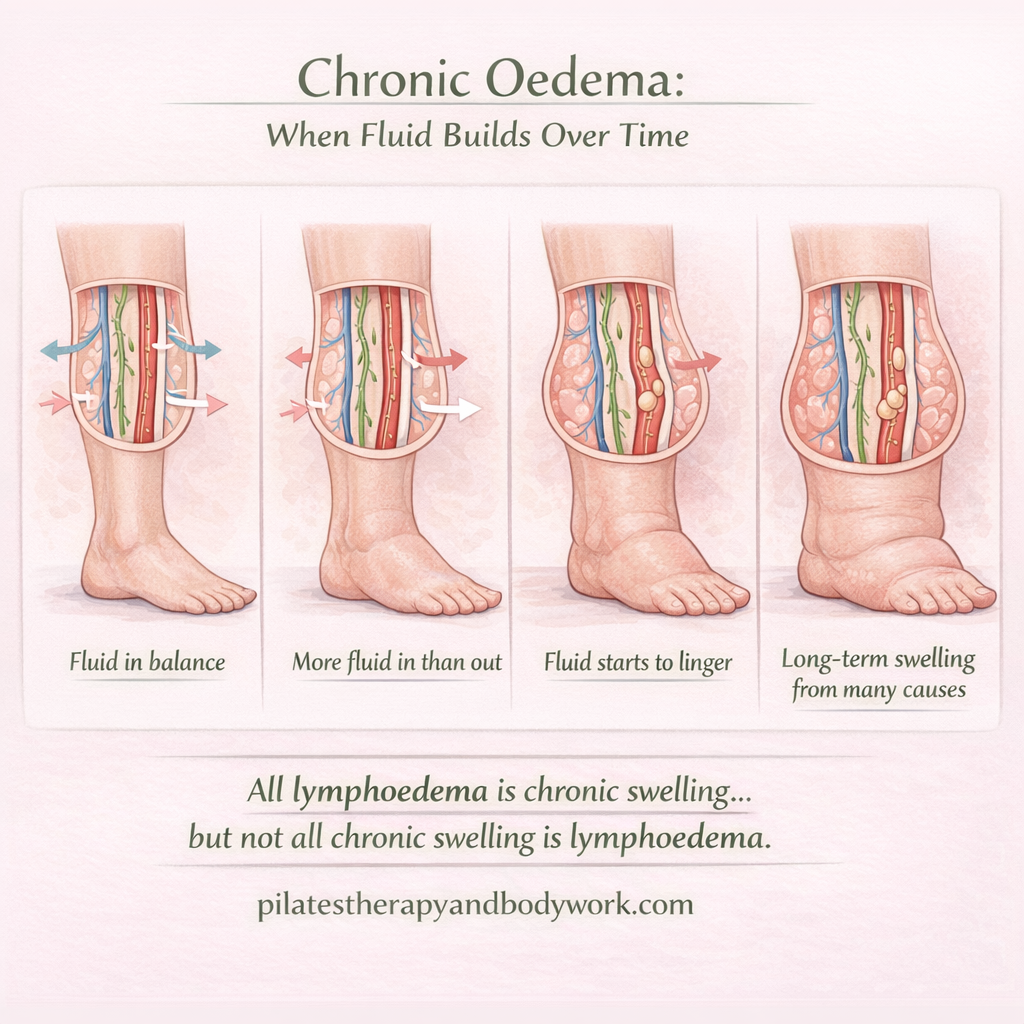
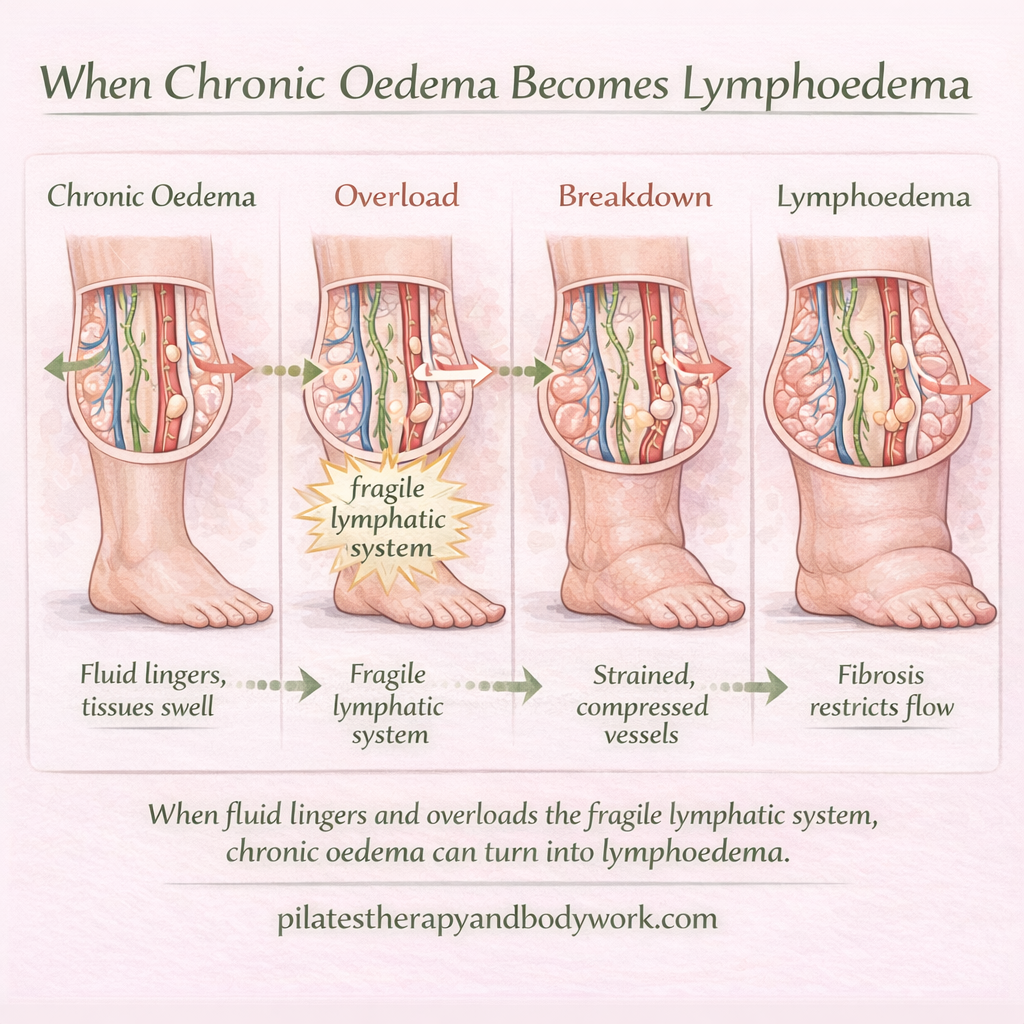
- Chronic oedema → long-term swelling from various causes (circulation, immobility, health conditions)
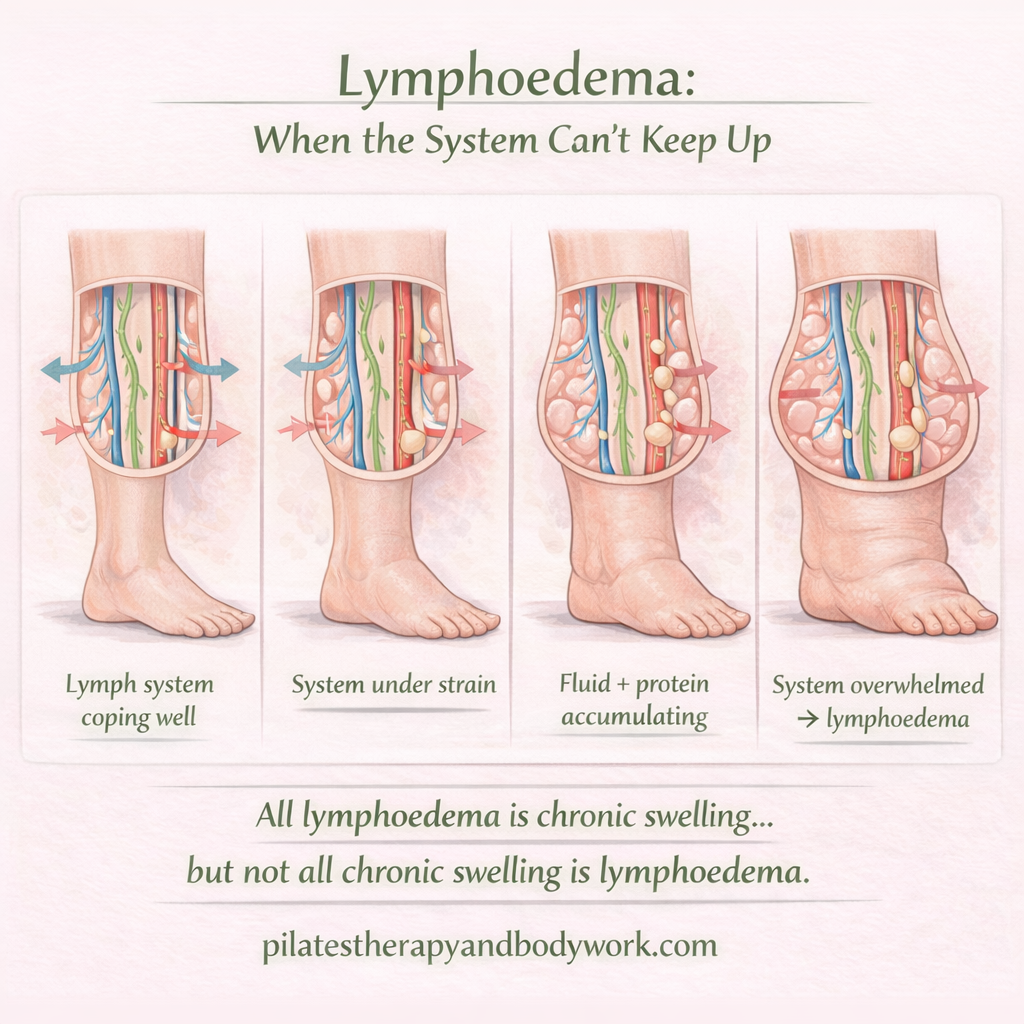
- Lymphoedema → a specific type of chronic swelling caused by a reduced lymphatic transport capacity
– In simple terms:
All lymphoedema is chronic swelling…
but not all chronic swelling is lymphoedema.
Why early awareness matters
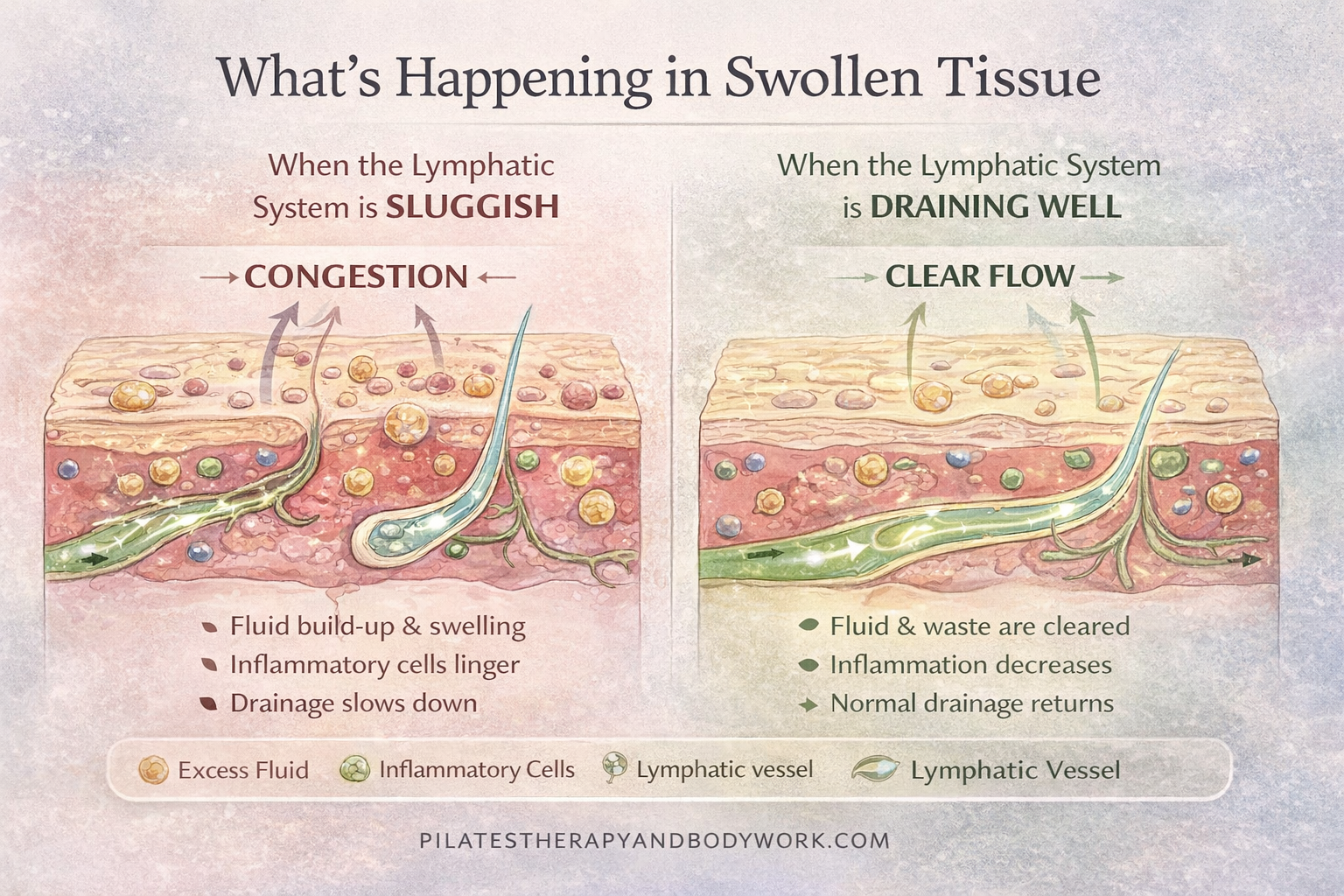
Swelling isn’t just about fluid.
Over time, if it isn’t supported:
– Fluid can become protein-rich
– This can trigger inflammation
– Which can lead to fibrosis (tissue thickening)
And that’s when things often feel:
- heavier
- firmer
- less responsive
Early awareness gives you:
- more options
- gentler interventions
- better outcomes
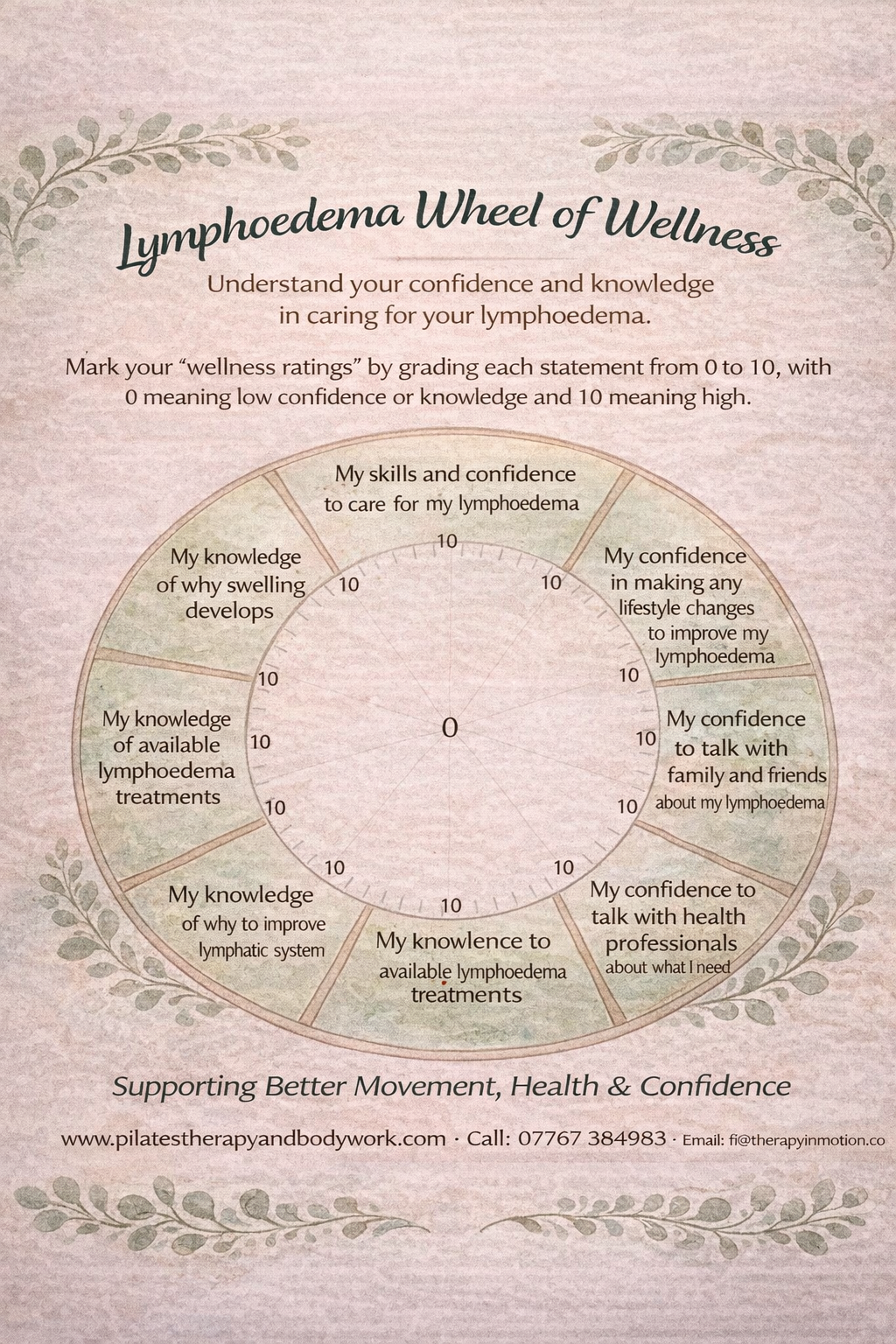
This is where the “Wheel of Wellness” comes in
I created a simple tool to help you step back and look at the bigger picture.
Not just:
– “Is my swelling better or worse?”
But:
– “How confident do I feel understanding and managing this?”
Your Lymphoedema (and Chronic Swelling) Wheel of Wellness
This tool helps you reflect on areas like:
- understanding your swelling
- confidence managing day-to-day changes
- knowing what helps your body
- feeling able to ask for support
It’s not about getting a perfect score.
– It’s about noticing patterns.
– And giving yourself a starting point.
Can this be used beyond lymphoedema?
Yes — and this is important.
You don’t need a diagnosis to start becoming aware.
The wheel works just as well for:
- general fluid retention
- early or suspected swelling
- post-surgical recovery
- ageing-related changes
- people who simply feel “heavier” or less mobile
– It helps you move from:
“I’m not sure what’s happening…”
to:
“I’m starting to understand my body.”
What actually helps?
There’s no single solution — and there shouldn’t be.
Support often comes from small, consistent things:
- gentle, regular movement
- breathing that supports fluid flow
- positioning and rest
- skin care
- compression where appropriate
- hands-on therapies such as Manual Lymphatic Drainage
– It’s not about doing everything
– It’s about doing the right things for you
A different way of thinking about swelling
Instead of asking:
• “How do I get rid of this?”
Try:
• “What is my body asking for support with?”
That shift alone can change everything.
Your next step
If any of this feels familiar, you’re not alone.
You don’t need to have it all figured out.
Start with awareness.
Use the Wheel of Wellness as a gentle check-in.
And if you’d like support:
I offer specialist movement, Manual Lymphatic Drainage, and soft-touch therapies to help you better understand and support your body.
Clacton-on-Sea | Bury St Edmunds | Essex | Suffolk
This isn’t about perfection.
– It’s about understanding.
– And small changes that help your body feel a little easier to live in.