A conversation with Sarah Jayne Mensah from Coastal Body Ballancer– on work, cancer and evolving practice
My first interview in a series– finding out about colleagues I work with, groups and people and different conversations around cancer.
A Conversation on Work, Cancer, and Evolving Practice with Sarah Jayne Mensah from Coastal Body Balance
Beginnings and long-term identity
You’ve worked in the beauty industry since 1984 and have practised reflexology since 1996 — that’s a long relationship with hands-on, caring work. What has your practice meant to you over the years?
Before your breast cancer diagnosis in 2024, what did a typical working week look like for you?
How closely did your sense of identity feel tied to your work at that stage?
Sarah – My practice as a therapist has meant so much to me over the years since I began at the age of 16. I love people and helping people in anyway I can is my main focus in everything I do. Before my breast cancer diagnosis my typical working week was busy and I didn’t have to think about how many massages I had booked in a day. My life was pretty balanced and is not all about work and never has been. I’ve never been a ‘career’ woman as such.
Diagnosis and the immediate impact
Can you take us back to the period around your diagnosis — what were your first thoughts about your business?
As someone who is self-employed, what worried you most in those early days: your health, your clients, your income, or something else entirely?
Did you feel any pressure, either internal or external, to keep working when your body was facing something so significant?
Sarah– When I first got the call back for a second mammogram I thought it was a mistake so was shocked when I discovered it was more serious. My first thought was “what if I need chemo?” “What if I die?” “How am I going to look after my clients if I’m poorly?” I was also annoyed as I had worked so hard to build up my clientele and it had been a struggle so didn’t want to to have people going elsewhere. In the early days I was less concerned with money as it really does become more about family, friends and ‘the bigger picture’. Your health is absolutely THE most important thing in life as everything else is dependent on it. Before my mastectomy I wanted to work as much as possible to have a financial buffer for afterwards but I’m very lucky that my husband earns enough that the bills were covered and that he works from home so was able to look after me in the early days of recovery. I reopened once I felt better but could only offer Body Ballancer as I wasn’t allowed to do any massages for 3 months. I attached some string on the Body Ballancer and trained my clients to zip themselves in which they were all happy to do. I had to make sure I didn’t book too many in at that time so as not to tire myself out as I was still having naps every day at that time.
Surgery, mastectomy, and recovery
How did mastectomy and surgery affect you physically in the early stages?
Was there a point where you realised you couldn’t work in the same way — and how did that land emotionally?
Did you ever question whether you would return to work at all?
Sarah– In the early days I was extremely tired and wasn’t allowed to move my arm above shoulder height. I had physio exercises to do each day and I had to put work to the back of my mind. I was delayed further with a second emergency operation 5 days after the first on my reduction side so after having a blood transfusion I was exhausted. At this point in time I couldn’t even walk to the end of the road and was in a wheelchair so worried that I might not work for some considerable time.
Managing a business during treatment
Practically speaking, how did you manage your business during this time?
Did you pause completely, reduce your workload, or adapt how you worked?
How did you communicate with clients about your diagnosis and time away, and how did that feel?
What surprised you most about the response you received from clients?
Sarah– I was extremely lucky and feel very grateful that my clients were all so lovely and understanding, very patient. I also didn’t need chemo or radiotherapy following my operation so after 3 months I felt back to normal and tentatively returned to normal duties.
Holding others while needing care yourself
You’ve spent decades supporting others — what was it like to suddenly be the one needing care?
Did you ever feel torn between looking after yourself and feeling responsible for your clients or your business?
How did you protect your energy, both physically and emotionally, during recovery?
Sarah– I’m much better at caring for others than letting others care for me. I guess it’s who you ar and why you come into this industry. I looked after myself with what I ate, got loads of rest, got fresh air when I felt up to walking everyday and the only person I let take care of me was my husband which was tough as he isn’t that way inclined! I did a lot of meditation and deep breathing before surgery and after which massively helped mentally. I kept certain people away who drain my energy and only let in people I trust not to drain me.
Reflexology, touch, and self-care
Did reflexology or other therapies support you during your own cancer journey?
Has becoming a patient yourself changed your relationship with touch, healing, or the body?
Do you feel that your lived experience of cancer has altered the way you now work with clients who are unwell or vulnerable?
Sarah– When you are diagnosed your are offered complimentary treatments at the hub at Colchester Hospital (Colchester Cancer Wellbeing Centre). I went for 2 Reflexology treatments before my op and a breathing class with others going through similar times. It was wonderful to feel completely in someone else’s hands and the relaxation that brings made me realise the power of what I do for a living and what a precious gift it is to be able to offer someone a sense of calm in a time of fear and chaos. I have always been an empathetic so I guess it was refreshing to feel that someone had my health in their hands and I got to see it from the other side for once.
How practice changes after cancer
Looking back now, how has your practice changed since your diagnosis?
Do you notice yourself working differently — perhaps in how you pace sessions, listen, or use touch?
Are there things you now value more in your work that you might not have prioritised before?
Has your experience shifted what feels important in a treatment, for both you and your clients?
Sarah– I guess I’m more conscious now of how tired I still get a year and a half on. I think because I’m so grateful everyday that the mammogram caught it when it did and my experience was so much better than a lot of people that I feel sometimes like it never happened. I would like to think that I can keep going with my business until I retire but I also know that it’s not the end of the world if you have to give up work. Health and happiness are what’s most important and time spent with loved ones.
Boundaries, sustainability, and longevity
Has cancer changed how you set boundaries around your time, availability, or energy?
Are there things you now do less of — or no longer do at all — in order to protect your health?
How do you think about sustainability in hands-on work now, after everything you’ve been through?
Sarah– I feel I’m of an age where I choose which hours I want to work and that’s one of the benefits of being self-employed. I hope I can keep going with what I’m doing now as long as possible and I’m very lucky that after my op I was able to return to normal duties after only 3 months. I think this was helped by my listening to the doctors and physios plus I play tennis so that was a driving force in my recovery!
Creating a healing therapy space
From your experience, what really makes a great therapy room — beyond equipment or décor?
How do you personally “set the scene” so a client feels safe, held, and able to relax?
Are there small details you feel make a big difference to how someone experiences a session?
Did your time as a patient change what you notice or prioritise in a treatment environment?
Sarah– For me, what makes a great therapy room is a sense of calm, like feeling you can leave your troubles at the door or talk about them until you find relief and that as you leave you feel way more relaxed and able to cope with the stresses of life knowing your therapist has your back. I have noticed over the years that there are certain people you ‘just click with’ immediately and some take a little longer, some you may never ‘gel with’ and that’s fine. Everyone is different and matching someone’s energy is important. You both have to feel comfortable for the connection to work and to experience optimum from a treatment.
Wisdom for those entering the profession
For someone entering reflexology or beauty therapies today, what foundations matter most?
What do you think can’t be taught in a course or qualification?
From your decades of experience, what do you feel separates a good therapist from a truly great one?
What would you encourage newcomers to protect or nurture in themselves as they build a career?
Sarah– It is very different in the industry now from when I started back in 1984. I had to go to college full-time and learn everything there was to know, anatomy, physiology, all the muscles their action and orientation, theory and practical in every treatment and have many exams. These days people are offering botox injections without proper medical training. All the training in the world can’t change your personality and I feel it’s this that keeps people coming back time and again, that personal interaction that they might not get anywhere else. I would recommend that anyone coming into the business now does what makes them feel passion, makes their hearts sing. I used to go through the motions with certain pats of beauty therapy like nails and waxing but now I’m older and wiser I much prefer the hands-on, holistic treatments.
Community, collaboration, and perspective
How important has community or peer support been for you throughout your career, particularly during illness?
Has your view of collaboration with other therapists changed since your diagnosis?
Sarah– Community in an area like Frinton is everything! Since moving here 4 years ago and starting a business from scratch 3 years ago it has become the No. 1 reason I love living here. I have friends who are therapists who understand the troubled times and how important it is to stay relevant and find your ‘niche’. There are lots of salons around and luckily we all offer something different so it doesn’t feel competitive. I myself am more than happy to pass clients on to another practitioner for something I can’t offer and I think this is important in business, especially in a small town like Frinton.
Redefining success
How do you personally define “enough” now — in terms of work, income, or energy?
Has cancer changed what success looks like for you?
Sarah– I am not and never have been a career woman. My family and friends have always come first but I do now have to be aware of my energy levels be that because of my age or since my illness. I can’t pour from an empty cup so I have to be conscious about not overdoing it. Success to me is more than just my business, its about people recommending me to family and friends, its about being recognised for a positive effect I have on people’s wellbeing and making friends along lifestyle journey.
Reflection and closing
Even after many years in practice, are there things you still feel you are learning or unlearning?
If you were starting again today, what might you do differently?
What does meaningful work look like to you now?
Sarah– Even after a lifetime of practice there is always room to learn more. It’s important in life in general to never quit learning, it keeps us young and things change rapidly all the time so it’s important to keep up with these changes. If I were starting again today I would probably take my skills abroad and travel with them anywhere in the world. The meaningful parts are when you see someone in pain– be that physically, emotionally or mentally and through relaxing treatments and being a listening ear you can help them move forward with more comfort and support than perhaps their own family can offer and a safe space in which to offload their troubles.
And finally:
If you could offer one piece of reassurance to someone newly diagnosed with cancer who is worried about their livelihood, what would it be?
Sarah– If I could offer one piece of advice to someone newly diagnosed it would be that it’s transitional, it’s not forever. Be kind to yourself, seek help where you need it, be that financially or practically and don’t worry too much about the future as it’s not set in stone and work is a means to an end not the end. Look after your physical and mental state by any means possible.
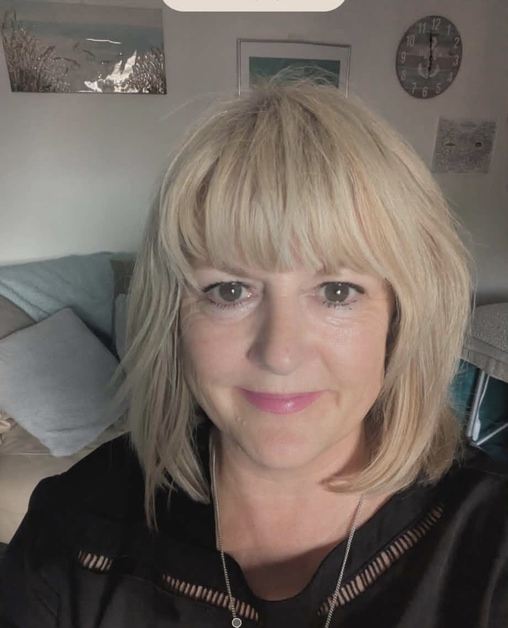
I think the image below sums Sarah Jayne up. Her love of life, her love for her work and the care she has for her family, friends and clients.
You will find Coastal Body Ballancer in the beautiful town of Frinton where Sarah Jayne Mensah offers her treatments.