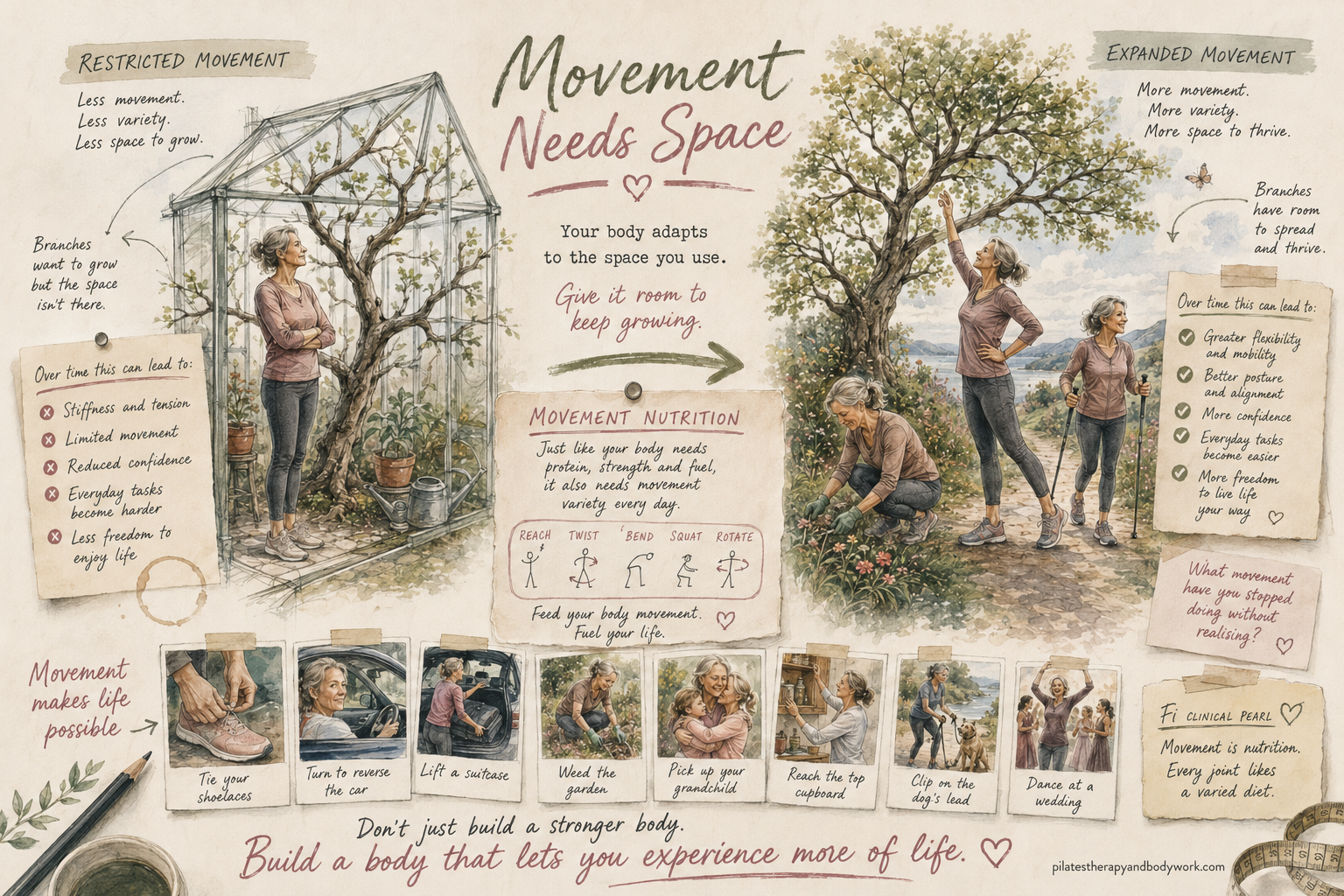
Changing the Mindset from Weight Loss to Healthspan
“Being lighter isn’t the finish line. It’s what you choose to do with your body afterwards that really matters.”
We’ve Been Asking the Wrong Question
For years, I thought success was measured in pounds.
Not the pounds in my purse – the pounds on my bathroom scales.
Every Monday felt like a report card. (I have done a few weight loss programmes in my time)
Every new diet promised the same thing.
Get smaller.
Wear a smaller dress size.
Take up less space.
And if you’re anything like me, you’ll probably recognise that feeling. We celebrate every pound lost, every notch tighter on the belt, every compliment that starts with, “You’ve lost weight.”
But somewhere along my own journey, something changed.
As the weight started coming off, I found myself asking a completely different question.
What kind of body am I actually trying to build?
Because reaching sixty has a funny way of changing your priorities.
I don’t just want to look healthier.
I want to feel capable.
I want to climb hills without worrying about my knees.
I want to lift shopping without thinking twice.
I want to travel with Annie, our motorhome, and still enjoy exploring wherever we stop.
I want to teach classes because I love teaching them—not because I’m physically hanging on.
Most of all…
I want a body that keeps saying yes to life.
“Thin is an appearance.” “Strong is a capability.”
Success Needs a New Definition
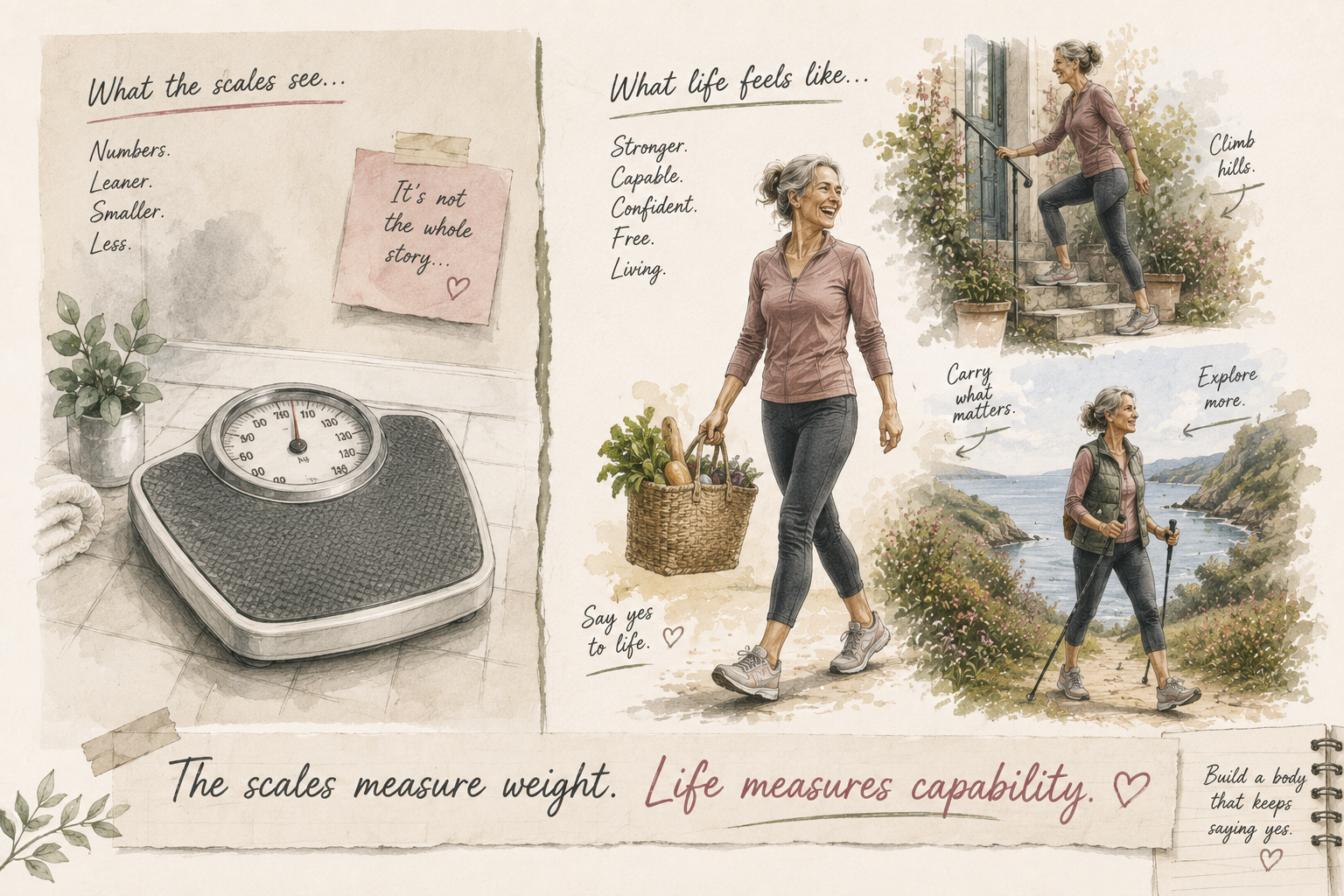
Somewhere along the way, we’ve confused weight loss with health.
The two often travel together, but they are not the same thing.
Losing excess body weight can reduce stress on joints, improve blood pressure, improve blood sugar control and lower the risk of many long-term health conditions.
Those are real benefits.
But if our only goal is to become lighter, we may miss something even more important.
What happens if we lose weight…
…but lose muscle?
…lose confidence?
…stop doing the activities we love?
Healthy ageing isn’t simply about weighing less.
It’s about continuing to do the things that make life enjoyable.
Because if the scales go down but life becomes smaller…
have we really succeeded?
Strength Changes Everything
One of the things I love about working with people is that strength means something different to everyone.
For one person, it’s getting up from the floor without needing help.
For another, it’s carrying their grandchild.
For someone recovering from cancer treatment, strength might simply mean walking around the block without needing to stop.
Strong isn’t one size fits all.
And that’s wonderful.
Research increasingly supports this shift in thinking.
The World Health Organization highlights that maintaining strength, balance and physical function is central to healthy ageing, helping people stay independent for longer rather than simply extending lifespan.
That word—independence—is incredibly powerful.
Because most of us aren’t chasing medals.
We’re chasing freedom.
It’s About Healthspan, Not Just Lifespan
We’ve become very good at talking about living longer.
But perhaps we should spend more time talking about living better.
Researchers now use the term healthspan.
Healthspan simply means the years we live in good health.
Years when we can move well.
Think clearly.
Travel.
Laugh.
Play.
Garden.
Dance.
Climb the stairs without planning the journey.
Healthspan is about quality, not just quantity.
And movement plays an enormous role.
Why Fifty Isn’t Just Another Birthday
None of this is about frightening anyone.
It’s about understanding that our bodies are entering a different chapter.
Before menopause, oestrogen quietly works behind the scenes supporting far more than our menstrual cycle. It plays an important role in maintaining bone, influencing muscle, supporting connective tissue and helping our bodies adapt to the loads we place upon them.
As oestrogen levels gradually fall, that protective effect begins to reduce.
It doesn’t mean we’re destined to become frail.
It certainly doesn’t mean life suddenly goes downhill after fifty.
It simply means our bodies become a little less forgiving if we stop asking them to do challenging things.
That’s why the advice changes.
Not because women suddenly become old.
Because the biology changes.
The encouraging news is that our bodies continue to respond remarkably well to strength training, weight-bearing exercise, balance work and purposeful movement well into later life.
Perhaps we simply have to become a little more intentional than we did in our thirties.
Fi Research Note
After menopause, organisations including the Royal Osteoporosis Society, the International Osteoporosis Foundation and the North American Menopause Society all recommend regular resistance training, weight-bearing exercise and balance activities to help maintain bone strength, muscle function and reduce fall risk.
The message isn’t:
“Do more because you’re failing.”
It’s:
“Do the right things because your body is adapting.”
Looking for the Clues
One of the fascinating things about working with bodies is that they often tell us a story long before pain arrives.
Some women tell me they feel as though they’re shrinking.
Others notice they’re standing a little differently.
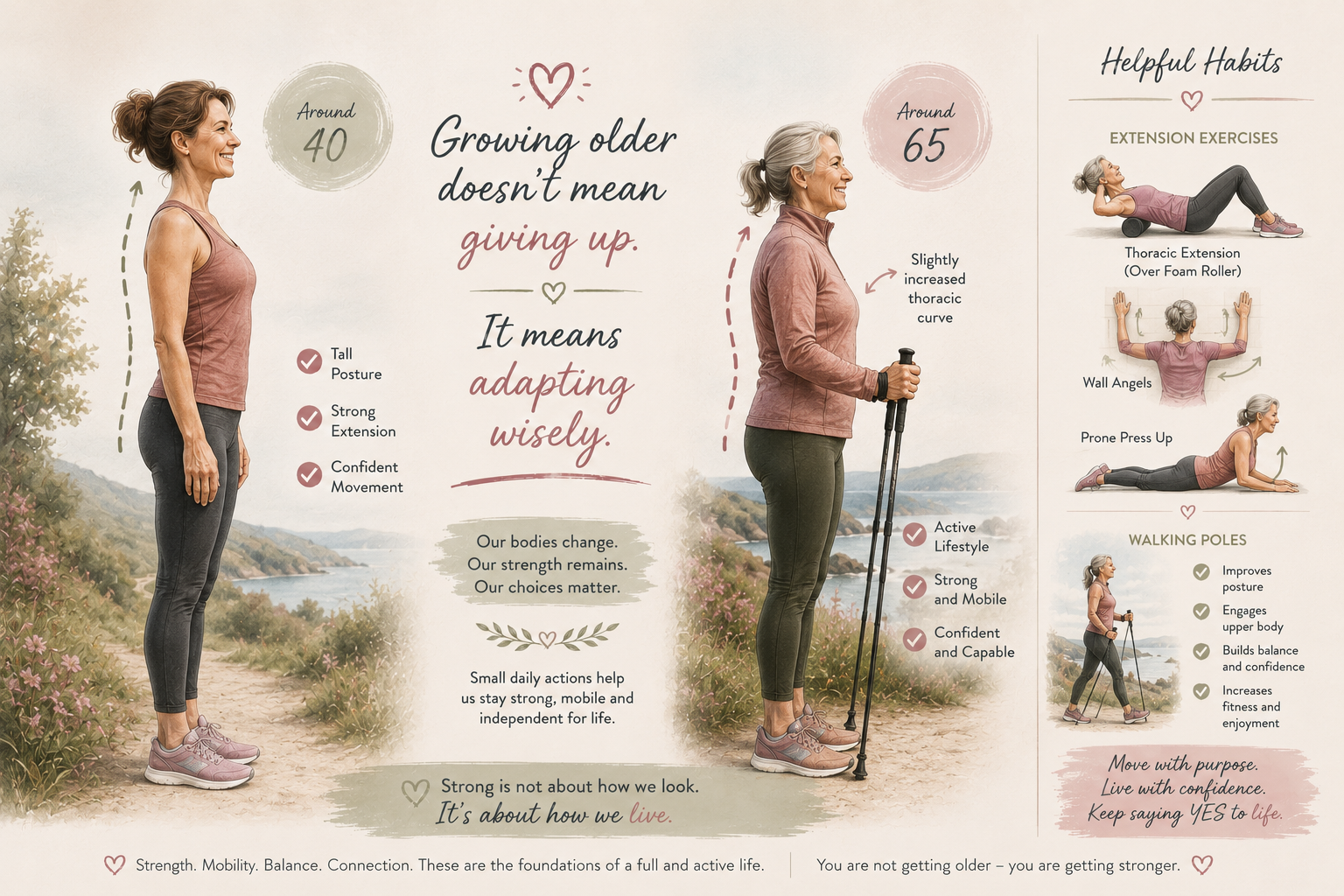
Some find their upper back has gradually become a little more rounded.
Now, that doesn’t automatically mean osteoporosis.
Far from it.
A slightly increased thoracic curve can happen for many reasons.
Posture.
Movement habits.
Muscle weakness.
Normal age-related adaptations.
Changes within the spine.
However, it can also be one of the signs that deserves a conversation with your GP, particularly if you’ve lost height, had previous fractures or have other risk factors for osteoporosis.
Understanding the difference matters.
Because accepting every change as “just getting older” may mean we miss opportunities to do something about it.
Fi Field Note
One of the phrases I hear surprisingly often is…
“I just feel like I’m shrinking.”
Sometimes that’s simply a feeling.
Sometimes it’s posture.
Sometimes it’s muscle loss.
Sometimes it’s changes within the spine.
Sometimes it deserves a conversation with your GP.
Whatever the reason…
accepting it isn’t your only option.
Learning to move with confidence, maintaining strength and preserving good spinal mobility may help you stay active and independent for longer.
Fi Research Note
Large international studies consistently show that regular physical activity improves physical function, reduces the risk of falls, supports mental wellbeing and helps people maintain independence as they age.
The biggest gains come from combining aerobic activity with strength, balance and functional movement rather than relying on one form of exercise alone.
Confidence Is a Muscle Too
Here’s something I don’t think we talk about enough.
Confidence fades when we stop doing things.
Not overnight.
Slowly.
Perhaps we stop kneeling because it’s difficult.
Then we stop gardening.
Then we stop getting down to play with grandchildren.
Eventually we convince ourselves…
“I’m too old for that.”
Often, we’re not too old.
We’re simply out of practice.
The wonderful thing about the human body is that it responds remarkably well when we challenge it appropriately.
The American College of Sports Medicine continues to recommend regular resistance training for older adults because improvements in strength, mobility and physical function are possible well into later life.
I find that incredibly encouraging.
It reminds me that capability isn’t fixed.
It’s something we can keep investing in.
It’s Not Just About the Gym
Whenever people hear the word strength, many imagine barbells, mirrors and loud music.
Strength doesn’t have to look like that.
Strength might be:
- Walking up hills.
- Standing on one leg while brushing your teeth.
- Carrying shopping evenly.
- Learning to use walking poles.
- Getting up from the floor.
- Playing with grandchildren.
Purposeful movement matters.
Enjoyable movement matters even more.
Because the best exercise programme in the world is the one you’ll actually keep doing.
And perhaps that’s the point.
We’re not training for the gym.
We’re training for life.
Community Might Be the Secret Ingredient
One thing I’ve noticed over the years is that people rarely return because of the exercise alone.
They return because of the people.
The conversation before class.
The laughter halfway through.
The coffee afterwards.
The feeling that somebody notices when they’re missing.
Research supports this too.
Studies consistently show that social connection improves long-term participation in physical activity. When movement becomes enjoyable and shared, we’re far more likely to stick with it.
Perhaps that’s why community matters just as much as the programme itself.
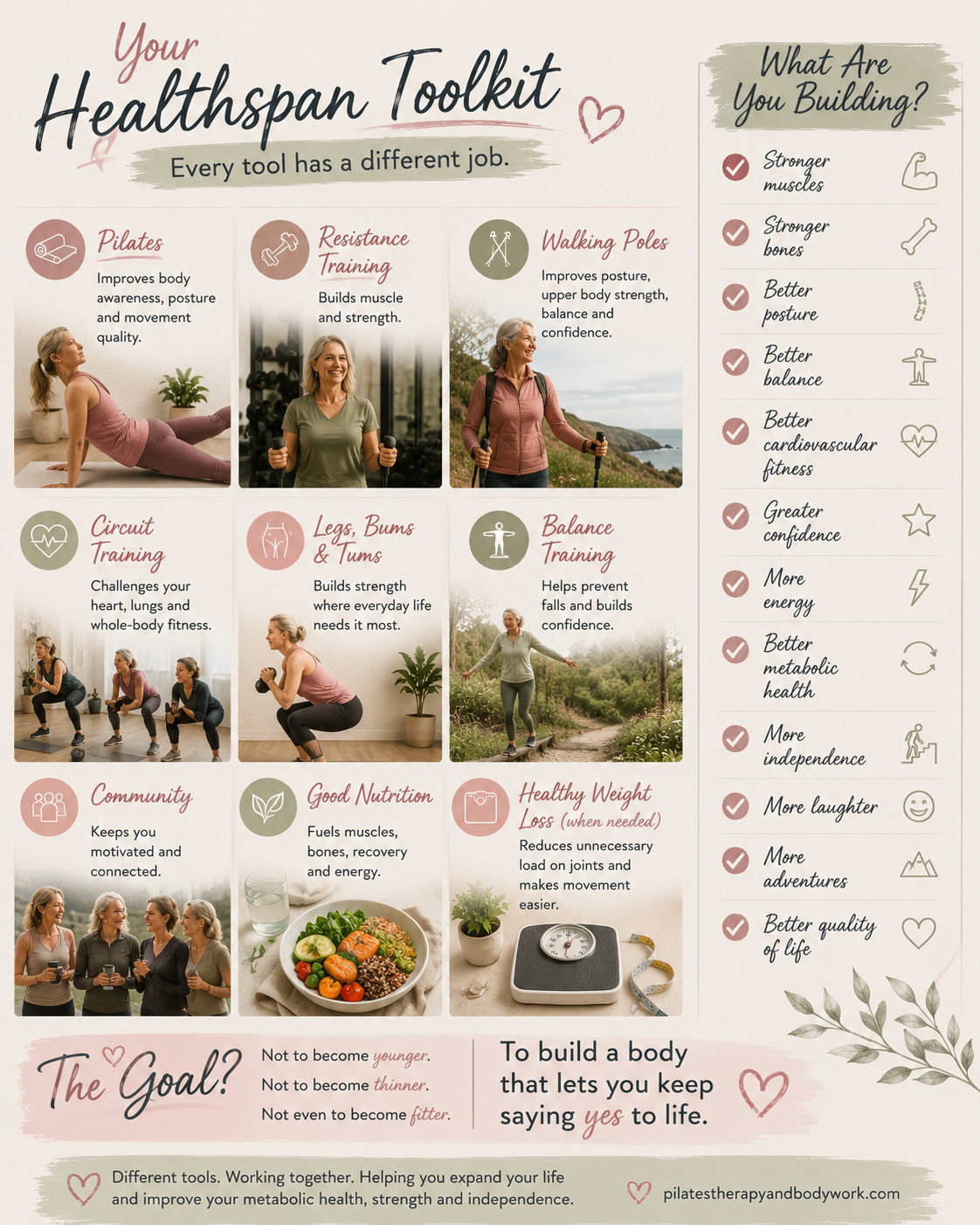
Building Your Healthspan Toolkit
One of the biggest myths in fitness is that we need to find the perfect exercise.
The truth?
There probably isn’t one.
Different types of movement give us different gifts.
The real magic happens when we put those gifts together.
I often think of it as building your own Healthspan Toolkit.
Pilates has always been my starting point because it teaches us to notice.
How do I move?
Where do I compensate?
Can I breathe well?
Am I using effort where I don’t need to?
Sometimes the greatest change isn’t becoming stronger.
It’s becoming more aware.
Strength training gives us something completely different.
It builds the muscles that help us climb stairs, carry shopping, lift grandchildren and remain independent for longer.
Walking poles bring another dimension.
People often think they’re simply for walking, but they encourage upright posture, involve the upper body, challenge balance and rhythm, and give people confidence to explore places they may once have avoided.
Circuit training helps the heart and lungs.
Balance work helps us trust our bodies.
Community reminds us we’re not doing any of this alone.
Good nutrition provides the building blocks that allow everything else to happen.
And when weight loss is appropriate, reducing unnecessary load can make moving feel easier and more enjoyable.
No one tool does everything.
Together, they create a body that’s ready for real life.
Fi Clinical Pearl
You don’t need one perfect exercise.
You need enough variety to build a body that’s ready for whatever life asks of you.
Looking Beyond the Scales
This blog isn’t anti-weight loss.
Far from it.
I’m incredibly proud of the progress I’m making.
Working with Highwoods Nutrition has helped me build healthier habits rather than simply chase a number on the scales.
What has surprised me most isn’t just the weight I’ve lost.
It’s the questions that weight loss has made me ask.
I’ve become fascinated by posture.
By movement.
By strength.
By confidence.
By how our feet adapt.
By why some changes improve naturally while others need a little more help.
Those conversations have inspired this entire series of blogs.
Over the coming months I’ll be sharing more of my own journey, together with an interview with Tanya and the coaching team at Highwoods Nutrition, because I think there are some important conversations to be had about creating healthy habits that last long after the scales stop moving.
If you haven’t already, you might also enjoy my blog on Sarcopenia, where I explore why preserving muscle may be one of the most important investments we can make as we grow older.
Because healthy ageing isn’t built on one pillar.
It’s built on many.
Nutrition.
Movement.
Strength.
Recovery.
Community.
Curiosity.
Each one makes the others stronger.
One Last Thought…
Today…
I still smile when the scales go down.
But they no longer tell the whole story.
The question I ask myself now is a very different one.
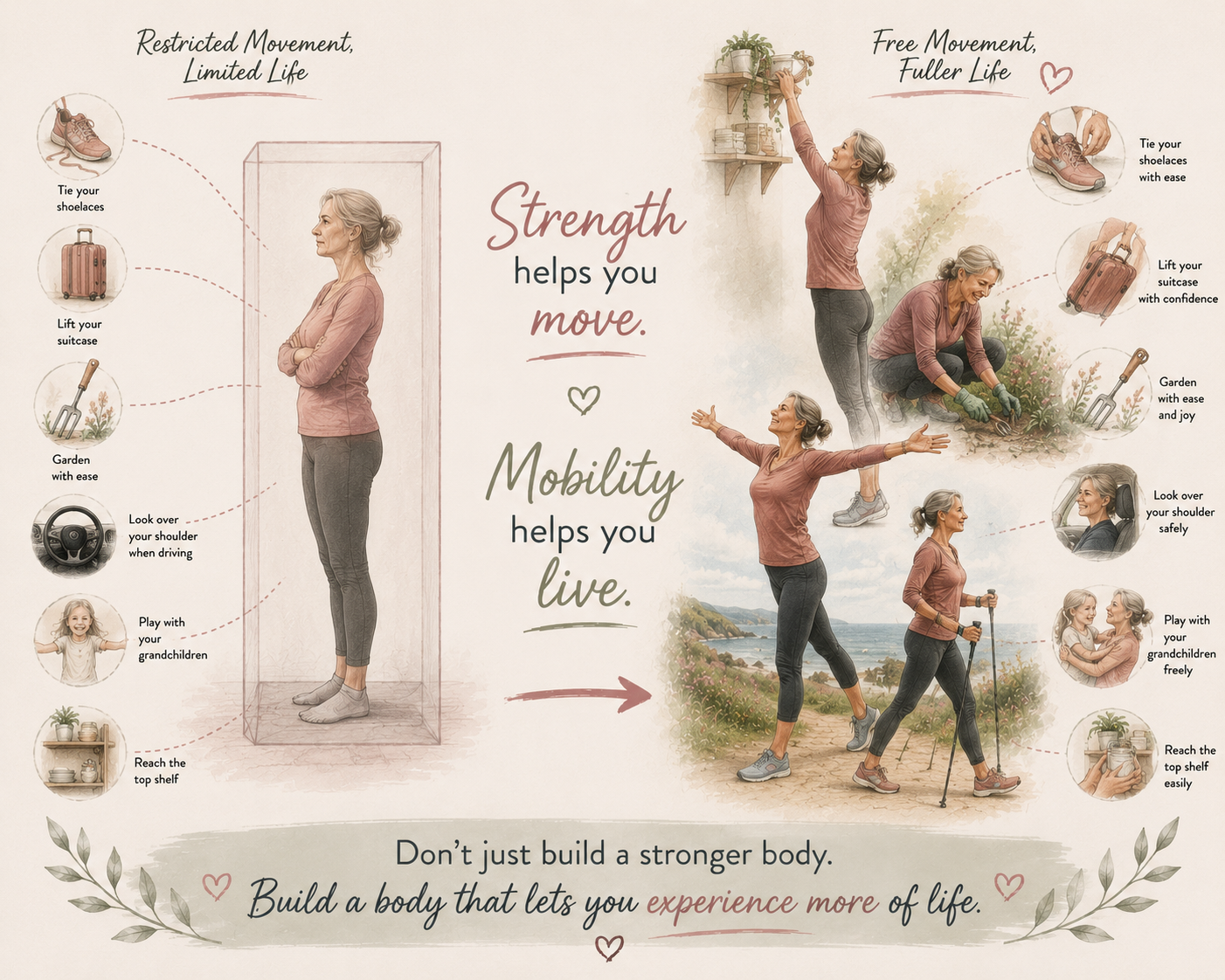
Can my body still say yes to life?
Can it carry shopping?
Can it climb hills?
Can it lift a suitcase into Annie?
Can it kneel in the garden?
Can it dance at a wedding?
Can it hug someone I love without worrying whether I’ll struggle to get back up?
That’s the body I’m trying to build now.
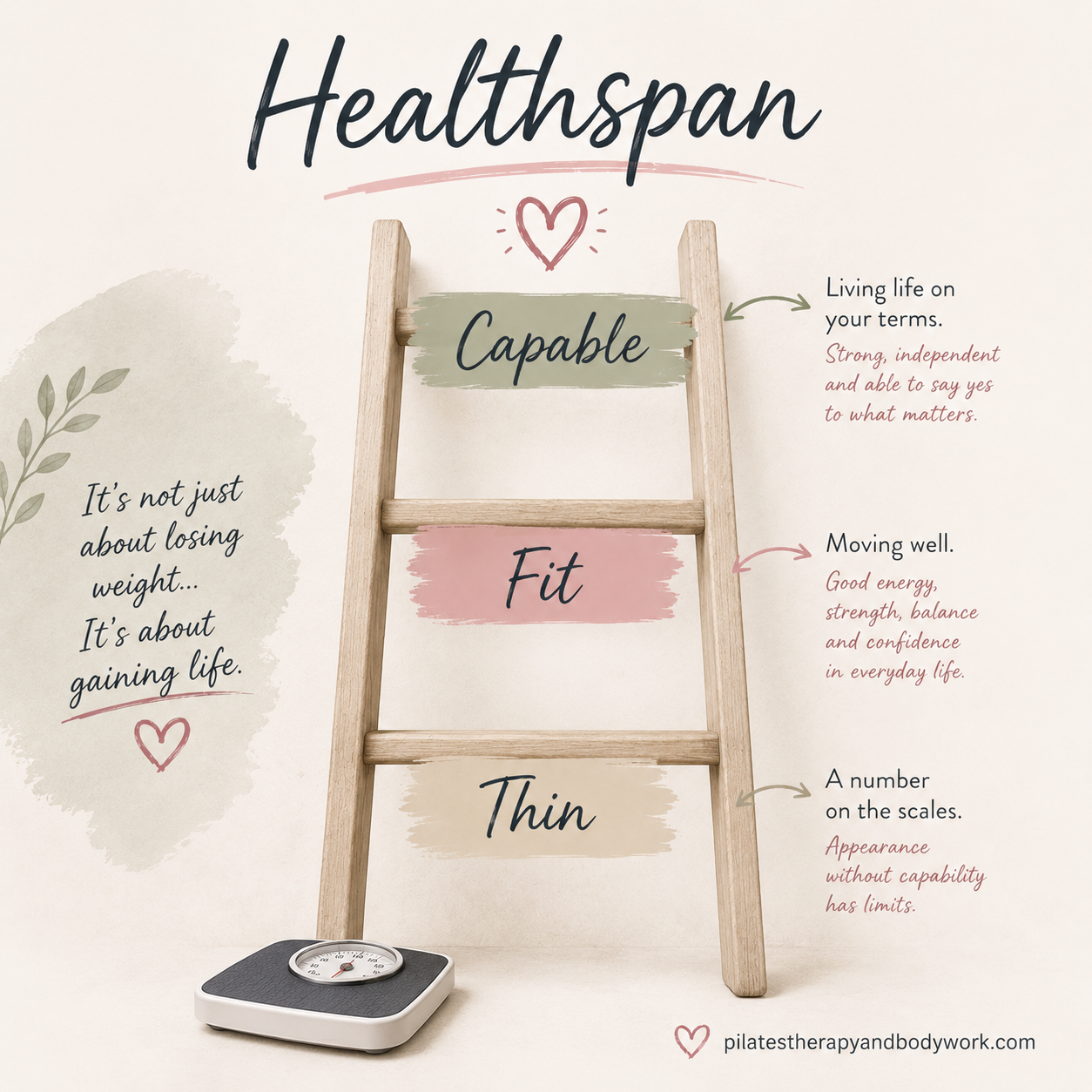
Not the smallest one.
The most capable one.
Because healthspan isn’t just about adding years to life.
It’s about adding life to your years.
So if there’s one thing I’d love you to take away from this article, it’s this.
Don’t spend the next twenty years simply trying to become lighter.
Spend them becoming stronger.
More confident.
More curious.
More connected.
Feed your body well.
Feed your muscles well.
And don’t forget to feed it something else every single day.
Movement Nutrition.
Because being lighter isn’t the finish line.
It’s what you choose to do with your body afterwards that really matters.
Further Reading
Related articles on Therapy in Motion
- Understanding Sarcopenia: Why Muscle Matters as We Age
- Could Weight Loss Change the Way You Stand?
- Osteoporosis
- Cancer Treatment and Bone Health
If you are looking for manual or movement therapies to support your weight loss journey or support through cancer or chronic conditions, please get in touch. I have a clinic in Clacton and I offer both online and in-person movement sessions. Email me fi@therapyinmotion.co or call me 07767 384983 if you are unsure where to start.