Why I Don’t Call It Exercise Anymore
There was a time when I talked about exercise all the time.
Now, I hardly use the word at all.
It wasn’t a conscious decision. I didn’t wake up one morning and decide to change my language.
It happened gradually.
One day I realised I was talking about movement instead.
Walking.
Breathing.
Music.
Laughter.
Connection.
Strength.
Confidence.
Helping people feel more like themselves again.
It wasn’t an accident.
After nearly thirty years of working with people, I’d realised that the word exercise carries a lot of baggage.
For some people it means punishment.
For others it brings back memories of school PE lessons, intimidating gyms or feeling judged because they couldn’t keep up.
For many of the people I meet—particularly after cancer treatment, surgery, persistent pain or a long-term health condition—the word exercise simply feels overwhelming.
Movement doesn’t.
People don’t walk into my clinic saying,
“I’d really like to improve my glute strength today.”
They tell me they want to play with their grandchildren.
Walk the dog again.
Carry the shopping without worrying.
Dance at a wedding.
Get up from the floor.
Sleep better.
Feel less frightened of moving.
Feel like themselves again.
Those aren’t exercise goals.
They’re life goals.
Movement is simply the vehicle that gets us there.
“The word exercise has become emotionally loaded for many people. Research into exercise anxiety shows that previous experiences, fear of judgement and low confidence can create powerful barriers to becoming active. It’s rarely movement itself that’s the problem—it’s what people expect movement to feel like.”
People don’t dislike movement. They dislike the memories, expectations and judgement they’ve attached to the word exercise.
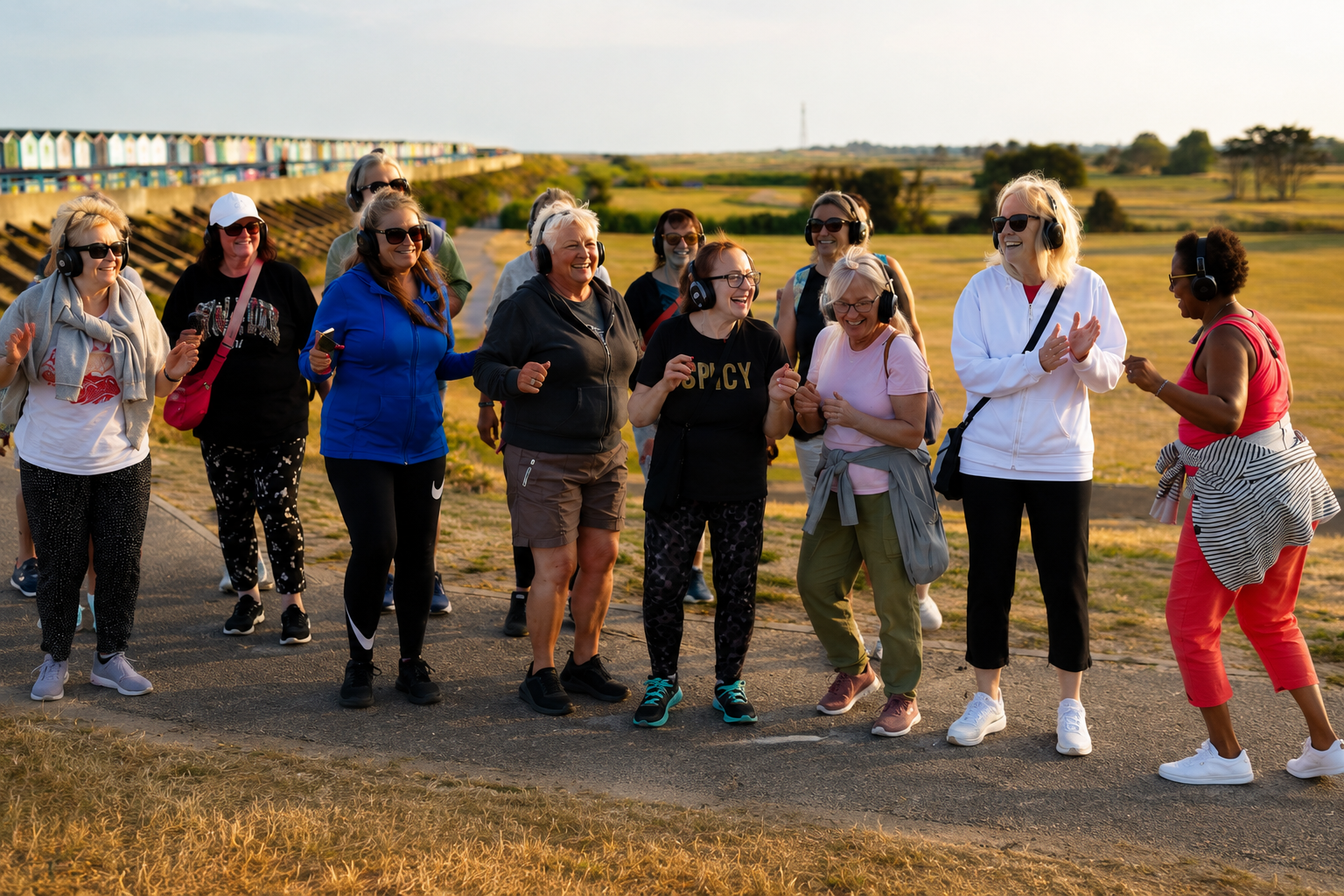
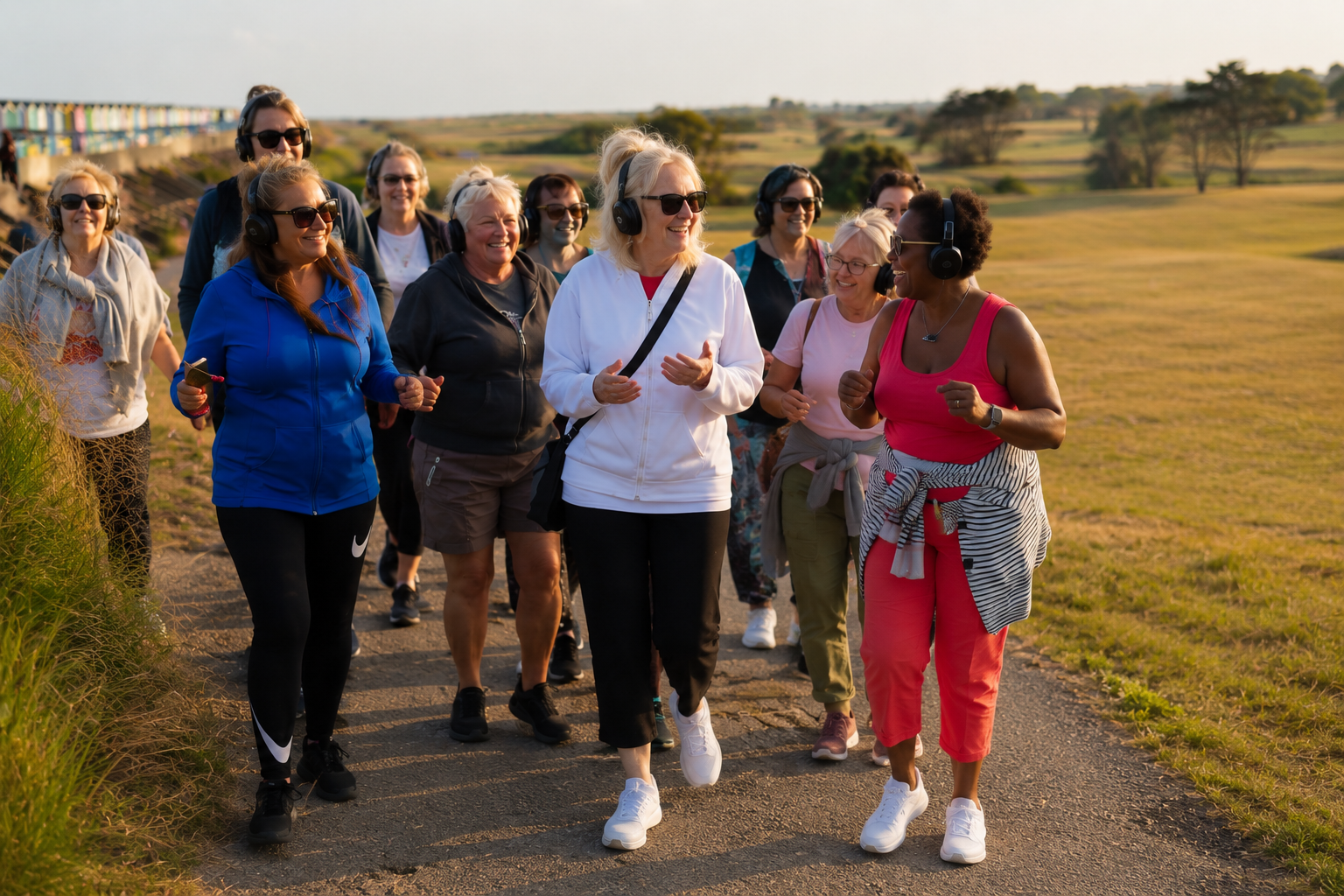
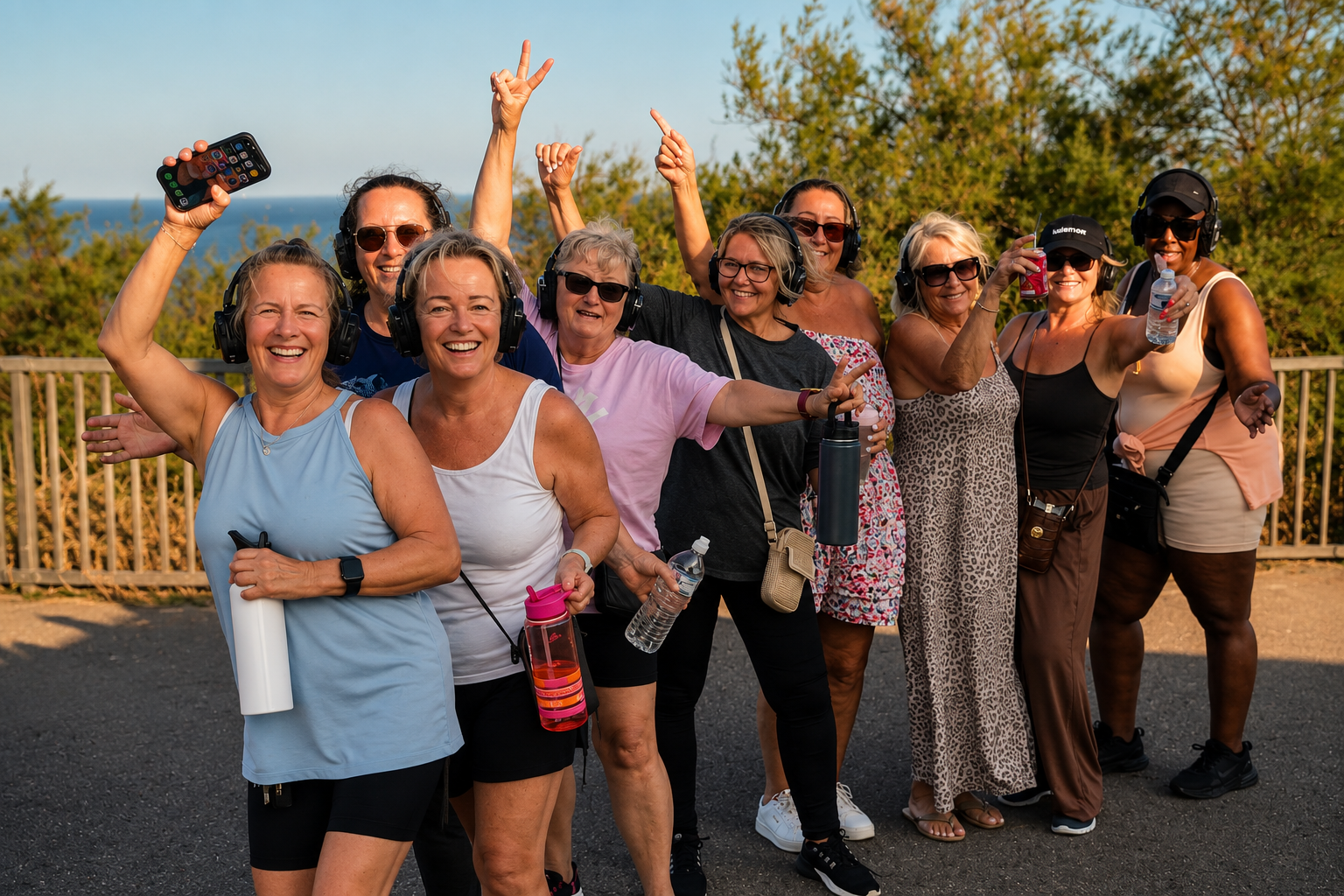
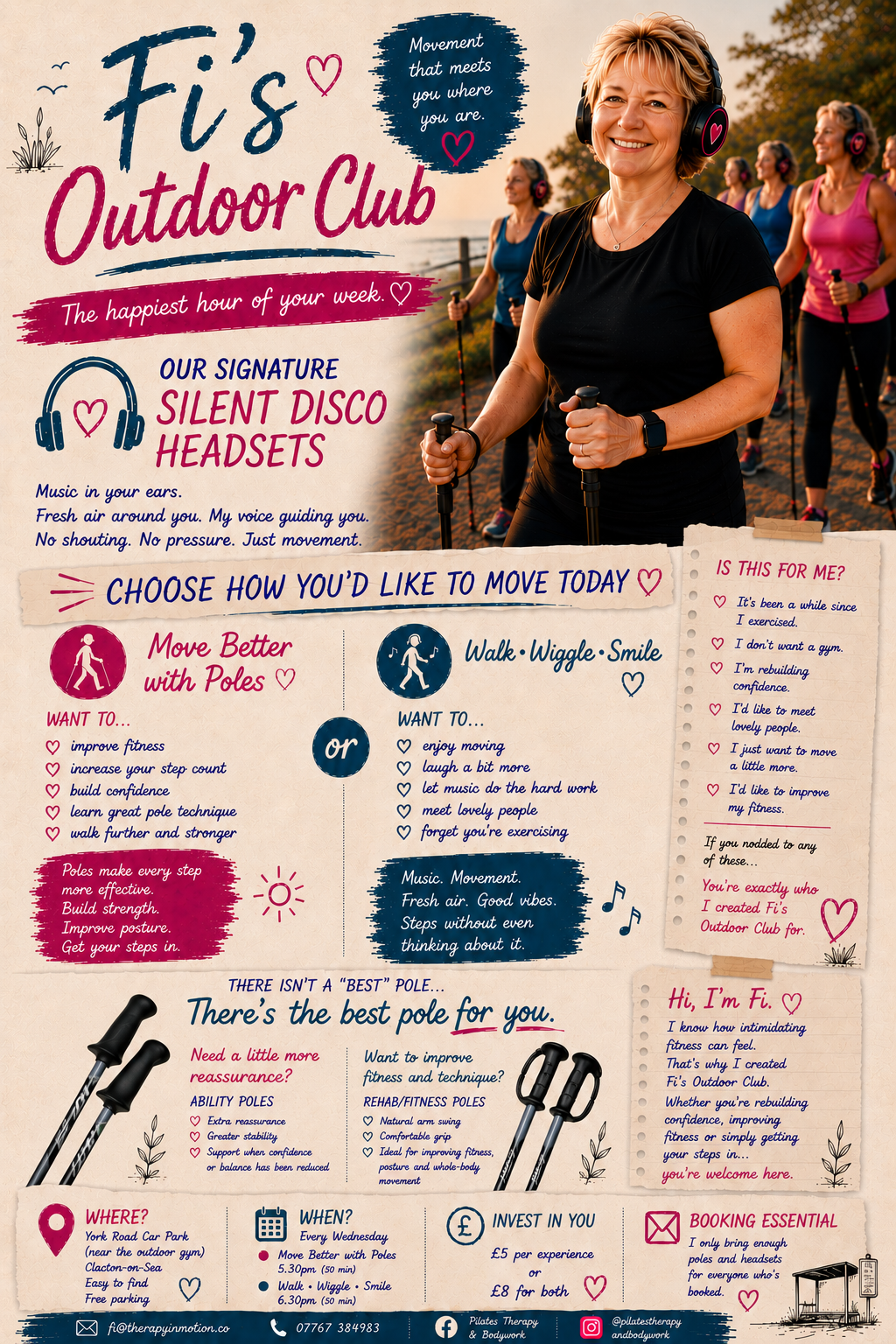
One of my favourite moments every week is watching people put on the silent disco headsets.
There’s always a smile.
Usually a laugh.
Occasionally a little dance before we’ve even started.
Nobody is thinking about calories.
Nobody is worrying whether they’re working hard enough.
They’re simply moving.
Without really noticing it, they’re exercising.
And that is a completely different experience.
The lovely thing is that science supports what many of us see every day.
One of the strongest predictors of whether someone continues being physically active isn’t fitness.
It’s enjoyment.
Psychologists have consistently found that when movement is enjoyable and intrinsically rewarding, people are far more likely to stick with it over the long term. We don’t continue because we have to—we continue because we want to.
Music helps too.
Research shows that listening to music during physical activity can improve mood, reduce the perception of effort and even help people move for longer before they feel tired. In simple terms, movement feels easier when it feels enjoyable.
Walking with other people offers something else entirely.
Studies have shown that group walking can improve physical activity levels, reduce loneliness, boost mental wellbeing and increase confidence—particularly in people managing long-term health conditions.
None of those benefits begin because somebody was told to exercise.
They begin because people discover movement they actually enjoy.
As someone working in cancer rehabilitation, persistent pain and long-term conditions, I’ve learnt that adaptation isn’t a compromise.
It’s good practice.
Some people stand.
Some people sit.
Some people use walking poles.
Some people dance.
Some people spend the first few weeks simply swaying to the music.
Every one of those people is moving.
Every one of those people is succeeding.
We know from cancer rehabilitation research that appropriately prescribed physical activity can reduce cancer-related fatigue, improve quality of life, enhance physical function and even help people tolerate treatment more effectively. The challenge isn’t convincing people that movement matters.
It’s helping them find movement that feels possible.
That’s why my sessions don’t look like boot camps.
I still teach my online Pilates sessions… And they have evolved, the movements are always related to function. We still have the traditional Pilates movements, it is just more therapeutic, and we have a weekly circuit session to up the intensity.
You’ll hear music.
You’ll hear conversation.
You’ll hear laughter.
You’ll hear me asking,
“How does that feel?”
far more often than,
“Give me ten more.”
Because movement isn’t about proving something.
It’s about discovering what your body can still do.
And very often…
that’s far more than you imagined.
If you’ve followed my work for a while, you may have noticed something else.
I don’t really sell classes.
I invite people to experiences.
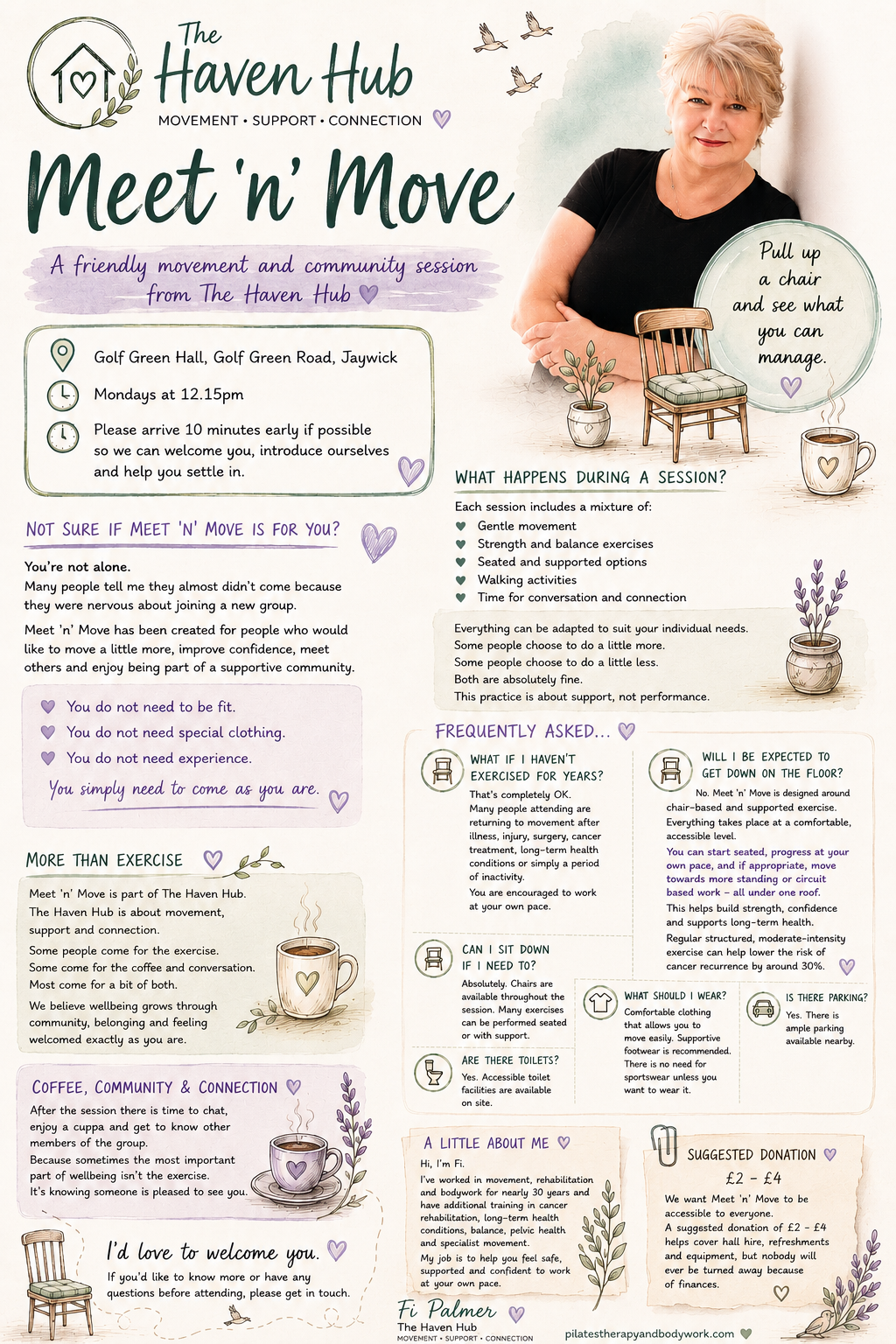
Meet ‘n’ Move.
Walk. Wiggle. Smile.
Move Better with Poles.
Those names are completely deliberate.
Because they tell people what they’ll leave with.
Not simply stronger legs.
A lighter mood.
A little more confidence.
A few more conversations.
Perhaps a new friend.
Perhaps the courage to book that treatment they’ve been putting off.
Perhaps the confidence to join another group.
Movement has a wonderful habit of opening doors.
Fi’s Clinical Pearl
The best exercise programme in the world is the one somebody enjoys enough to keep doing.
Consistency will almost always beat perfection.
I still love Pilates.
I still love rehabilitation.
I still love helping people move better.
But these days, I’m far more interested in helping people enjoy moving.
Because when people enjoy moving…
They keep moving.
And that’s where the real magic happens.
Helping people move more freely.
Helping people feel more like themselves again.
Not through exercise.
Through movement.
Further Reading (Evidence Behind the Blog)
- Teixeira PJ et al. (2012). Exercise, physical activity, and self-determination theory: A systematic review.International Journal of Behavioral Nutrition and Physical Activity.
- Terry PC, Karageorghis CI, Curran ML et al. (2020). Effects of music in exercise and sport: A meta-analysis.Psychological Bulletin.
- Kelly P et al. (2018). Walking on sunshine: Systematic review of outdoor walking groups and health benefits.International Journal of Environmental Research and Public Health.
- American College of Sports Medicine Roundtable on Exercise Guidelines for Cancer Survivors.
- James Earls. Born to Move.
I’ve never carried out a research study on the word exercise, but I have spent nearly thirty years listening to people. Interestingly, the research mirrors many of those conversations. We know that fear of judgement, low confidence and previous negative experiences can all become barriers to being physically active. Perhaps it isn’t movement that feels scary. Perhaps it’s everything people think exercise is supposed to look like.
Fi Field Note
I rarely hear someone say, “I hate moving.”
I often hear, “I hate gyms.”
“I’m not sporty.”
“People will laugh at me.”
“I won’t be able to keep up.”
Those are very different conversations.
Research supports this too. Enjoyment, confidence and feeling socially supported are among the strongest predictors of whether people continue being physically active.
Rhodes RE, Fiala B. (2009). Building motivation and sustainability into the prescription and recommendations for physical activity and exercise therapy: The evidence.
Teixeira PJ et al. (2012). Exercise, physical activity, and self-determination theory: A systematic review.
If you would like more information about treatments or movement sessions, please give me a call 07767384983 or email me fi@therapyinmotion.co