
The Inner Ear, Balance and the Lower Leg: What Happens When the Messages Change?
An overlooked connection in ageing, cancer treatment and our ability to stay steady on our feet.
Did you know your inner ear and your lower legs are in constant communication with your brain?
Well, not quite a conversation in the way we usually think about it. But they are constantly providing information that helps us know where we are, how we’re moving and what we need to do to stay upright.
Most of the time, we don’t give this a second thought.
Until something changes.
Perhaps we start feeling unsteady in the dark, struggle on uneven ground or find ourselves reaching for the handrail more often.
Or perhaps we notice that recovering from a little trip or stumble isn’t quite as easy as it used to be.
So what happens when more than one of the systems we rely upon for balance starts struggling?
And could this be particularly important for older adults and people who have undergone cancer treatment?
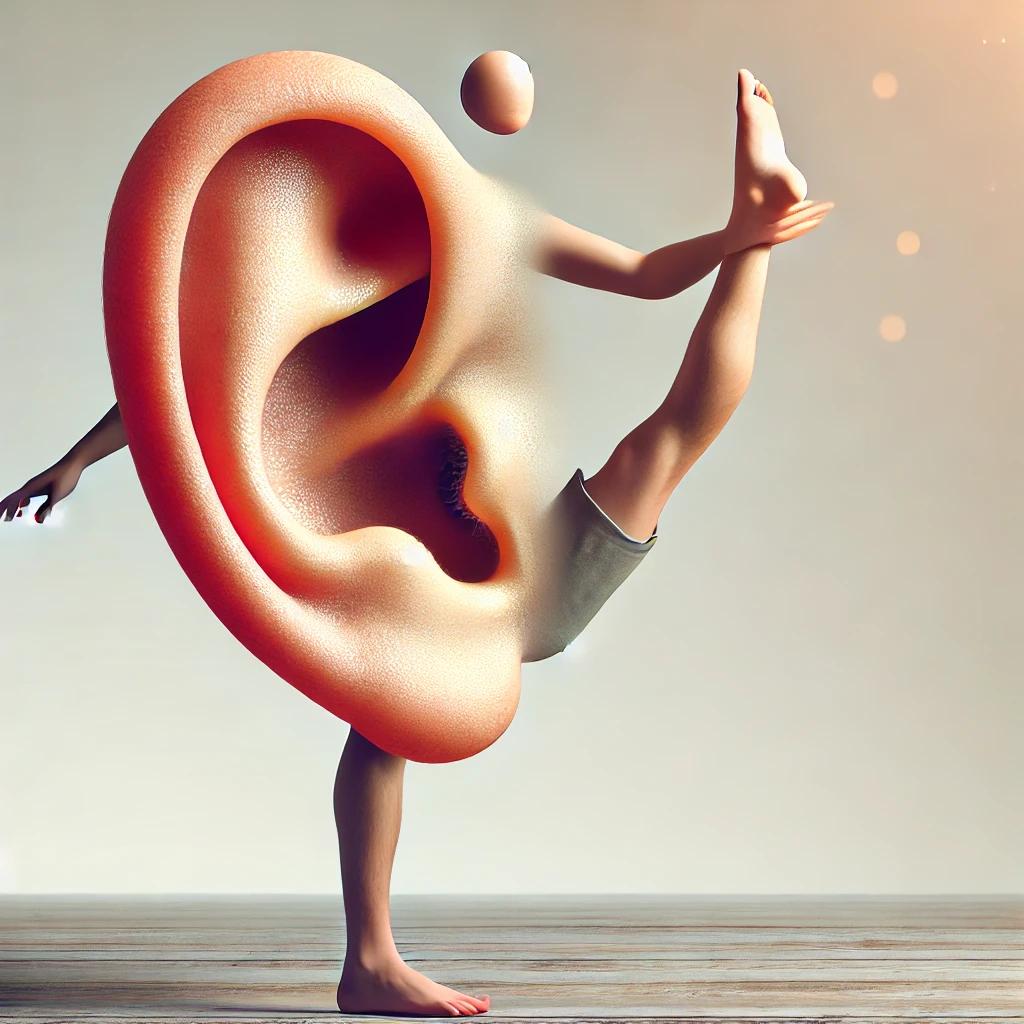
The inner ear does rather more than help us hear
When we talk about our ears, most people immediately think about hearing.
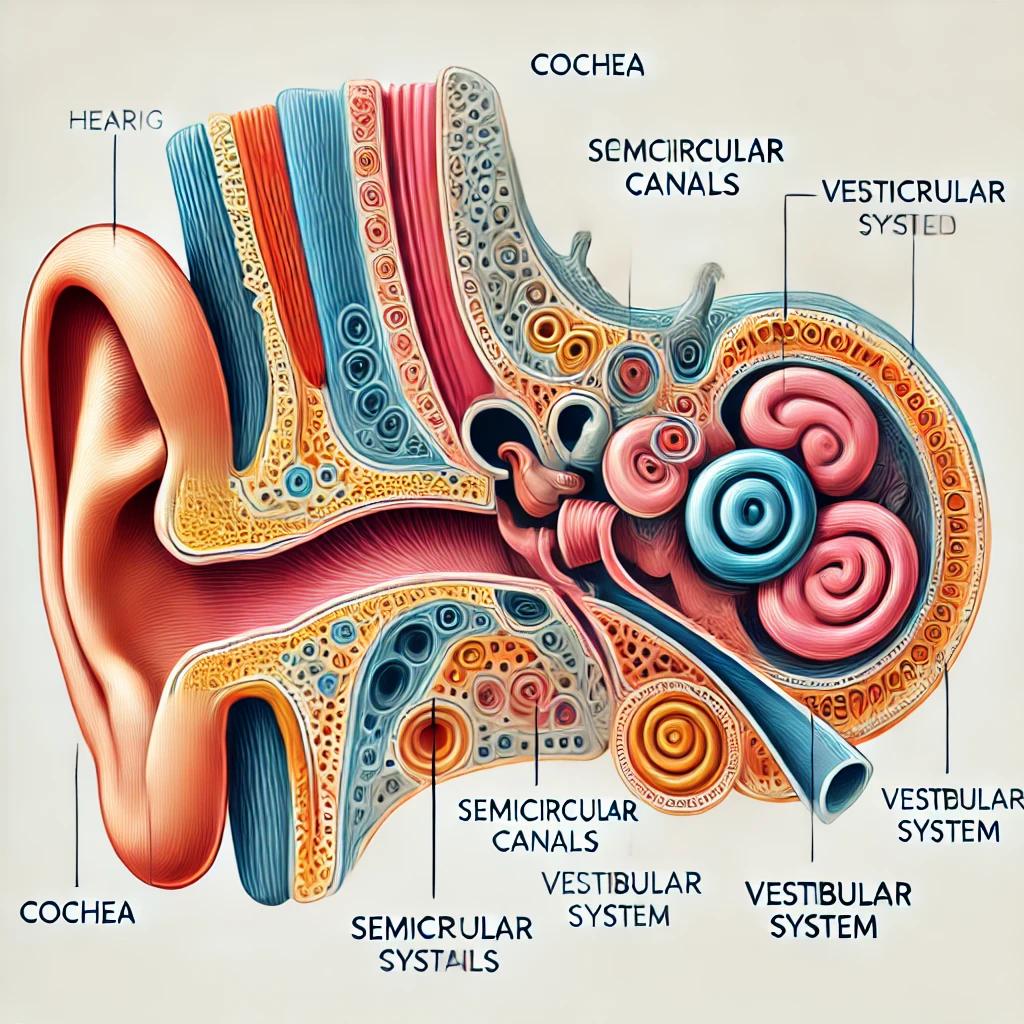
But tucked away in the inner ear is another rather extraordinary system.
The vestibular system.
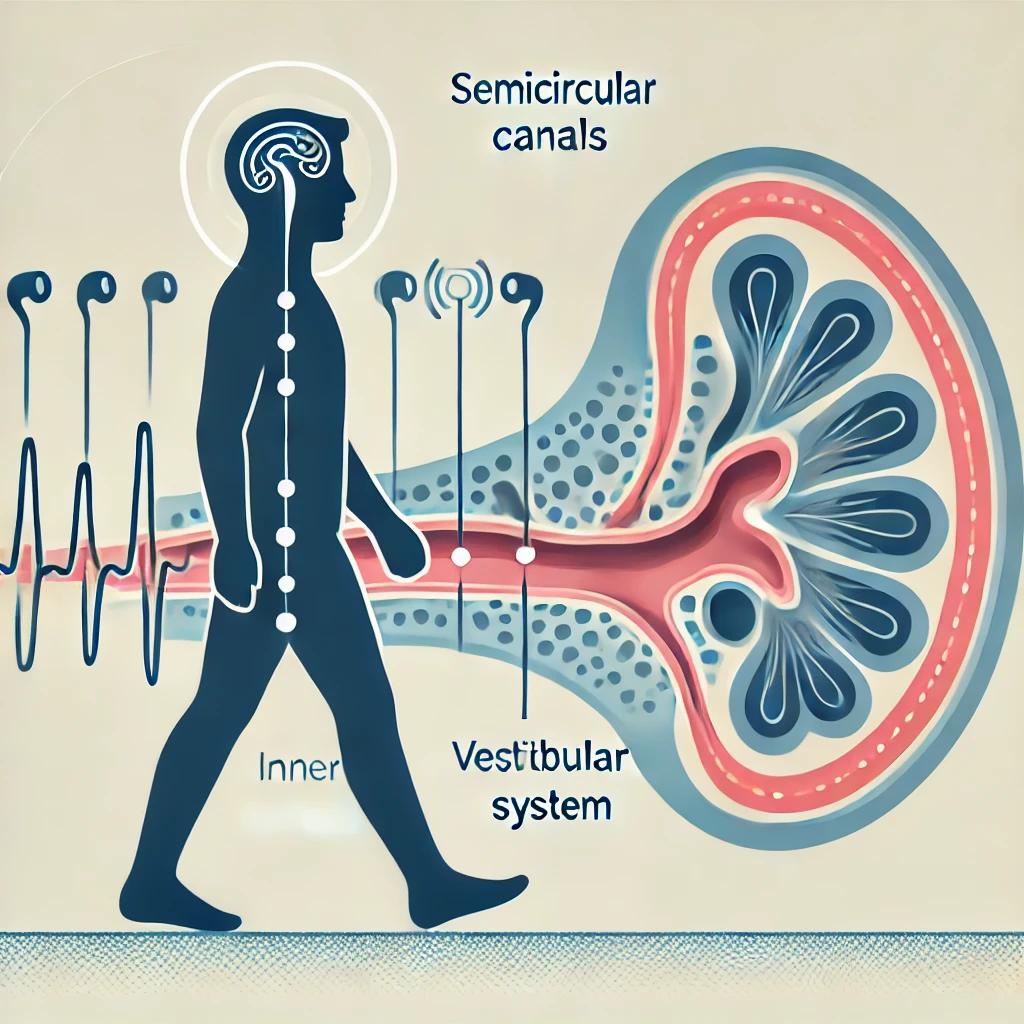
It includes the semicircular canals and two otolith organs, which detect different aspects of head movement, acceleration and orientation relative to gravity.
This information helps us maintain balance, coordinate movement and keep our eyes steady as we move our heads.
But there’s an important distinction.
Hearing and balance are closely related anatomically, but they are not the same function.
The cochlea is responsible for hearing, while the vestibular organs provide information about head movement and orientation.
Someone may have hearing loss without having a vestibular disorder.
Equally, someone may have vestibular difficulties while their hearing remains perfectly normal.
This is particularly important when we consider ageing, medication and cancer treatment.
inner_ear_anatomy
inner_ear_balance_connection
lower_leg_balance
Our lower legs have a rather important job too
Think about what happens when you stand on uneven ground.
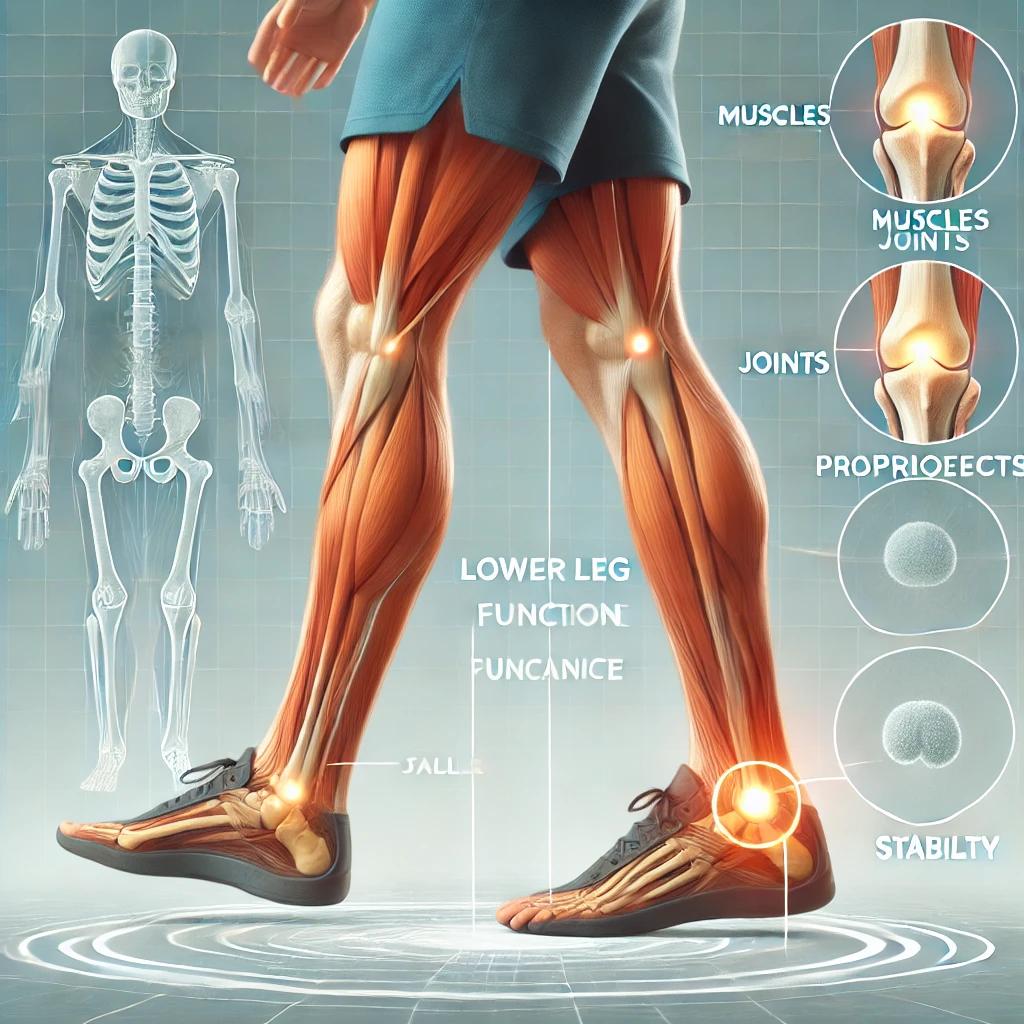
Your feet detect pressure and changes in contact with the surface.
Muscles, tendons and joints provide sensory information about position, movement and force.
Your nervous system uses this information alongside messages from your eyes and inner ear.
This sense of body position and movement is called proprioception.
The muscles around your ankles and lower legs also help make the adjustments needed to maintain your balance.
And they often do this without you consciously thinking about it.
When these systems are working well together, our responses can feel almost automatic.
But when the sensory information becomes less reliable, or our ability to respond is reduced, maintaining balance may become more difficult.
I’ve explored this in more detail in my follow-on article:
Your Balance Isn’t Just in Your Legs — So What’s Your Brain Doing?
Read more about mechanoreceptors, proprioception and how our brain uses sensory information to coordinate movement.
[ADD LINK TO NEW PROPRIOCEPTION BLOG]
Hearing loss and falls: what does the research actually say?
Hearing loss becomes more common as we get older.
And research suggests there is an association between hearing impairment and an increased risk of falls.
A 2025 systematic review and meta-analysis included 27 studies involving more than five million participants.
Researchers found that people with hearing loss had approximately 51% higher odds of having experienced a fall in cross-sectional analyses, and a 17% higher risk of falls over time in longitudinal analyses.
But we need to interpret that carefully.
This doesn’t mean that hearing loss automatically causes falls.
Nor does it mean that everyone with hearing loss has a problem with their vestibular system.
The relationship is complicated.
Hearing contributes useful information about our surroundings. Hearing difficulties may also affect attention and awareness of environmental sounds, while some people may have additional health conditions or sensory changes contributing to their fall risk.
There is still uncertainty about whether treating hearing loss directly reduces falls.
So rather than assuming the ears are responsible, perhaps we should be asking what else is happening?
How is their vision?
What about their foot sensation?
Their muscle strength?
Their confidence walking outside?
And have they experienced any dizziness or unsteadiness?
Because one symptom doesn’t necessarily tell us the whole story.
Chemotherapy, hearing and the nervous system
This is where the connection becomes particularly important in cancer rehabilitation.
Some cancer treatments can affect hearing, peripheral nerves and, in some circumstances, vestibular function.
Platinum-based chemotherapy drugs, particularly cisplatin, are well recognised for their potential to damage hearing.
Carboplatin may also cause ototoxicity, although the risk and severity depend on the treatment and individual circumstances.
There is also evidence that cisplatin can affect the vestibular system, although this has been studied less extensively than hearing loss.
Not everyone receiving these drugs will experience these difficulties.
But some people may notice dizziness, unsteadiness, changes in hearing or problems coordinating movement.
And then we need to consider something else.
Chemotherapy-induced peripheral neuropathy.
Certain chemotherapy drugs can damage peripheral nerves, sometimes leaving people with altered sensation, numbness, tingling or difficulties knowing exactly where their feet are.
Imagine trying to walk across uneven ground when you can’t reliably feel what’s happening beneath your shoes.
Now add some lower-limb weakness, perhaps fatigue, reduced activity during treatment or changes in vision.
And possibly a vestibular problem as well.
These difficulties can overlap.
They can also affect confidence, which sometimes leads people to move less.
The less we move, the more strength and physical capacity we may lose.
And before long, what started as a sensory or treatment-related problem can become a much wider movement issue.
Sarcopenia: are we overlooking another piece of the puzzle?
I’ve written before about sarcopenia, the progressive loss of muscle strength and mass associated with ageing.
Although some loss of muscle function can occur as we age, the degree of decline varies, and inactivity can make things worse.
And it isn’t simply about the appearance of our muscles.
Strength matters when we stand up from a chair, climb stairs, carry shopping and recover from a loss of balance.
How often do we hear someone say they’re thinking about moving into a bungalow because stairs are becoming difficult?
Sometimes that is absolutely the right decision.
But I also wonder how often we explore whether strength, confidence and movement capacity could be improved before someone gives up an activity altogether.
And if somebody has reduced sensation in their feet, that strength may become even more important.
However, strength alone isn’t the whole answer.
We still need to consider the sensory information available and how the nervous system coordinates an appropriate response.
What can we do to improve balance?
The encouraging news is that we can often improve aspects of balance, strength and functional movement through appropriately selected exercise.
But it isn’t necessarily a case of giving everyone the same exercises.
For some people, we may start with strengthening the lower legs, improving ankle mobility and exploring weight shifts with support.
For others, it might involve sit-to-stand exercises, stepping, walking, turning or practising changes in direction.
Tai Chi, Pilates and carefully structured strength and balance programmes can all offer useful opportunities, depending on the individual’s needs and the way the sessions are designed.
Someone with significant vestibular difficulties may benefit from assessment and specialist vestibular rehabilitation.
Someone with chemotherapy-induced neuropathy may need adaptations to their balance programme, particularly where sensation is reduced.
And someone frightened of falling may need a more supported starting point.
We need to balance appropriate challenge with safety.
Standing on one leg is one way to challenge balance.
But can someone respond when they stumble?
Can they turn around confidently?
Can they walk on uneven ground?
Can they manage the movements they actually need in everyday life?
Those are important questions too.
What about hearing aids?
If you have hearing difficulties, getting your hearing assessed and using prescribed hearing aids where appropriate can make an important difference to communication and awareness of your surroundings.
But we shouldn’t promise that hearing aids will automatically improve balance or prevent falls.
The research isn’t yet sufficiently clear to make that claim.
And if you are experiencing dizziness, vertigo, persistent unsteadiness or unexplained falls, don’t assume that a hearing aid or more exercise is necessarily the solution.
An appropriate medical assessment may be needed.
When should we ask for more help?
🟢 Generally reassuring
You feel steady during everyday activities but would like to maintain strength, confidence and mobility as you get older.
A progressive strength and balance programme may be a useful starting point.
🟠 Worth investigating
You have new or increasing unsteadiness, reduced sensation in your feet, persistent dizziness, changes in hearing or repeated near-falls.
Speak to your GP or relevant healthcare team for assessment. If you’re undergoing or recovering from cancer treatment, tell your cancer team about these changes.
🔴 Seek urgent medical attention
Sudden hearing loss needs urgent assessment, even without dizziness. New severe dizziness accompanied by difficulty speaking, facial weakness, double vision, new limb weakness or an inability to walk safely may indicate a medical emergency.
Don’t simply assume these symptoms are part of ageing or a normal response to treatment.
Bringing the pieces together
Our inner ear, eyes, feet, muscles, joints and nervous system all contribute to our ability to stay upright.
But they don’t work independently.
And they don’t always change at the same rate.
Someone may have strong legs but reduced foot sensation.
Someone else may have good sensation but poor strength or coordination.
Another person may be relying heavily on their vision because their vestibular system is struggling.
Which is why I think we should be cautious about treating balance as though it were simply a matter of standing on one leg for longer.
It’s a much bigger conversation.
For people recovering from cancer treatment, it may mean recognising difficulties that haven’t always been connected to their treatment or rehabilitation.
For older adults, it may mean looking beyond age itself and exploring what can still be improved.
And for those of us working with movement, perhaps the important question is not simply whether somebody has good balance.
It’s whether they have the strength, sensory information, coordination and confidence to move through the world safely and do the things that matter to them.
Because maintaining our independence isn’t just about staying upright.
It’s about being able to keep moving through life.
I’ve explored this sensory conversation further in my newer article, Your Balance Isn’t Just in Your Legs — So What’s Your Brain Doing?
It looks at mechanoreceptors, proprioception and how our brain uses information from the body to help us maintain balance — and, importantly, recover when something unexpected happens.
Fi
Pilates Therapy & Bodywork
www.pilatestherapyandbodywork.com
Further Reading & Research — With a Few Fi Thoughts
1. Hearing Loss and Falls: A Systematic Review and Meta-Analysis (2025)
A review of 27 studies involving over five million participants found an association between hearing loss and increased odds and future risk of falls.
Fi thought: An association isn’t necessarily a cause. Are we investigating the whole person’s balance system, rather than assuming that hearing loss explains everything?
2. Cisplatin Vestibulotoxicity: A Current Review (2024)
This review examines evidence about cisplatin and its possible effects on the vestibular system, including dizziness, unsteadiness and balance difficulties.
Fi thought: We talk about peripheral neuropathy after chemotherapy, but are we always considering possible vestibular involvement when someone reports being unsteady?
3. Balance Disorders — National Institute on Deafness and Other Communication Disorders
An accessible explanation of the vestibular system, how it works with vision and body sensation, and why different conditions can interfere with balance.
Fi thought: A useful reminder that balance depends on several systems working together. One symptom doesn’t necessarily tell us which part is struggling.
4. Exercise for Preventing Falls in Older People — Cochrane Review (2019)
A review of 108 trials involving 23,407 participants found that exercise programmes reduced the rate of falls by approximately 23%.
Fi thought: We have good evidence for exercise in falls prevention. The challenge is choosing and adapting that exercise for the person standing in front of us.